
Skip to content
  • Jump to:
  • Leaf miners
  • Damage
  • Species
  • Life cycle
  • News

Biological control of leaf miners

Leaf miners are damaging pests that tunnel through leaves, reducing photosynthesis and weakening plant growth. Their feeding patterns cause visible leaf damage, lower crop quality and can open the way for secondary infections. Effective leaf miner control is essential to protect plant vitality and maintain marketable yields. Biological control of leaf miners combines effective natural enemies and monitoring tools to target different pest stages:

Parasitic wasps attack and parasitize leaf miner larvae inside the leaves, while beneficial nematodes target pupae in the soil. Sticky traps help monitor adult activity and support timely intervention. With Koppert’s biological solutions for leaf miners, professional growers can keep infestations under control, maintain crop quality and support sustainable crop production.

Biological solutions for Leaf miners

Filters:
Clear all filters
Show all Show less
products found:

Questions or need help?

Find a reseller
  • Easy to use
  • Minimal resistance
  • No chemical residues
  • No pre-harvest intervals

Learn more about

What are leaf miners?
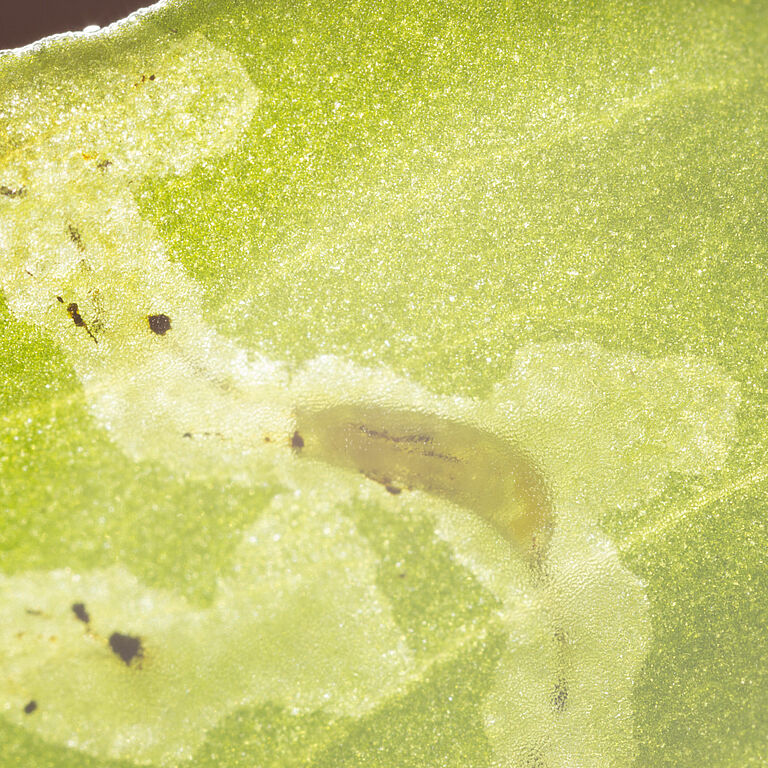
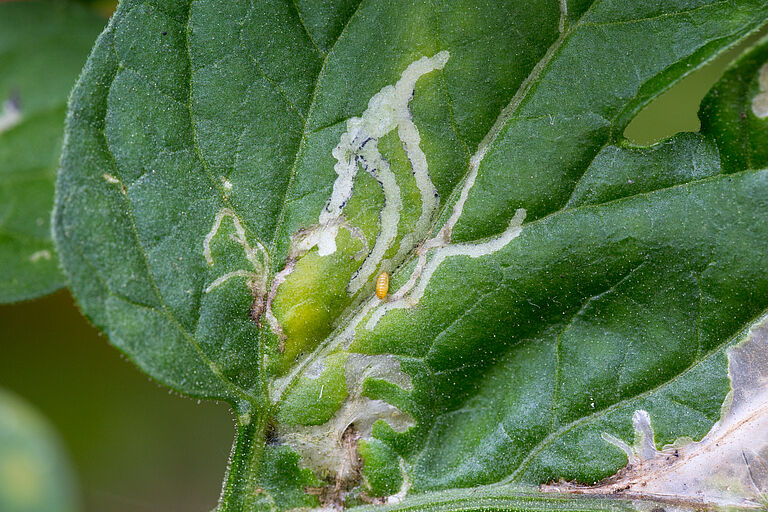
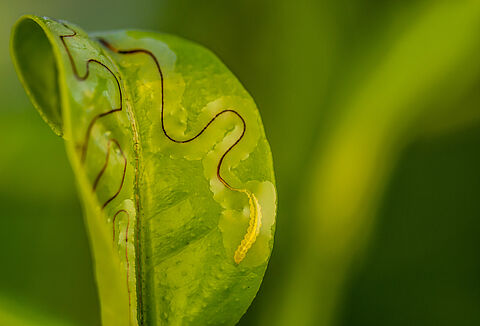
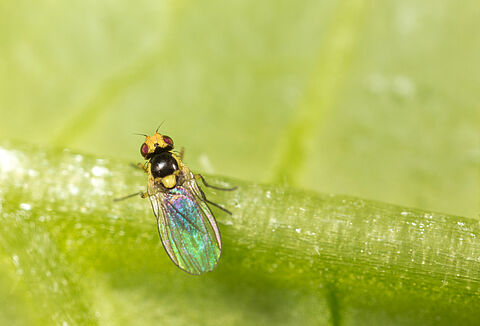
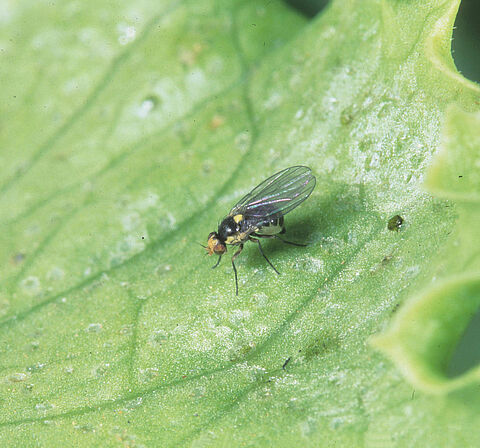
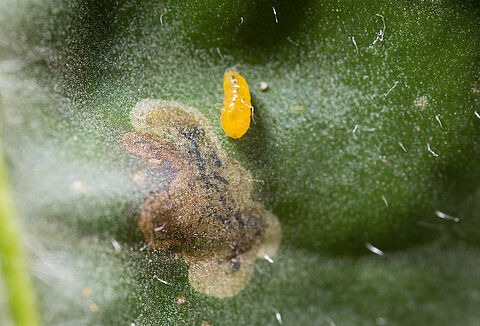
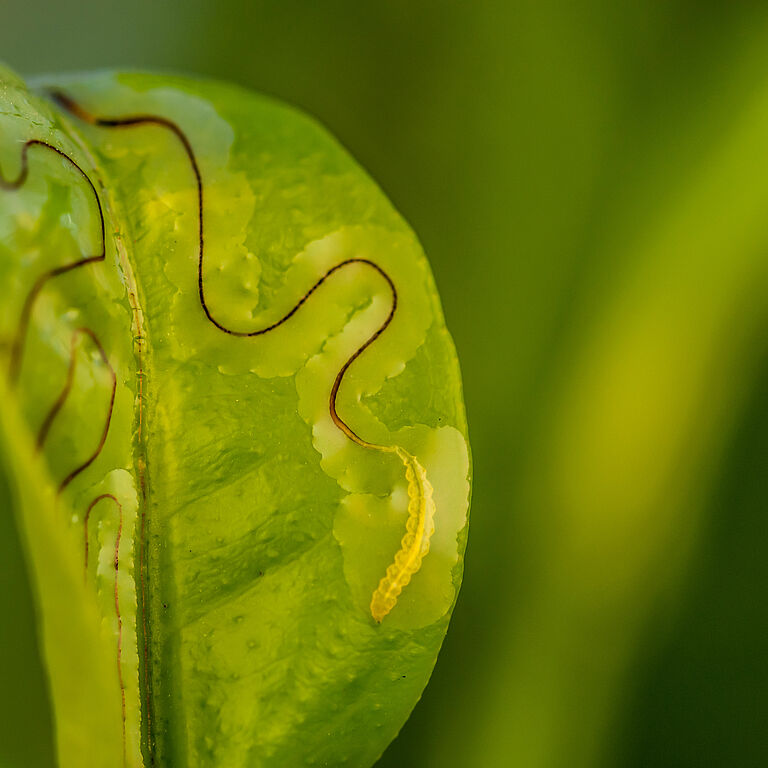
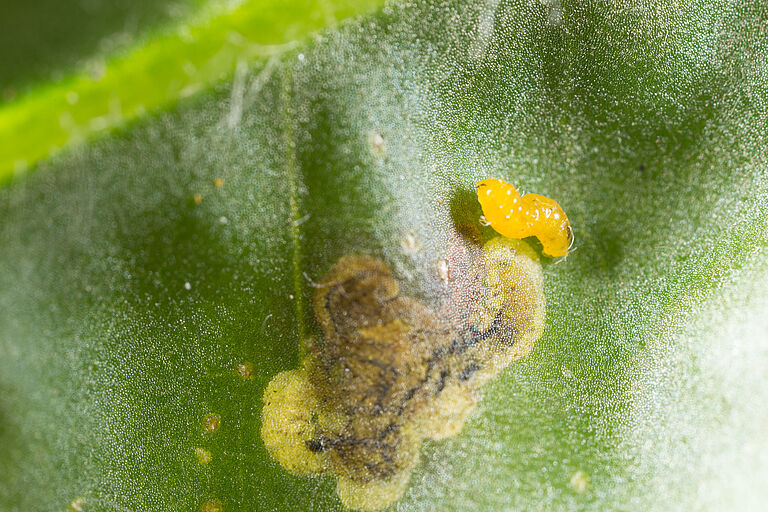
Leaf miners belong to the order Diptera (the true flies) and form the family Agromyzidae. This is a family of small flies whose larvae tunnel into the leaves of plants, creating ‘mines’. There are many species of leaf miner affecting various crops in temperate parts of the world. Under natural conditions, the larvae of these species are parasitized by parasitic wasps and so cause few problems. However, the use of chemical insecticides kills these natural enemies, allowing the leaf miner population to erupt into serious numbers. In addition, the pesticides used to control leaf miners disrupt the biological control of other crop pests. The leaf miner species that cause damage in horticultural crops are mostly polyphagous; that is, they feed on many crops. However, this is not universal among the Agromyzidae. Of the approximately 2,500 species in this family, only eleven are truly polyphagous. The species that cause most damage all belong to the genus Liriomyza and are very common in temperate regions.
Leaf miner damage

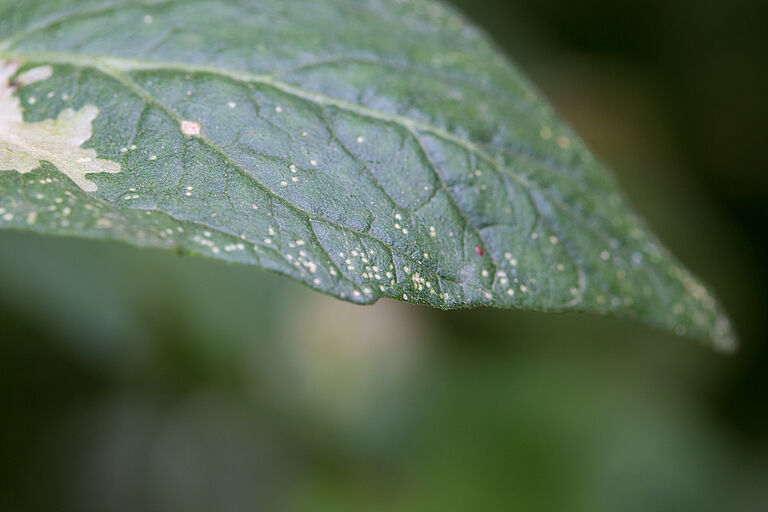
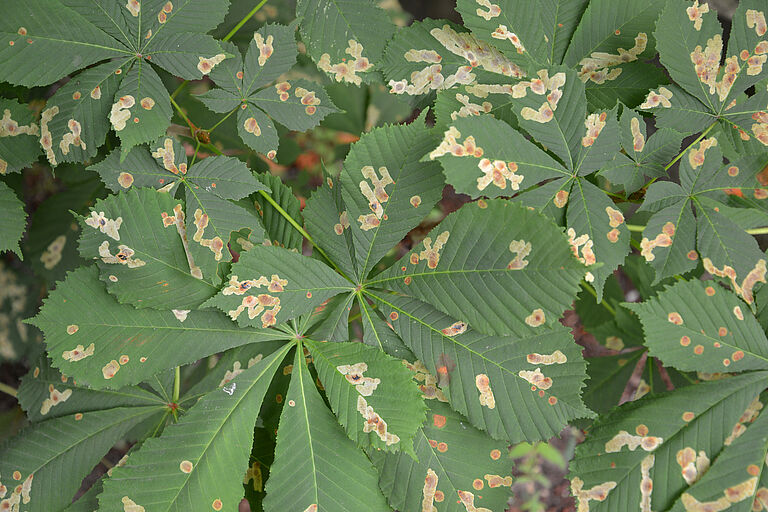
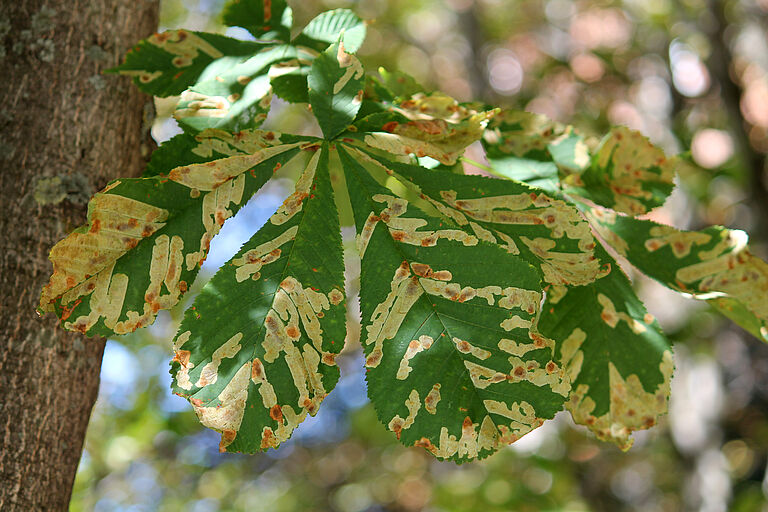
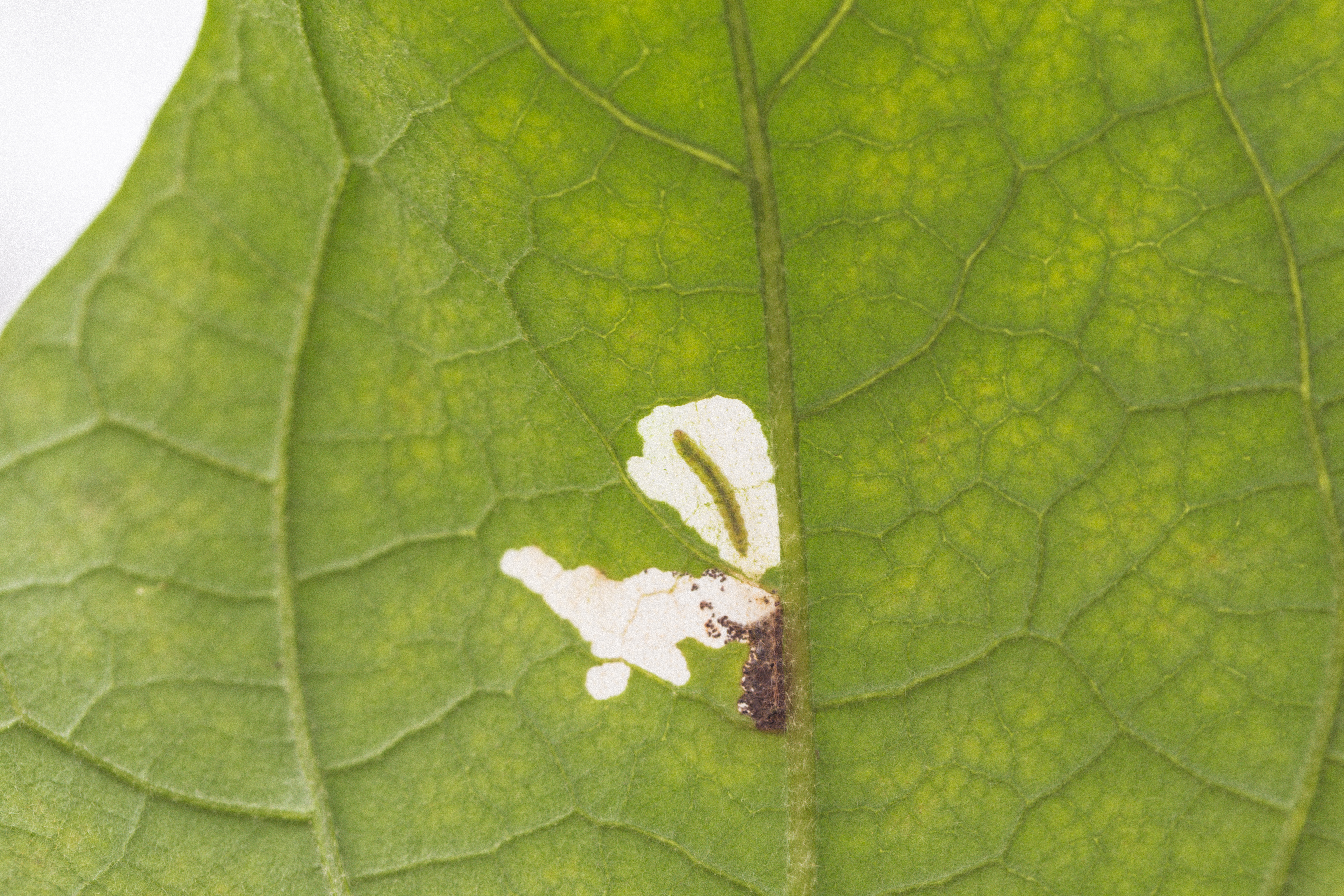
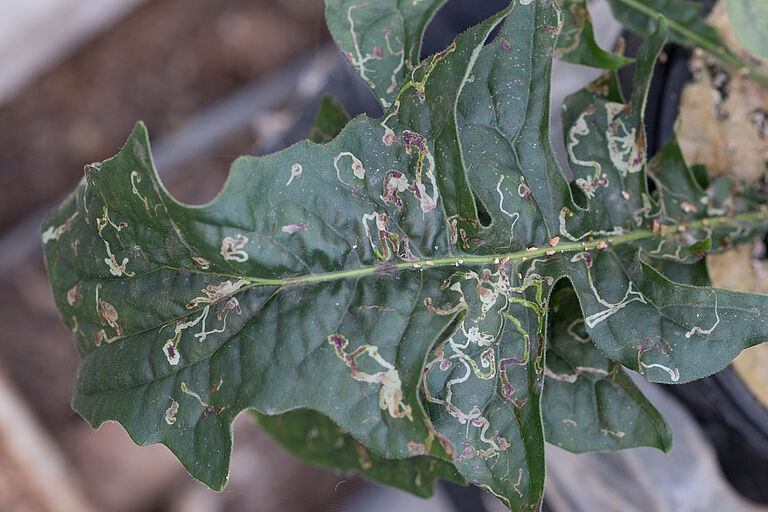
Leaf miners cause damage to plants both directly and indirectly. The most direct damage is caused by the larvae mining the leaf tissue which can lead to desiccation, premature leaf-fall and cosmetic damage. In (sub)tropical areas this can lead to burning in fruit such as tomato and melon. Loss of leaves also reduces yield. In full-grown plants of fruiting vegetable crops, however, a considerable quantity of foliage can be lost before the harvest is affected. The size of a leaf tunnel depends on the stage of development of the leaf, the species of host plant and the species of leaf miner. The older larvae make wider tunnels. Feeding spots made by adult females can also reduce yield, although with the exception of ornamental crops, this is usually of less significance. Seedlings and young plants can be totally destroyed as a result of the direct damage caused by leaf miners. The relationship between population size, leaf damage and yield reduction varies according to the season, culture method and the susceptibility of the host plant. This susceptibility can also vary considerably from one cultivar to another. Indirect damage arises when disease causing fungi or bacteria enter the plant tissue via the feeding spots.

Leaf miner species

Life cycle of leaf miners

Leaf miner control videos

Take a look at the video or go to our Youtube channel to see our leaf miner control products in action.

Need help?