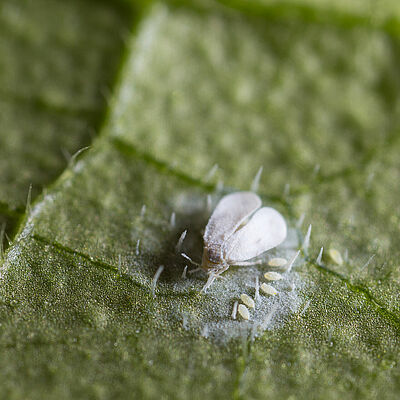
Various beneficial insects, mites and fungi contribute to the effective control of whitefly in agriculture and horticulture. Koppert provides a comprehensive range of whitefly control solutions harnessing the power of natural predators and beneficial organisms:
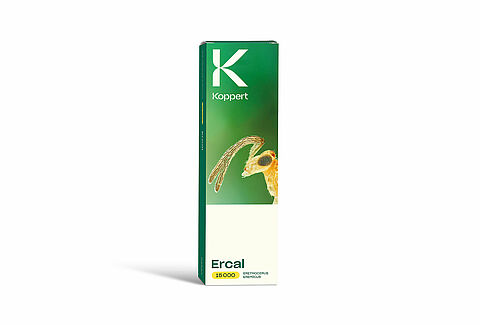
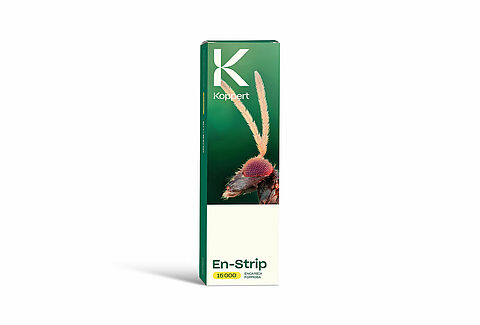
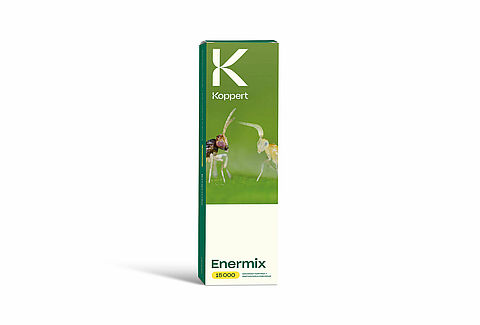
- Parasitic wasps, including Encarsia formosa (En-Strip) and Eretmocerus eremicus (Ercal, Enermix), act as effective biological control agents, with Encarsia formosa excelling against greenhouse whiteflies at lower temperatures.
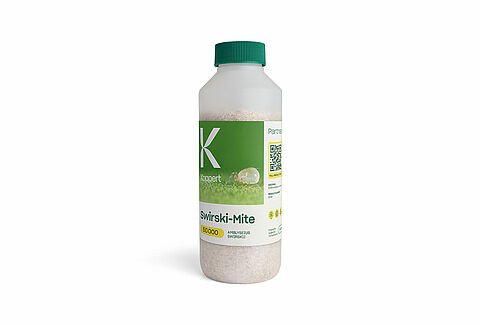
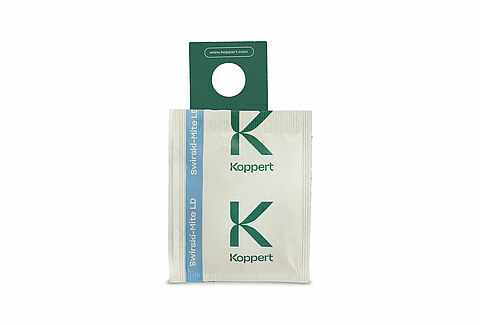
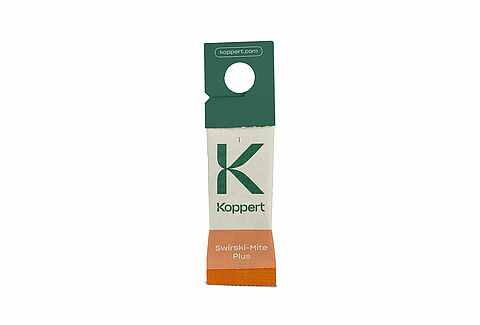
- Predatory mites such as Amblyseius swirskii (Swirski-Mite, Swirski-Mite LD, Swirski-Mite Plus, Swirski Ulti-Mite), Amblydromalus limonicus (Limonica), and Amblyseius andersoni (Anso-Mite, Anso-Mite Plus) play a crucial role by actively preying on whitefly eggs and larvae. Amblyseius swirskii targets whitefly eggs and larvae, while Amblydromalus limonicus is effective in low-temperature and high-density conditions. Amblyseius andersoni, known for its cold tolerance, controls whitefly populations by preying on their eggs and larvae.
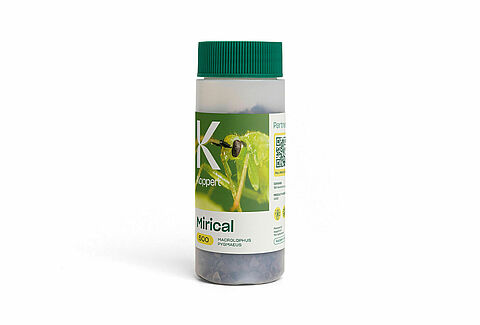
- Predatory bugs, especially Macrolophus pygmaeus (Mirical), are generalist predators with a preference for whiteflies, offering effective control in tomato crops.
- Beneficial microorganisms like Lecanicillium muscarium (Mycotal) provide an eco-friendly solution, infecting and parasitizing whiteflies without the need for chemical pesticides.
These integrated approaches emphasize Koppert's commitment to sustainable whitefly management in agriculture and horticulture.