



Skip to content

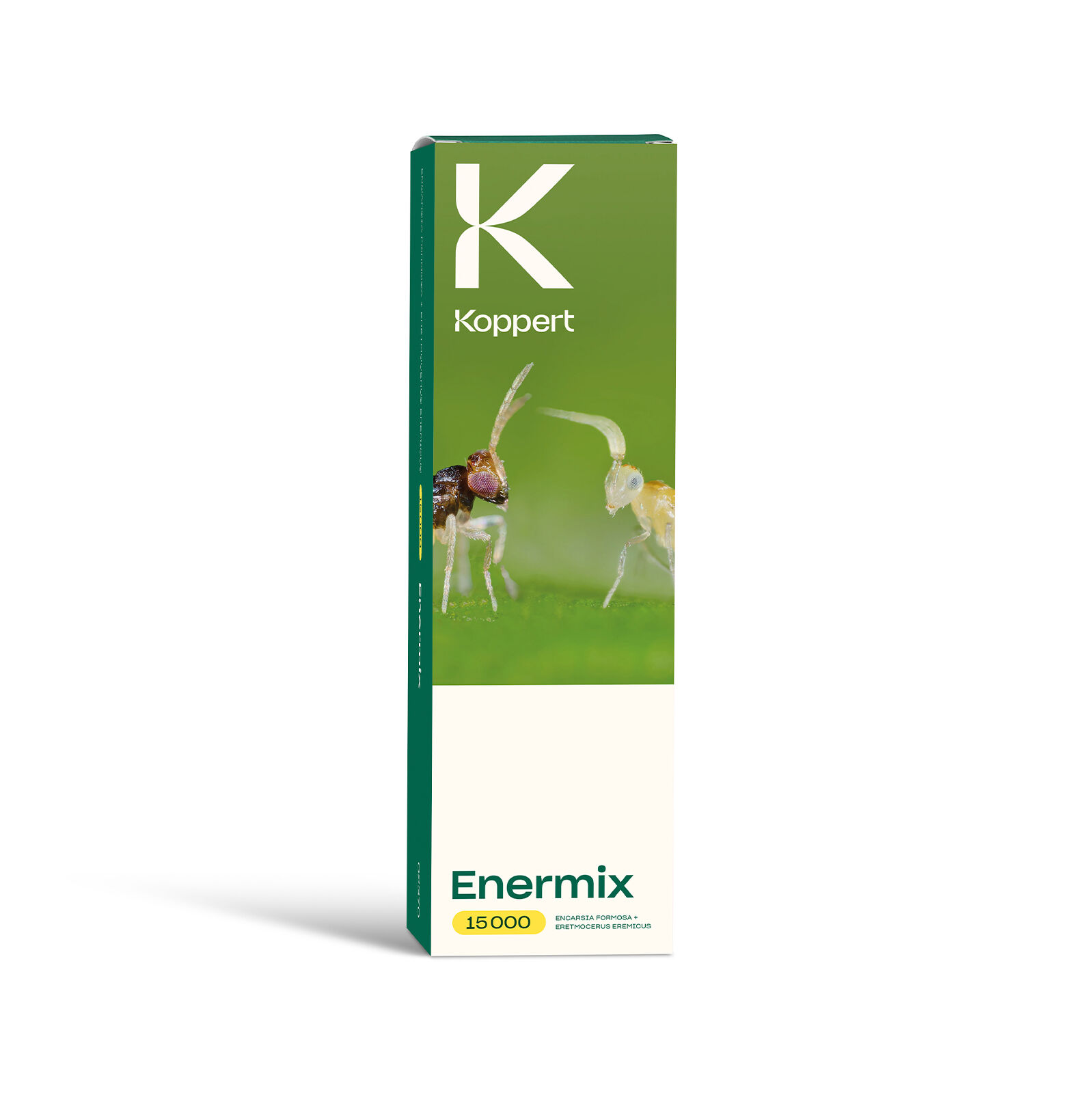
Enermix

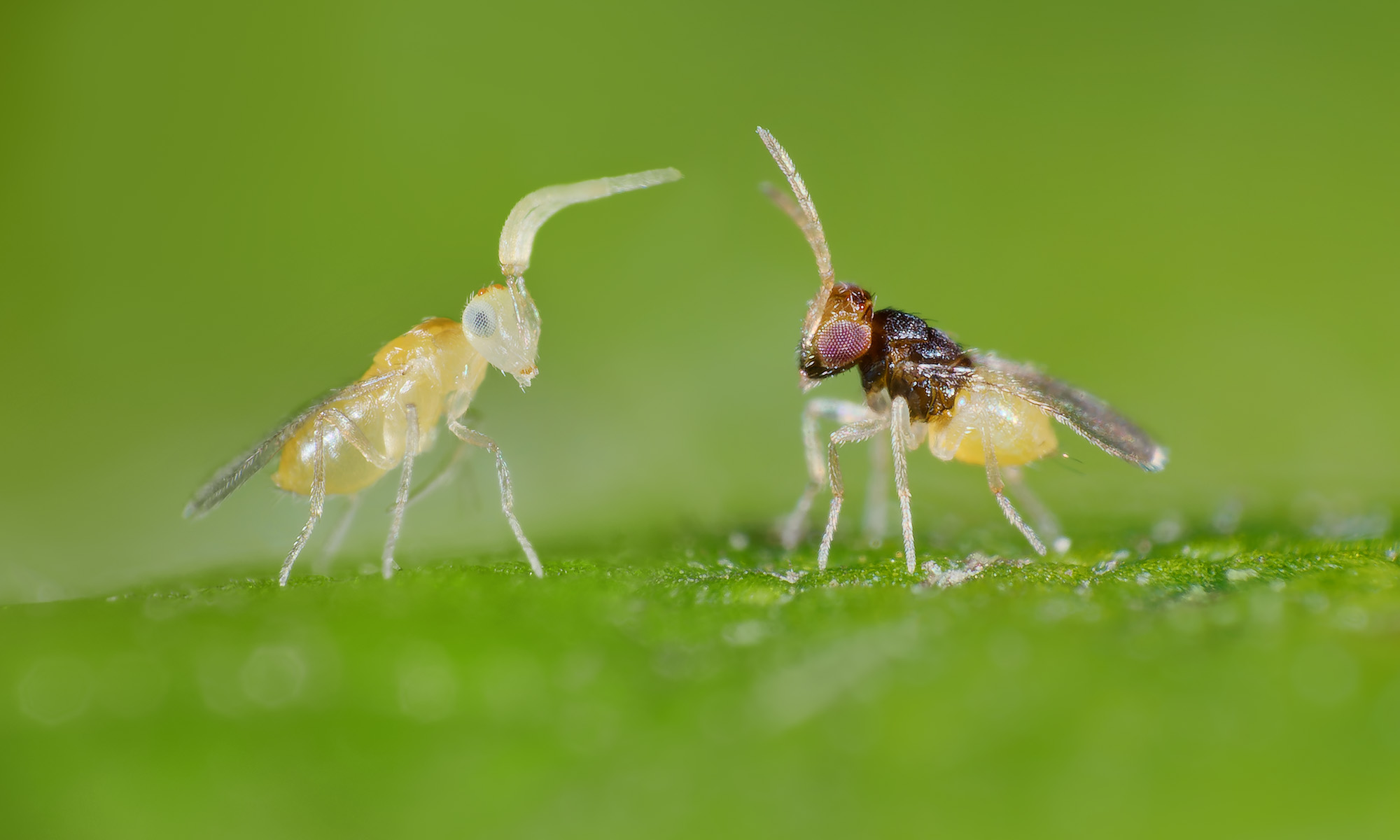
  • Eretmocerus eremicus, Encarsia formosa
  • Parasitic wasps
Testimonials
Downloads

Use for:

  • Whiteflies
  • For the control of greenhouse whitefly and tobacco whitefly

  • Can be used at fluctuating temperatures

  • Can be used preventively or at first signs of pest presence

  • Jump to:
  • Use for
  • Product details
  • Directions for use

Use for

Pests

Greenhouse whitefly (Trialeurodes vaporariorum); Tobacco whitefly (Bemisia tabaci).

"The general conditions of Koppert (Koppert B.V. and/or of its affiliated companies) apply. Only use products that are permitted in your country/state and crop. Always comply with the conditions specified in local product registrations. Koppert cannot be held liable for unauthorized use. Koppert is not liable for any loss of quality if the product is stored for longer than recommended and/or under incorrect conditions."

Product details

Mode of action

Adult female parasitic wasps parasitize second to fourth stage larvae of the whitefly. Host feeding also takes place.

Visual effect

Trialeurodes vaporariorum pupae parasitized by Encarsia formosa turn black, Bemisia tabaci pupae become brownish. Whitefly pupae parasitized by Eretmocerus eremicus turn yellow, the adult parasitoid wasp can be seen clearly within the parasitized whitefly pupae shortly before it emerges.

Product specifications

Pack size 3,000; 15,000 pupae.
Presentation Cardboard strips with 5 cards each, wrapped in plastic, in a cardboard box, each card holds 60 parasitized whitefly pupae, 30 E. formosa and 30 E. eremicus.
Carrier None.

Directions for use

Application

  • Open package carefully inside the greenhouse
  • Bend and tear off the strips opposite to the mounting hole
  • Make sure not to touch the pupae during handling
  • Suspend the cards in the crop, if possible approximately 75 cm under the plant head
  • Avoid hanging cards at places exposed to direct sunlight

Dosage

The dosage of Enermix depends on climate, crop and whitefly density and should always be adjusted to the particular situation. Start introduction preventively soon after planting of the crop. Introduction rates typically range from 1-10 per m2/release. Releases should be repeated at least 3 times at weekly intervals or until control is achieved. Depending on the specific situation, it may be better to switch to the use of En-strip or Ercal. Consult a Koppert advisor or a recognized distributor of Koppert products for advice on the best strategy for your situation.

Environmental conditions

Encarsia formosa is most effective at temperatures between 20°C and 25°C (68 and 77°F). At a 24 hours average temperature below 17°C/63°F the control of whiteflies may be insufficient. For optimal performance of Eretmocerus eremicus the 24 hour average greenhouse temperature needs to be at least 20°C/68°F. Eretmocerus eremicus is still active at temperatures above 30°C/86°F.

Combined use

Enermix is best to be used in combination with generalist predatory mites (Amblyseius andersoni, Amblyseius swirskii, Neoseiulus cucumeris or Amblydromalus limonicus) or, in tomato, with predatory mirid bugs (Macrolophus pygmaeus or Nesidiocoris tenuis).

Storage time after receipt

Apply as soon as possible after receipt. If necessary, the product can be stored for 1-2 days.

Storage temperature

8-10°C/47-50°F.

Storage conditions

In the dark.

Need help?