
Skip to content
  • Jump to:
  • Downloads
  • Identification
  • Damage
  • Life cycle
  • Management

Why is the green leafhopper a critical threat to viticulture?

Jacobiasca lybica (formerly Empoasca lybica) is a highly mobile sap-feeding leafhopper that poses a growing threat to vineyards. This leafhopper is also known as the cotton jassid, cotton leafhopper, green leafhopper, or burning grape leafhopper. It pierces mesophyll cells and extracts sap, reducing photosynthetic capacity and causing symptoms such as stippling, yellowing, leaf edge burn ("hopperburn"), leaf curling, premature leaf drop, and canopy thinning, effects that reduce fruit set, berry size, ripening uniformity and overall yield and quality. Eggs are inserted into plant tissue; several nymphal instars and mobile adults produce multiple, temperature-driven, overlapping generations each season.

Integrating biological leafhopper control solutions into an IPM strategy helps growers suppress populations before economic damage occurs.

  Biological solutions for Green leafhopper  

Filters:
Clear all filters
Show all Show less
products found:

Questions or need help?

Contact us
  • Easy to use
  • Minimal resistance
  • No chemical residues
  • No pre-harvest intervals

Learn more about

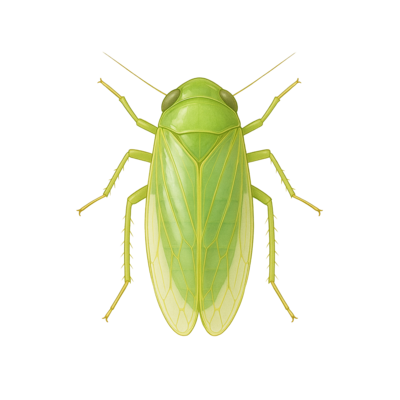
Identification of Jacobiasca lybica

Accurate identification of Jacobiasca lybica leafhoppers is important because it closely resembles other leafhopper species, particularly the smaller green leafhopper (Empoasca vitis), which occurs in many of the same growing regions and crops.

Adult leafhoppers:

  • Size: 3–4 mm long
  • Shape: slender, wedge-shaped
  • Color: light green to yellow-green
  • Wings: fully developed, capable of flying
  • Behavior: highly mobile; jump or fly quickly when disturbed

Adults are typically found on the underside of leaves, where they feed and reproduce.

Nymphs:

  • Wingless, pale green and translucent
  • Fast-moving, characteristically move sideways when disturbed

Nymphs are usually found on the underside of leaves near feeding sites.

Damage symptoms of leafhopper Jacobiasca lybica

Both nymphs and adults of Jacobiasca lybica damage crops by feeding on leaf tissues. Using their piercing-sucking mouthparts, they puncture plant cells and extract their contents. This feeding disrupts physiological processes, reduces photosynthesis, and at high densities causes significant crop stress.

Early symptoms

  • Fine white or yellow speckling (stippling) on leaves
  • Loss of leaf shine and healthy green color
  • Reduced vigor of young shoots
  • Localized discoloration along leaf veins

These symptoms first appear on older leaves where feeding is concentrated.

Advanced symptoms

  • Yellowing of leaf margins
  • Browning or scorching of leaf edges ("hopperburn")
  • Downward curling of leaves
  • Premature leaf aging and senescence
  • Leaf drop in severe infestations
  • Reduced canopy development

In grapes, the characteristic leaf margin scorch (hopperburn) has led to the common name burning grape leafhopper.

Life cycle of Jacobiasca lybica

Jacobiasca lybica leafhoppers develop through three stages: egg, nymph, and adult. Under favorable conditions, multiple generations can occur during a single growing season, allowing populations to build up rapidly.

Egg

Females lay their eggs inside leaf tissue, where they are protected from environmental conditions and natural enemies. The eggs hatch after several days, depending on temperature.

Nymph

Nymphs pass through five instars, they feed on the underside of the leaves, and their development speed depends on temperature and host quality.

Adult

Adults actively feed, disperse, and reproduce. Their ability to move between plants and fields enables infestations to spread quickly.

Population development

Warm temperatures favor rapid development and reproduction; multiple, overlapping generations are common. Rapid population growth makes regular monitoring and early, threshold-based intervention essential to prevent economic damage.

Management of Jacobiasca lybica

Suppressing populations before economic damage occurs requires combining cultural vineyard care with structured monitoring thresholds.

Cultural practices

  • Maintain weed control strips between rows to eliminate alternative reproduction hosts.
  • Carefully manage irrigation and nutrition to avoid excessive succulent vegetative growth which attracts feeding adults.

Monitoring

  • Field scouting: Inspect leaf undersides visually early in the season and use yellow sticky traps

Biological control of leafhopper Jacobiasca lybica

Early intervention is key to preventing Jacobiasca lybica populations from reaching damaging levels. Biological control can be integrated into an IPM program to suppress leafhopper populations while preserving beneficial insects and supporting sustainable crop production.

Need help?