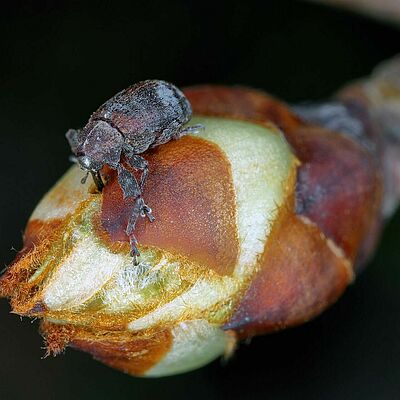
What is pear blossom weevil?
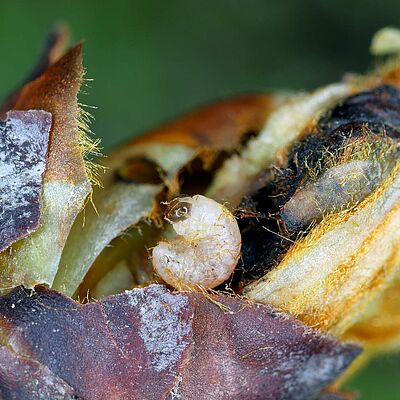
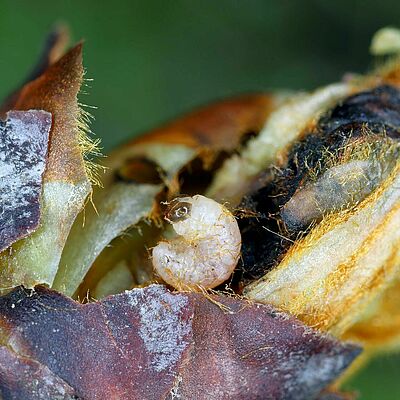
The pear blossom weevil (Anthonomus piri) is a destructive pest of pear orchards. Adult weevils emerge from summer dormancy in autumn to lay eggs inside developing flower buds. The larvae feed within the buds over the winter and spring, preventing blossoms from opening and reducing fruit sets. Heavy infestations can significantly affect yield, particularly in orchards with high pest pressure.
- Easy to use
- Minimal resistance
- No chemical residues
- No pre-harvest intervals
Learn more about
Life cycle of pear blossom weevil
Overwintering
Unlike many other weevil species, pear blossom weevil overwinters as an egg or young larva inside unopened flower buds, where it remains protected until spring.
Spring activity
As temperatures rise in spring, the overwintering larvae resume feeding inside the flower buds, destroying the developing floral tissues. No egg laying occurs during this stage.
Development
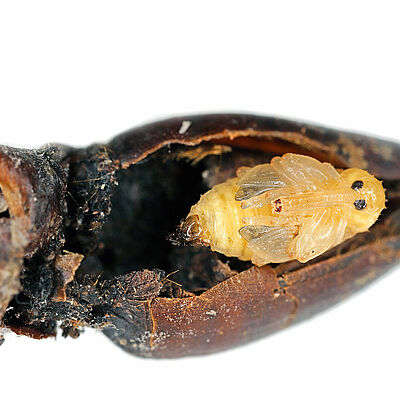
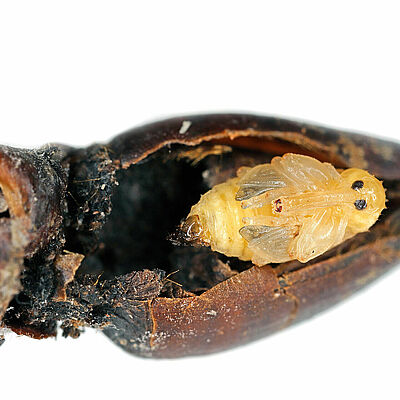
Larvae complete their development entirely within the flower buds before pupating. New adults emerge in late spring to early summer (May–June), feed on foliage, and then enter a summer diapause in sheltered locations such as beneath loose bark or in leaf litter.
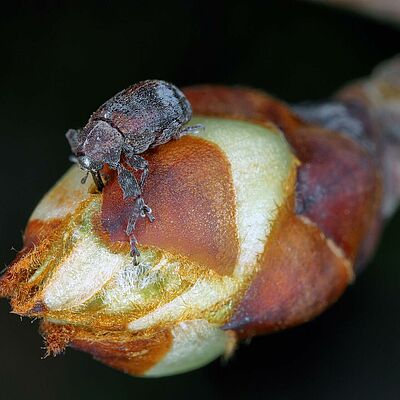
Management of pear blossom weevil
Effective control of pear blossom weevil requires an integrated approach combining cultural practices, monitoring, and timely interventions during vulnerable autumn adult activity period before eggs are laid.
Cultural practices
Reduce overwintering populations by removing sheltered overwintering sites.
- Remove loose bark and debris: Strip loose or peeling bark from trunks and main branches in late summer to reduce overwintering sites.
- Sanitation: Remove fallen leaves and other plant debris. Maintain clean buffer zones around the orchards.
- Prune damaged wood: Remove and destroy twigs with capped or dried blossoms in early spring to reduce pest pressure.
Monitoring pear blossom weevil
Regular monitoring in late summer and autumn is essential for early detection and timely interventions. Inspect orchards for:
- Adult weevils on branches
- Feeding punctures on swelling buds in autumn
- Brown, dried flower buds in spring
- Areas with reduced blossom development
Early monitoring in autumn is essential to assess pest pressure before flowering.
Biological control of pear blossom weevil
Biological control gives growers a practical way to reduce pear blossom weevil pressure by using natural enemies. Beneficial nematodes can be applied to the foliage to target the pest during its vulnerable stages. Once applied, these nematodes actively seek out and infect the weevil larvae, helping to bring populations down in a sustainable way.