Lifecycle and appearance of the may beetle
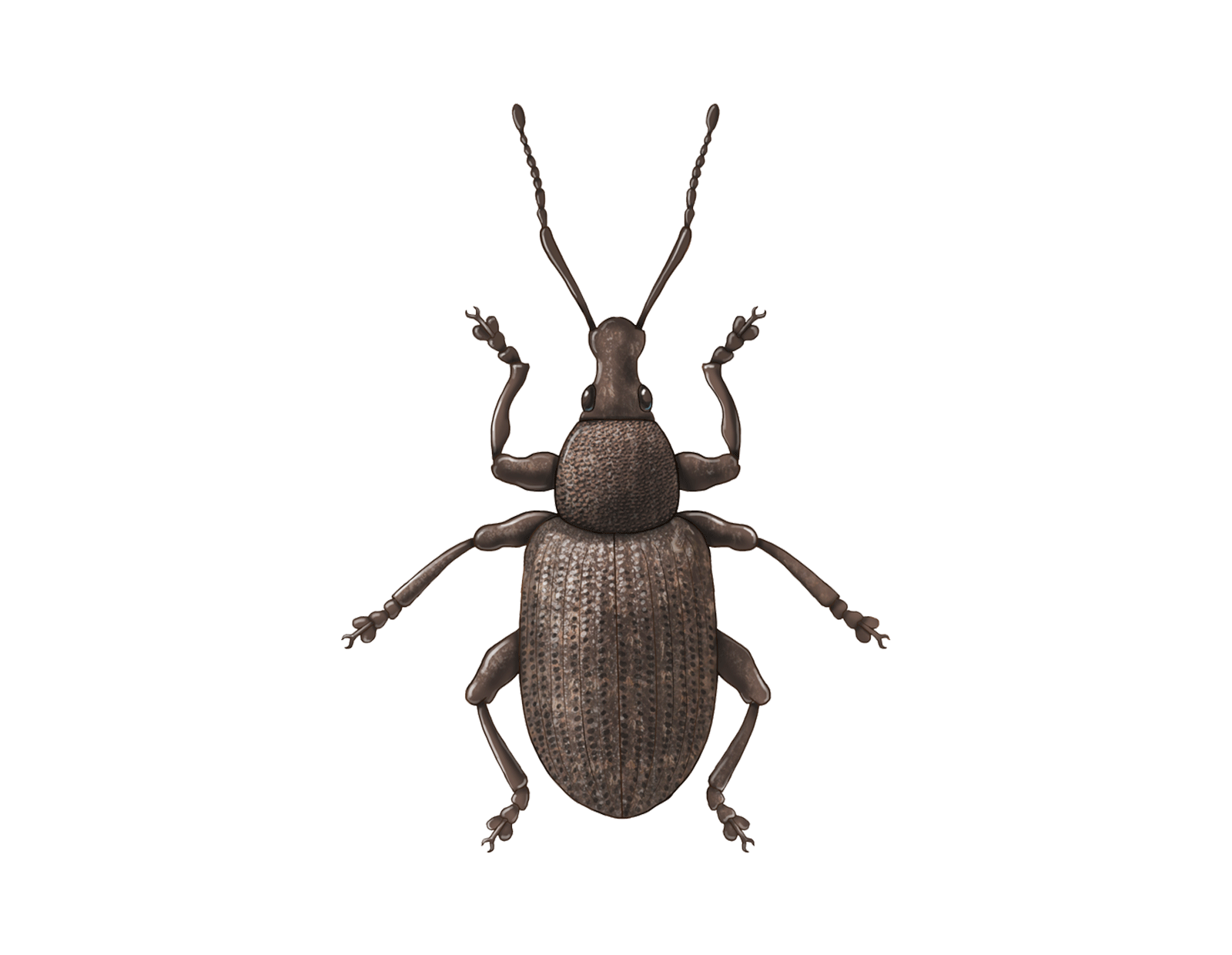
The adults belonging to the majority of Phyllophaga species are very similar in terms of their external appearance. In short, the adults have a reddish-brown colour and grow to approximately 10 to 25 cm in size, depending on the particular species.
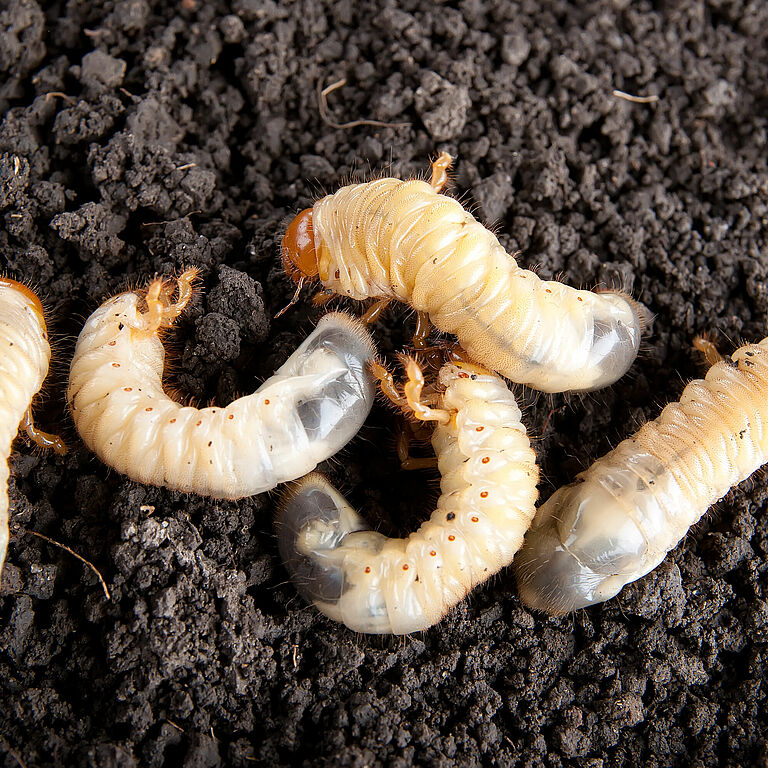
Just like the adults, the Phyllophaga larvae or grubs look similar, with their key features being a whitish, milky-coloured body and reddish-brown head, measuring approximately 5 to 7 cm in length. To differentiate between species, an examination of the position of the setae in their final abdominal segment is needed, although this is not a method which works for all species. They can best be identified based on examination of the male genitalia.
They have a very long lifecycle, lasting between one and three years. This cycle starts with the deposition of eggs in the ground, close to plant roots. The larvae eat throughout the summer and migrate deep into the soil in autumn. In cold climates they overwinter as larvae and continue their larval development the next spring. While the younger larvae are relatively harmless, the older larvae are the most aggressive. In early spring they either start feeding again or when the larvae are fully grown a kind of earthern cell is created in the ground in which they pupate. The adult beetles emerge a few weeks later but remain in the soil until the temperature is high enough to emerge. Finally, when the rains arrive, the adults are encouraged to emerge in order to copulate and consequently lay eggs, restarting the cycle again.