Skip to content
  • Jump to:
  • Downloads
  • Damage
  • Life cycle
  • Management

What is Esca disease?

Esca is a complex grapevine trunk disease caused by a group of fungi rather than a single organism. Early infections are mainly caused by Phaeomoniella chlamydospora and various Phaeoacremonium species (often P. minimum), which colonize the vine's wood and cause internal tissue damage. Later, other fungi, particularly Fomitiporia species, further degrade the wood and cause extensive white rot.

Esca can appear in different forms, ranging from stunting, poor rooting, and trunk necrosis in nursery or young vines to characteristic "tiger-stripe" leaf symptoms, berry spotting, and occasional sudden vine collapse in older vines. Because these fungi become established within the vine's permanent wood and cause irreversible damage, infected vines cannot be cured. As a result, prevention and long-term integrated management are the most effective strategies for commercial vineyards.

Learn more about

Esca disease damage symptoms
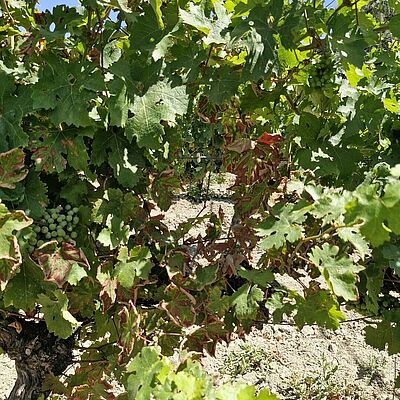
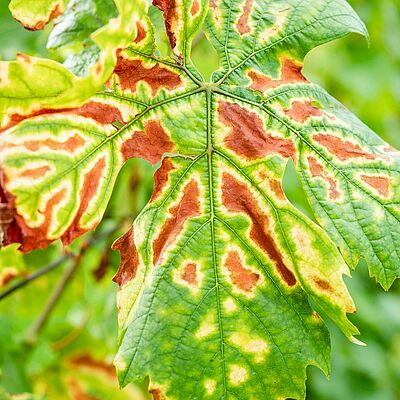
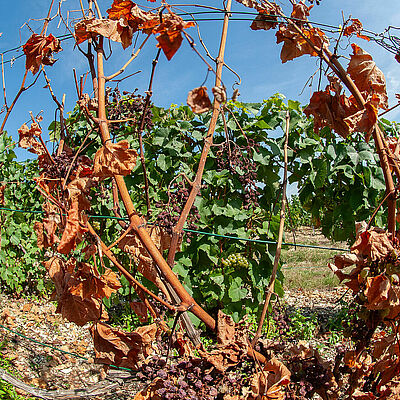
Esca symptoms are most visible on mature grapevines and affect both the foliage and the internal wood. Symptom expression is often intermittent, appearing in some years but not others, and may be limited to individual shoots, sections of the canopy, or the entire vine. The severity and distribution of symptoms are influenced by several factors, including vine age, grape variety, environmental stress such as heat and drought, and the extent and location of fungal colonization within the wood.

Leaf and canopy symptoms

  • Interveinal chlorosis and necrosis: Yellow-brown discoloration develops between the leaf veins of white grape varieties, while red varieties show red-brown to bronze necrotic areas.
  • "Tiger-stripe" pattern: Leaves develop the characteristic striped pattern associated with Esca disease.
  • Leaf margin necrosis and desiccation: Leaf edges become brown, dry out, and may eventually die.
  • Premature leaf drop: Severely affected leaves may fall before the end of the growing season.
  • Berry symptoms (occasional): Berries on symptomatic shoots may develop spots, shrivel, or ripen unevenly.

Wood symptoms

  • Internal wood necrosis: Brown to black streaks and dead tissue develop inside the trunk, cordons, or branches. These symptoms are typically visible when pruning cuts expose the wood or when bark is removed.
  • White rot: In advanced stages, the wood becomes soft, light-colored, and spongy as decay progresses within the vine.
  • Vascular dysfunction: Damage to the vine's internal tissues restricts the movement of water and nutrients, leading to reduced vigor, stunted growth, and lower yields.
  • Localized wood damage: Internal symptoms are often confined to specific sections of the trunk or cordon and may correspond to shoots showing leaf symptoms.
  • Vine decline and collapse: Severely affected vines may suddenly wilt and collapse during periods of heat and drought (apoplexy). More commonly, vines show a gradual decline in vigor, productivity, and lifespan over multiple growing seasons.

Life cycle of Esca disease

Esca-associated fungi primarily enter grapevines through pruning wounds, graft unions, and bark injuries. Sources of infection include infected vineyard wood, pruning debris, and contaminated planting material.

Dispersal

  • Local spread: Fungi can spread over short distances through rain splash and contaminated pruning tools.
  • Long-distance spread: The disease is most commonly introduced through infected propagation material. In some cases, fungal spores produced on decaying wood can be carried by wind and contribute to disease spread.

Infection and colonization

Fresh pruning wounds and other injuries provide entry points for Esca-associated fungi. Once inside the vine, the fungi colonize the wood and may remain undetected for years while gradually damaging internal tissues and reducing the vine's ability to transport water and nutrients. As the disease progresses, wood-decaying fungi can further break down the wood, leading to extensive white rot.

Advanced stages and decline

As internal damage accumulates, vines may show reduced vigor, shoot dieback, declining productivity, and progressive canopy deterioration. In severe cases, vines can suddenly wilt and collapse (apoplexy), particularly during periods of environmental stress. Because the fungi persist within the vine's permanent wood, established infections cannot be cured. As a result, prevention, wound protection, and vineyard sanitation are essential components of Esca management.

Management of Esca disease

Effective Esca management focuses on prevention, as infected vines cannot be cured. An integrated approach that combines sanitation, wound protection, cultural practices, and the use of healthy planting material can help reduce disease incidence and limit its impact.

Integrated measures

Sanitation and exclusion

Reducing sources of infection is essential for limiting the spread of Esca-associated fungi.

  • Use certified disease-free planting material to prevent the introduction of pathogens into new vineyards.
  • Remove severely affected vines that no longer remain productive.
  • Remove and destroy pruning debris promptly to reduce potential sources of fungal inoculum.

Pruning practices and wound protection

  • Prune during dry weather whenever possible to reduce the risk of infection.
  • Protect pruning wounds immediately after pruning using appropriate wound protectants.

Cultural practices and vine health

  • Avoid unnecessary trunk and cordon injuries during vineyard operations.
  • Manage vine vigor and crop load to maintain balanced growth and reduce susceptibility to disease.
  • Provide balanced nutrition and irrigation to minimize plant stress and help reduce the severity of Esca symptoms.

Biological solutions for Esca disease

Trianum contains the beneficial fungus Trichoderma harzianum T-22, which colonizes the root zone and supports healthy root development and plant resilience. By establishing around the root system, Trianum helps create favorable conditions for healthy vine growth and supports the plant's natural ability to cope with stress.

Need help?