Black rot damage symptoms
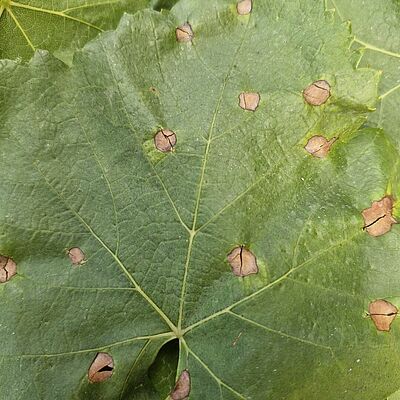
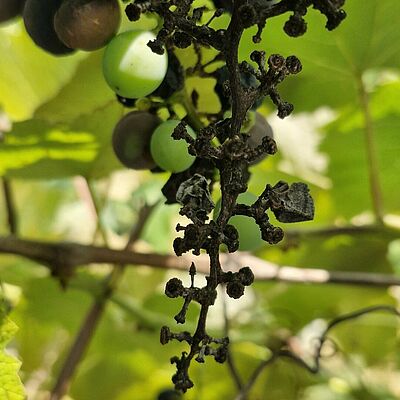
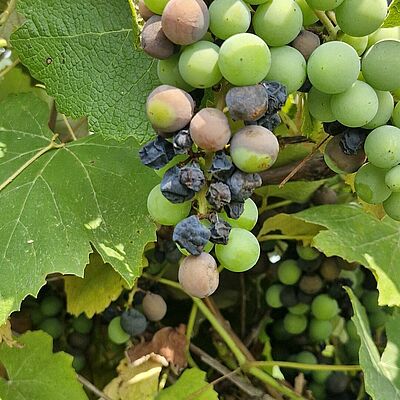
Black rot symptoms can appear on all green, expanding tissues of the grapevine. Recognizing symptoms early in the growing season is critical for timely management interventions.
Leaves
Leaf infections are typically the first visible indicators of black rot, appearing roughly 10 to 14 days post infection.
- Initial stages: Symptoms show up as small, circular, tan or cream-colored spots that typically measure 2 to 10 mm in diameter.
- Margins: As lesions develop, they become surrounded by a distinct dark reddish-brown margin.
- Pycnidia formation: Within the older central parts of these lesions, tiny black fruiting bodies (pycnidia) become visible, often arranged in a black ring or cluster.
Shoots, leaf stalks and tendrils
Infected shoots, leaf stalks, and tendrils may develop the following symptoms:
- Elongated cankers: Sunken, dark brown to black lesions form on affected tissues.
- Discoloration and girdling: Lesions may completely encircle leaf stalks or stems, restricting water and nutrient transport. This can weaken plant tissues, cause shoot dieback, and increase the risk of stem breakage.
Berries and fruit infections
While leaf spots serve as an early warning sign, fruit symptoms typically result from infections that occur between flowering (anthesis) and bunch closure.
- Early symptoms: Small, localized, light-brown spots appear on developing green berries.
- Concentric expansion: Lesions enlarge rapidly, spreading concentrically until the entire berry is affected within a few days.
- Mummification: Infected berries turn dark brown to black, shrivel, and become hard, wrinkled "mummies" covered with spore-producing pycnidia. These mummified berries often remain attached to the grape cluster.
- Late-season infections: Berries infected later in the season may not fully mummify. Instead, they develop fruit rot on the vine, reducing fruit quality and marketability.
The black, dried mummified berries left hanging in the trellis or dropped are the primary overwintering structures for the pathogen.