

Skip to content

Crop protection in raspberry cultivation

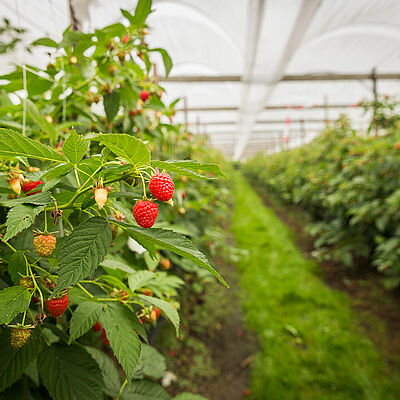
Growing healthy, productive raspberry crops requires effective pest and disease management throughout the growing season. Commercial raspberry growers manage pests and diseases such as spider mites, aphids, thrips, raspberry beetles, spotted wing drosophila (Drosophila suzukii), powdery mildew, Botrytis, Phytophthora, and cane diseases, while meeting strict residue standards and increasing sustainability expectations.

Koppert supports professional raspberry growers with biological crop protection solutions and Integrated Pest Management (IPM) strategies that strengthen crop resilience, improve plant health, and promote consistent, high-quality raspberry production. By combining monitoring, prevention, and biological control, growers can reduce reliance on conventional crop protection products, minimise pesticide residues, prevent resistance buildup, and build a more sustainable and future-proof raspberry production system.

  Biological solutions for Raspberry  

Filters:
Clear all filters
Show all Show less
products found:

Questions or need help?

Contact us
  • Easy to use
  • Minimal resistance
  • No chemical residues
  • No pre-harvest intervals

Learn more about

About

The raspberry (Rubus idaeus), also referred to as red raspberry or occasionally as European raspberry to distinguish it from other raspberries, is a red-fruited species of Rubus. This particular plant species has its origins in Europe and northern Asia, but nowadays the fruit is being extensively produced in other temperate regions.

In North America, the variety Rubus idaeus var. strigosus, is usually regarded as a distinct species, namely the Rubus strigosus (American Red Raspberry). However, red-fruited cultivated raspberries, even those from North America, usually derive from Rubus idaeus or horticultural derivatives of hybrids of R. idaeus and R. strigosus.

The fruit of the raspberry plant is red, tasty and sweet but tart-flavoured. Raspberries are a seasonal fruit and produced in summer or early autumn. Botanically speaking, the raspberry is not a berry, but an aggregate fruit of numerous drupelets around a central core.
Need help?