
Damage symptoms
Grapevines:
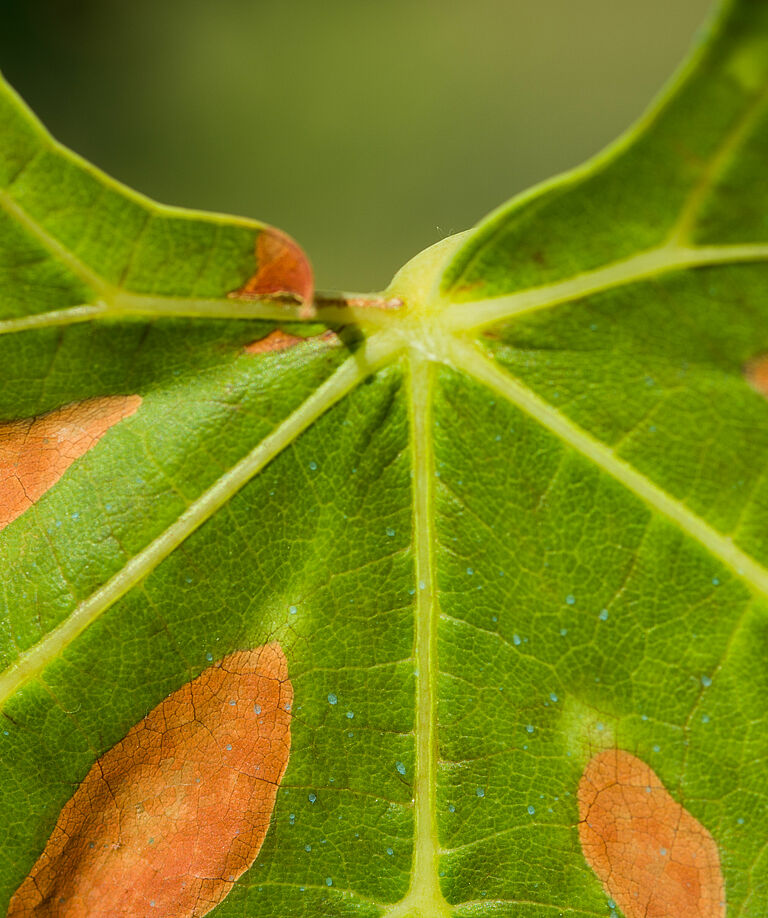
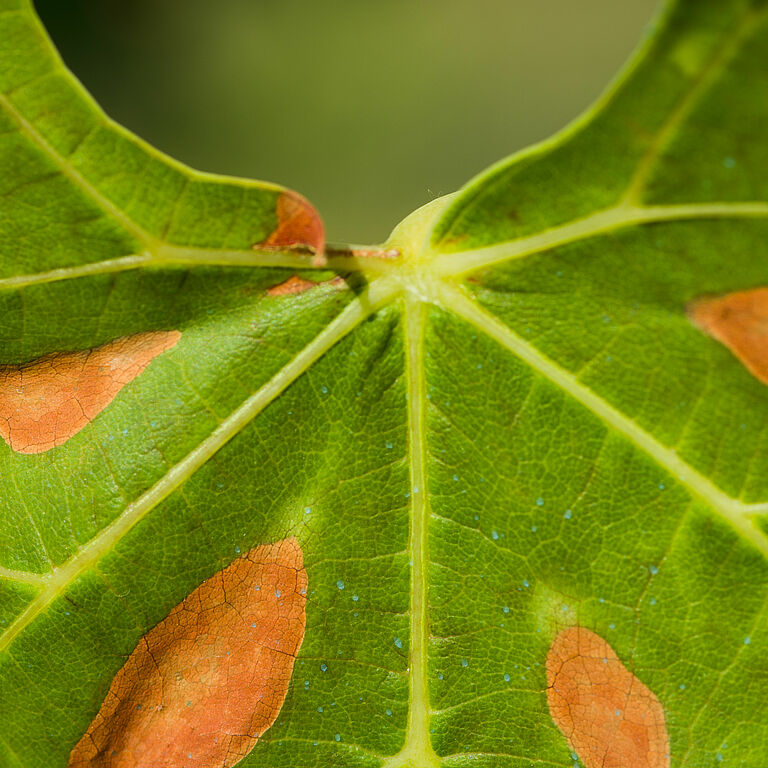
Primary infection of leaves results in leaf scorch. Part of a green leaf suddenly dies and turns brown with adjacent tissue turning yellow or red. This desiccation spreads and the whole leaf may shrivel and drop off. Infected stems show irregular maturation and patches of brown and green tissue. In the following seasons, these infected plants show a slower development and produce chlorotic shoots that are stunted. When the infection becomes chronic, the leaves become distorted with interveinal chlorosis and the shoots get shorter internodes. Infected vines eventually die. This happens faster in younger vines than in older ones and faster in susceptible cultivars (within 2-3 years) than in more tolerant cultivars, which may survive more than five years.
Stone fruit (peaches and plums):
In peach, the canopy of infected plants is compact and umbrella-like due to the shorter internodes. The foliage is denser and the leaves are a darker green than usual. Also, young infected trees show dwarfing. Leaves and flowers appear early and remain on the plant longer, but fewer and smaller fruits are produced.
In plums, the first symptoms are irregular chlorosis or browning of leaves along the margin or the tip from early to midsummer. The necrotic area spreads over the leaf from the margin and is marked by a chlorotic band. In the beginning, only a few leaves per branch are showing symptoms, but later the growth stops and the plants die, usually within a few years.
Citrus fruits:
Symptoms are variable interveinal chlorosis of the leaves, resembling zinc deficiency. Infection becomes systemic more rapidly in young trees than in older trees. In the latter, it may stay limited to certain branches. When the leaves mature, slightly raised gummy lesions occur on the underside of the leaves. These lesions start out in a light-brown colour, turning to dark-brown or necrosis. Fruits of infected trees are much smaller and their sugar content is higher. The early blossoming and fruit set in peach does not occur in citrus, there is no difference between infected and healthy trees. Normal fruit abortion does not happen so total production remains similar, with more smaller fruits in infected trees. The infected trees grow slower than normal and look stunted. Twigs and branches die and the foliage becomes thinner, but the trees don’t die of the disease.
Olives:
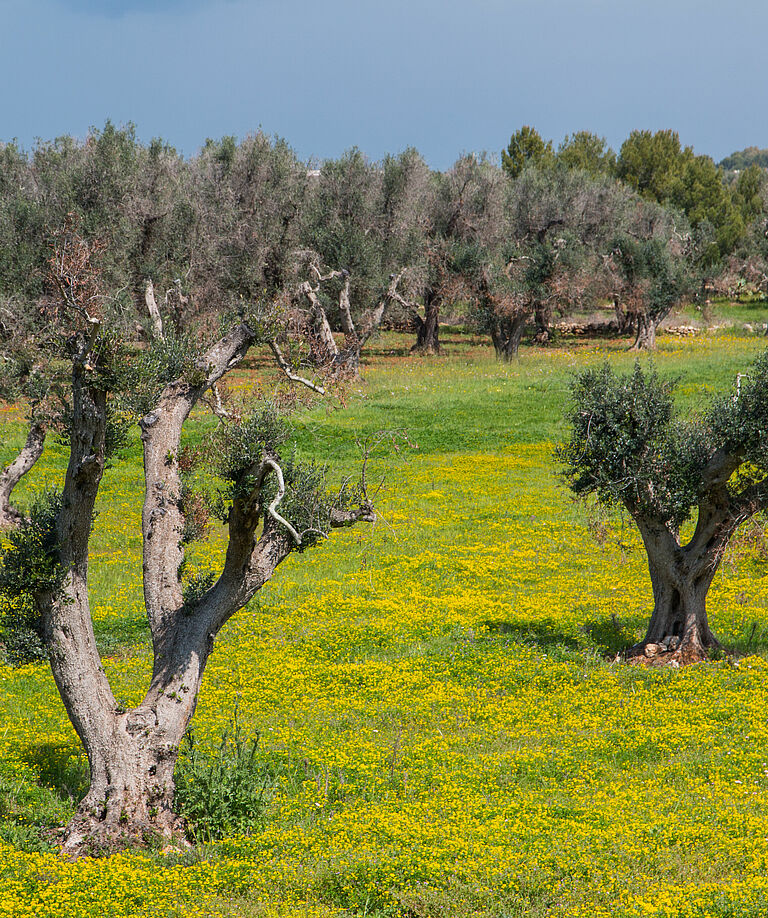
Scorch symptoms and desiccation of twigs and small branches occur on infected leaves. This usually starts in the upper part of the canopy on a few branches and then extends to the rest. Eventually, the whole root system is killed and the trees die.