
Damage symptoms
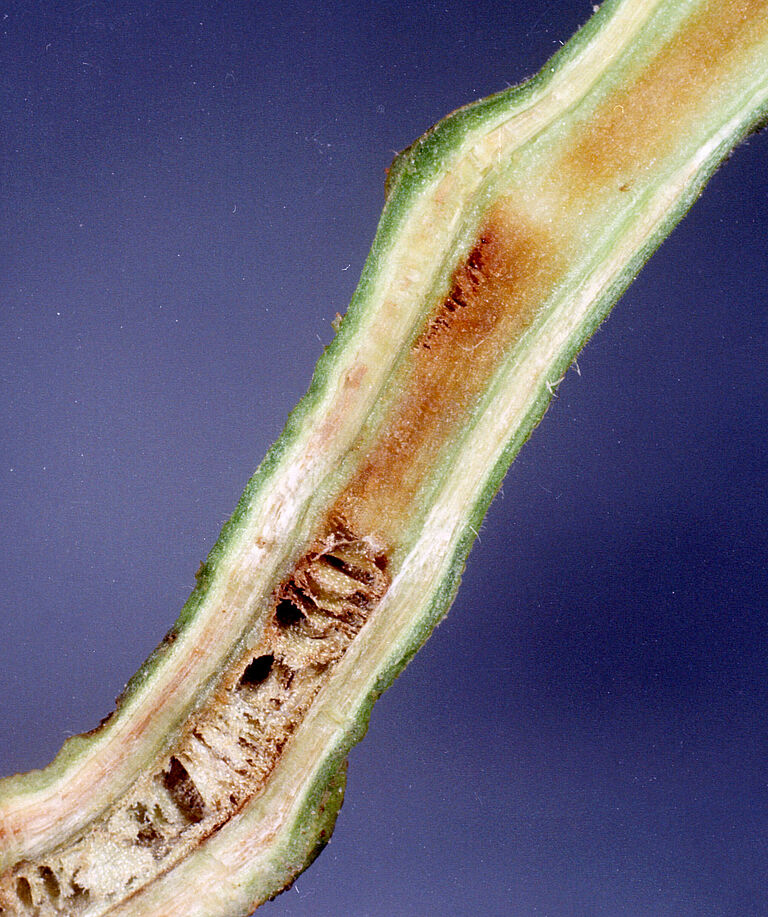
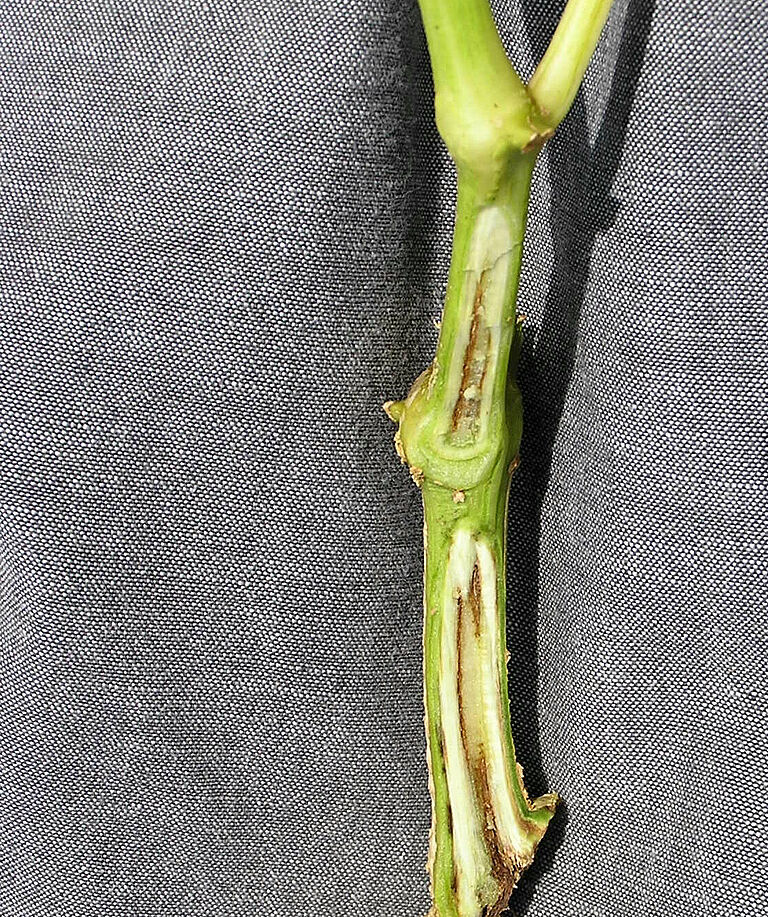
In potato, field symptoms of Ralstonia solanacearum are wilting and yellowing of leaves and stunted plants. Inside, vascular browning is common with bacterial slime oozing from the cut. When the bacteria transfers to young plants through infected tubers, the wilting and collapse of plants happens rapidly. Leaves remain green after wilting, until they are completely desiccated. Infected stems show long, dark brown streaks. The vascular tissue in the tubers becomes grey-brown and the tuber eyes also turn grey-brown. This disease can be distinguished from Clavibacter by the bacterial slime produced from wounds, which is not seen in Clavibacter-infected plants.
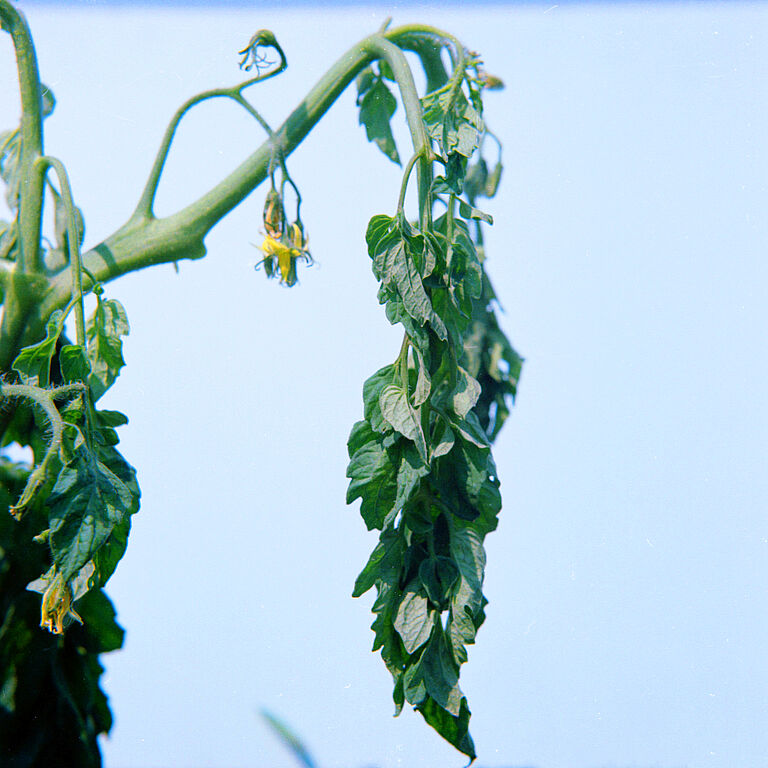
In tomato, the youngest leaves are affected first. They show signs of wilting during the day which may disappear in the early stages of infection. Under conditions favourable for the bacteria, the whole plant will wilt soon after the first symptoms appear. When conditions are less conducive for disease development, the plants may show signs of stunting and produce many adventitious roots on the stem. The vascular stem tissue is coloured brown and when the stem is cut, bacterial slime oozes from the wound. This is the way to distinguish it from Verticillium or Fusarium wilts.