Application
- Stapler/clip the egg sheet to a leaf/branch, out of direct sunlight
- Distribute evenly throughout the orchard
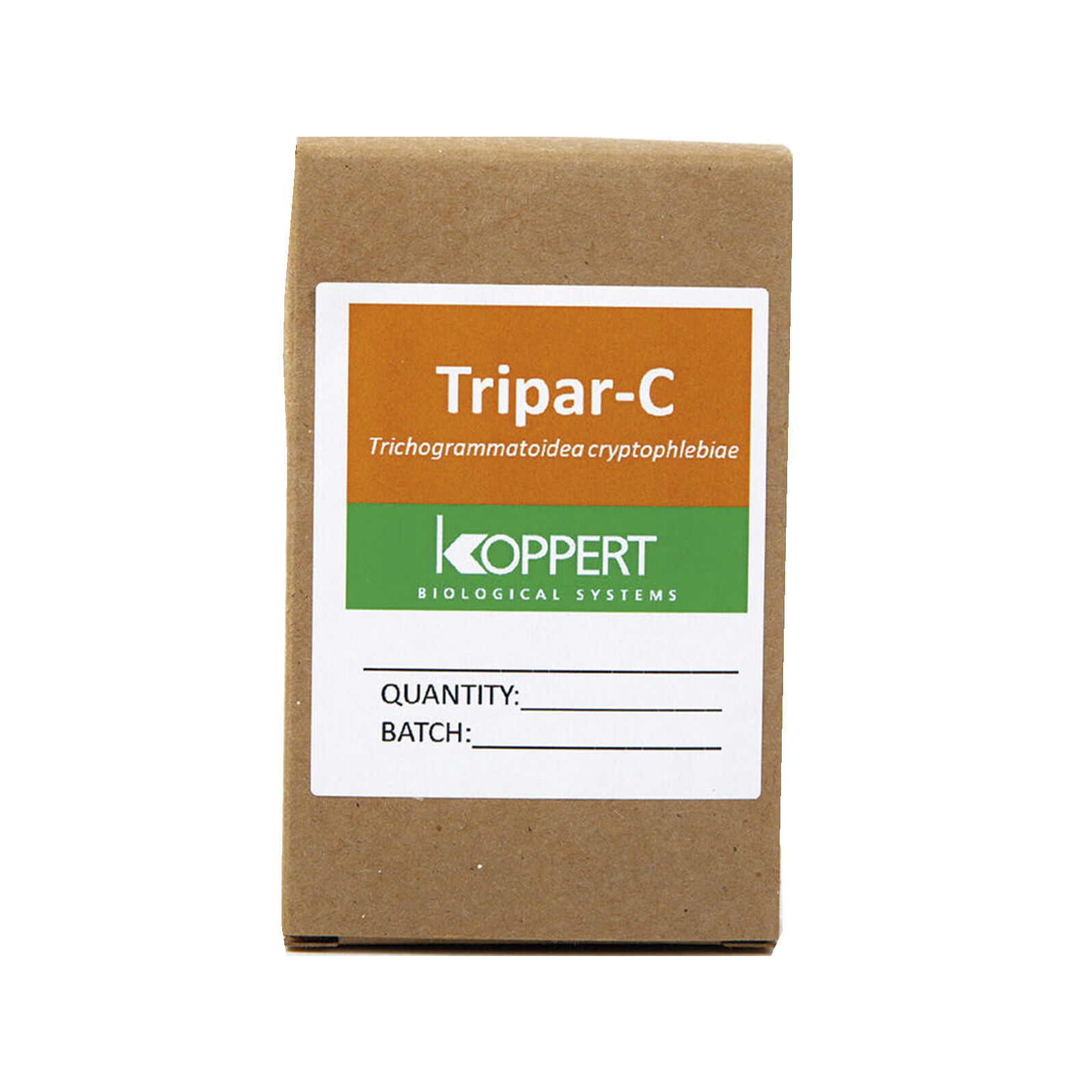
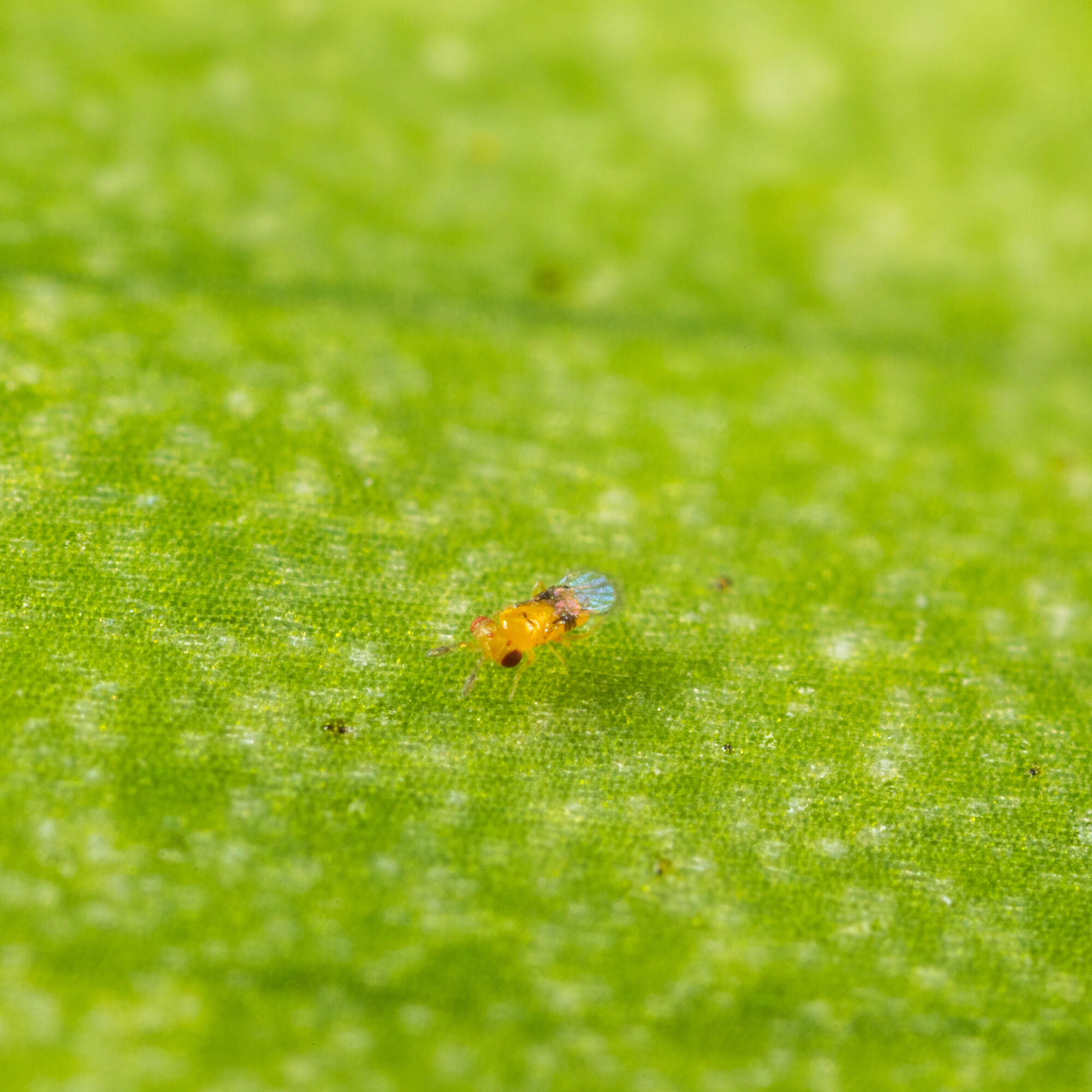
Use Tripar-C as biological control of False codling moth, Macadamia nut borer and the litchi moth.
"The general conditions of Koppert (Koppert B.V. and/or of its affiliated companies) apply. Only use products that are permitted in your country/state and crop. Always comply with the conditions specified in local product registrations. Koppert cannot be held liable for unauthorized use. Koppert is not liable for any loss of quality if the product is stored for longer than recommended and/or under incorrect conditions."
The adult Tripar-C wasps lay their eggs inside the False codling moth egg. Tripar-C larvae feed on the False codling moths’ larvae inside the egg and pupate. The moth egg changes colour from yellow to black. The newly hatched Tripar-C wasp emerges from the False codling moth egg.
The predatory wasp is most effective at temperatures around 25°C. The lowest temperature at which development can occur is 20°C and the highest temperature is 35°C.
The information given below is merely indicative. Tailored advice can be provided if information is available on the local factors that need to be taken into account, such as the crop, the climate conditions and the level of infestation. For the correct application, please consult a Koppert specialist or a recognized distributor of Koppert products.
Three to four releases (3-4 weeks apart) of 20 000 – 25 000 each.
Biological beneficials have a very short life expectancy and therefore need to be introduced into the crop as soon as possible after receipt. Failure to do so can have a negative impact on their quality. In case you do need to store Tripar-C, please follow the instructions below. Koppert SA is not liable for any loss of quality if the product is stored for longer and/or under different conditions than those recommended.
Storage after receipt: 1-2 days
Storage temperature: 10-12°C (do not refrigerate)