Skip to content

Thripor-L

  • Orius laevigatus
  • Predatory bugs
Testimonials
Downloads

Use for:

  • Thrips
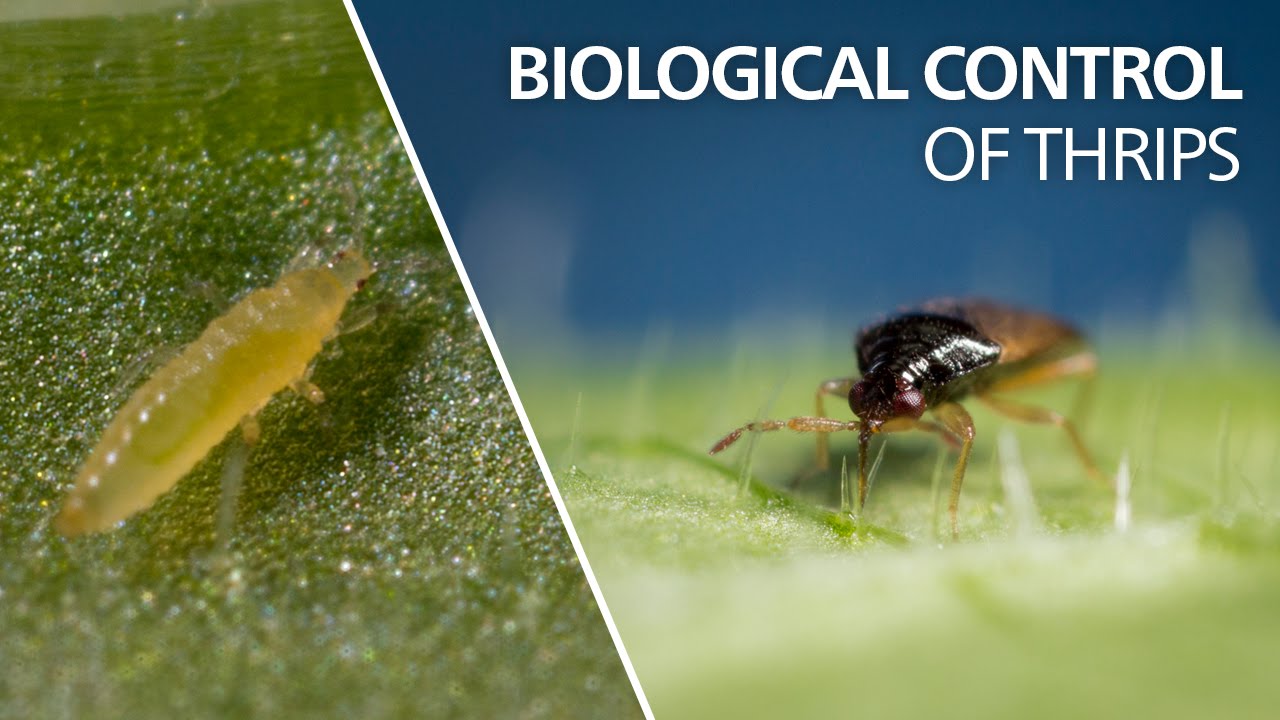
  • For the control of thrips

  • Feeds on larvae and adults.

  • Jump to:
  • Use for
  • Product details
  • Directions for use

Use for

Pests

Various species of thrips.

Crops

Do not use in tomato.

"The general conditions of Koppert (Koppert B.V. and/or of its affiliated companies) apply. Only use products that are permitted in your country/state and crop. Always comply with the conditions specified in local product registrations. Koppert cannot be held liable for unauthorized use. Koppert is not liable for any loss of quality if the product is stored for longer than recommended and/or under incorrect conditions."

Product details

Mode of action

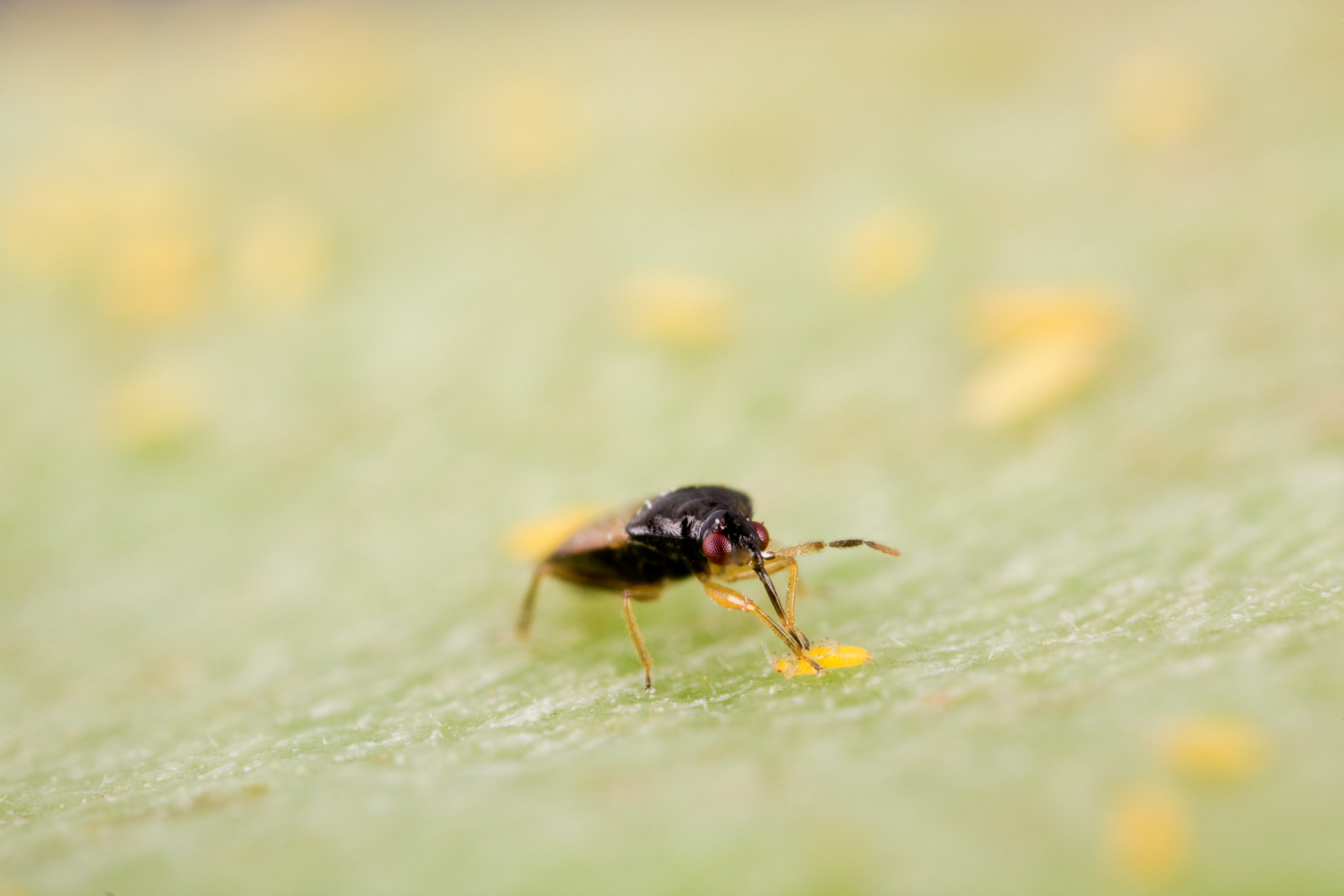
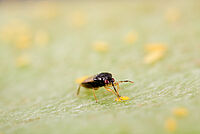
Adults and nymphs pierce thrips larvae and adults with their sucking mouthparts and suck out the contents.

Visual effect

Orius laevigatus sucks out the body contents of its prey leaving only the empty skin.

Product specifications

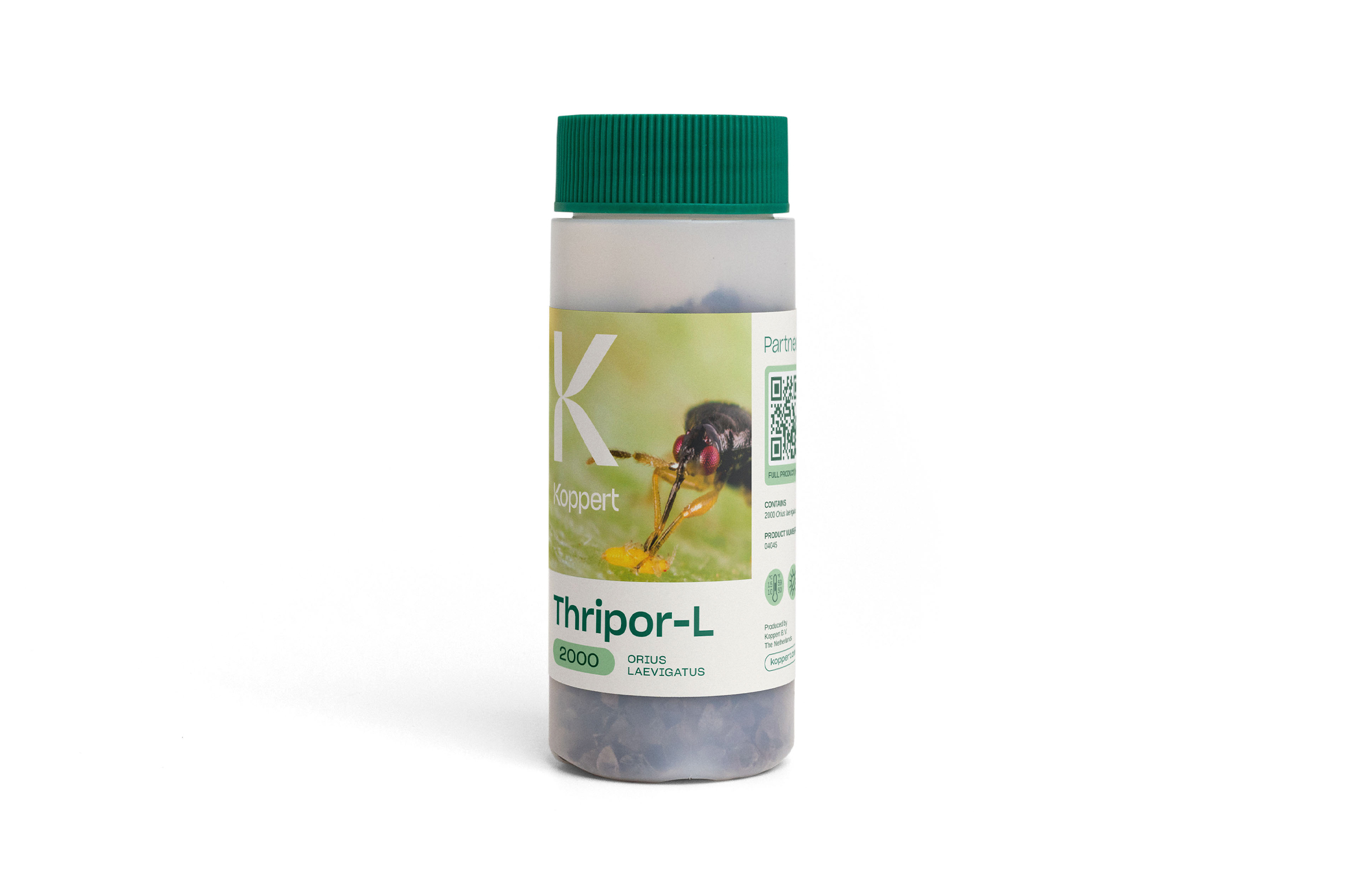
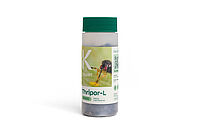
Pack size 500; 2,000 adults and nymphs.
Presentation 100 ml bottle.
Carrier Vermiculite and buckwheat hulls.

Directions for use

Application

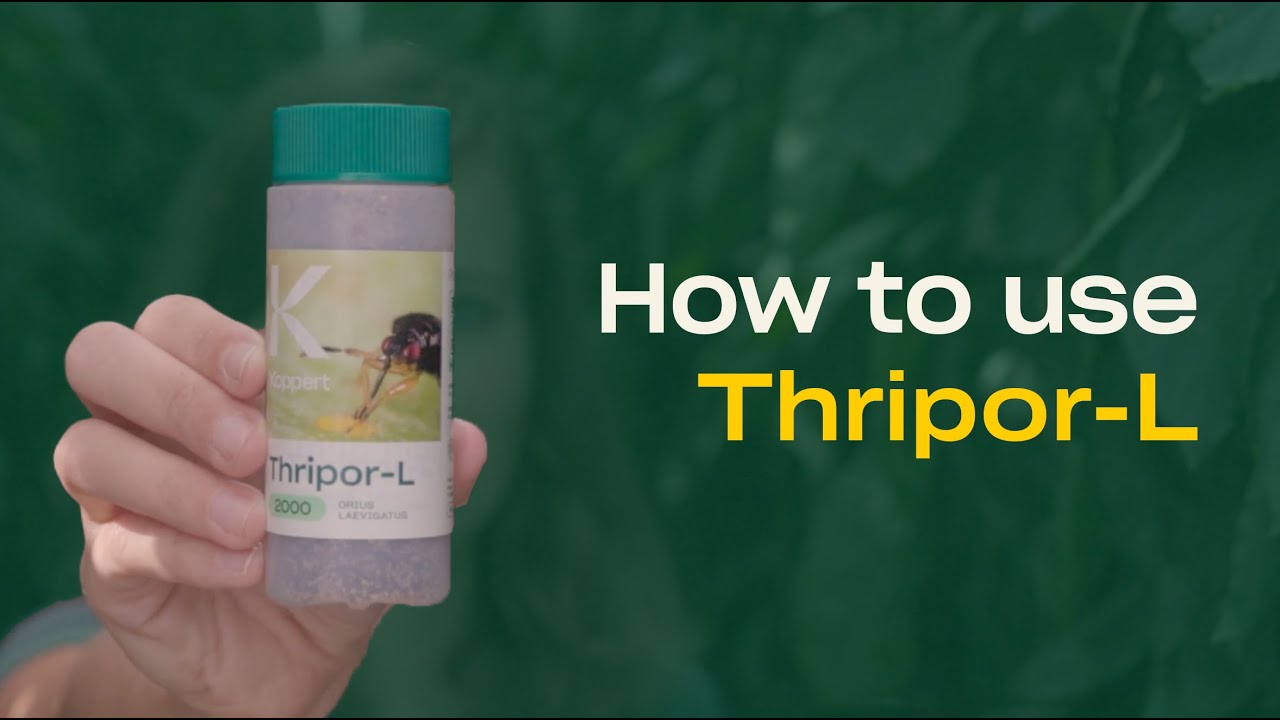
  • Shake bottle gently before use
  • Spread material on clean rock wool slabs, leaves and/or in application boxes (Dibox)
  • Apply in groups of at least 50 insects in order to establish a population and encourage mating
  • Make sure the material remains undisturbed at the introduction site for a few hours after application

Dosage

The dosage of Thripor-L depends on climate, crop and thrips density and should always be adjusted to the particular situation. Start introduction as soon as the first thrips are detected in the crop. Introduction rates typically range from 0.5-10 per m2/release. Releases should be repeated once or twice. Consult a Koppert advisor or a recognized distributor of Koppert products for advice on the best strategy for your situation.

Environmental conditions

Optimal temperatures for Thripor-L are above 20°C (68°F), lower temperatures slow down the development of Orius laevigatus significantly. Effectivity is reduced at temperatures above 30°C (86°F).

Combined use

Should be combined with generalist predatory mites.

Storage time after receipt

Apply as soon as possible after receipt. If necessary, the product can be stored for 1-2 days.

Storage temperature

10-15°C/50-59°F.

Storage conditions

In the dark, bottle horizontally.

Need help?