Application
- Do not open the box until you arrive at the release point.
- Carefully open the perforated lid of the carboard box.
- Hang the open box vertically on the plants, preferably close to flowers.
- Protect from direct sunlight or rain.
Use for:
For the control of all aphid species
Disperses well and finds aphid hotspots
All species/stages of aphids.
"The general conditions of Koppert (Koppert B.V. and/or of its affiliated companies) apply. Only use products that are permitted in your country/state and crop. Always comply with the conditions specified in local product registrations. Koppert cannot be held liable for unauthorized use. Koppert is not liable for any loss of quality if the product is stored for longer than recommended and/or under incorrect conditions."
Adult hoverflies emerge from the pupae and deposit their eggs in the aphid colonies. The young larvae start feeding on the aphids.
Aphids are consumed entirely, only skin remains. Dark excrements (meconium) on the leaves is an indicator of hoverfly larvae activity.
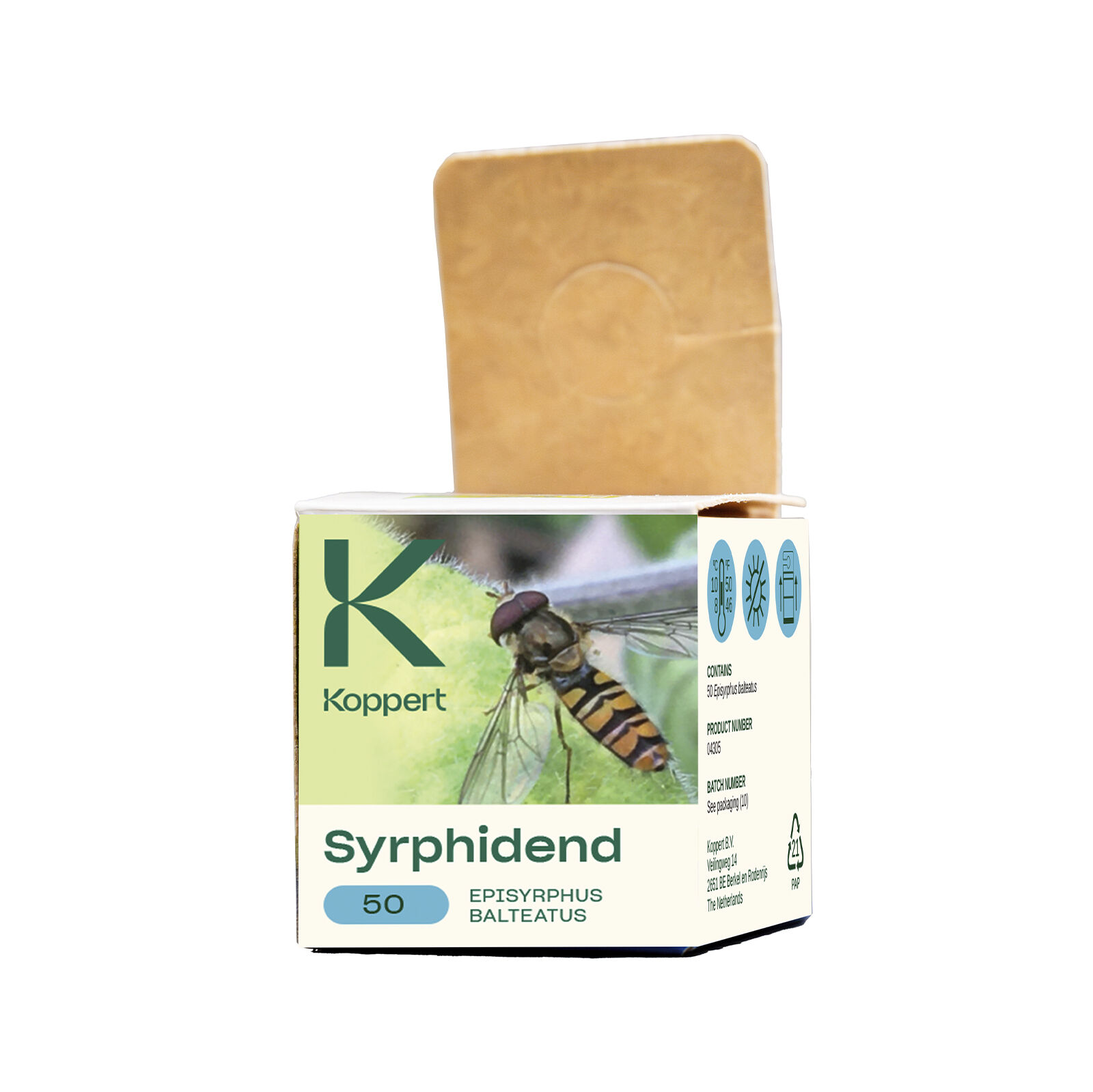
| Pack size | 50 pupae. |
| Presentation | 3,5x3,5x3,5 cm cardboard box. |
| Carrier | Buckwheat hulls and vermiculite. |
The dosage of Syrphidend depends on climate, crop and aphid density and should always be adjusted to the particular situation. Start introduction preventatively or as soon as the first aphids are detected in the crop. Introduction rates typically range from 100-600 pupae per ha/release. Releases should be repeated a number of times. Consult a Koppert advisor or recognized distributor for advice on the best strategy for your situation.
For effective control of aphids combine with other predators and/or parasitoids.
Pesticides can have (in)direct effects on biological solutions. Find out which pesticides have side effects on this product.
Koppert One – Side EffectsApply as soon as possible after receipt. If necessary, the product can be stored for 1-2 days.
8-10°C/47-50°F.
In the dark.
Syrphidend is used to control all aphid species.
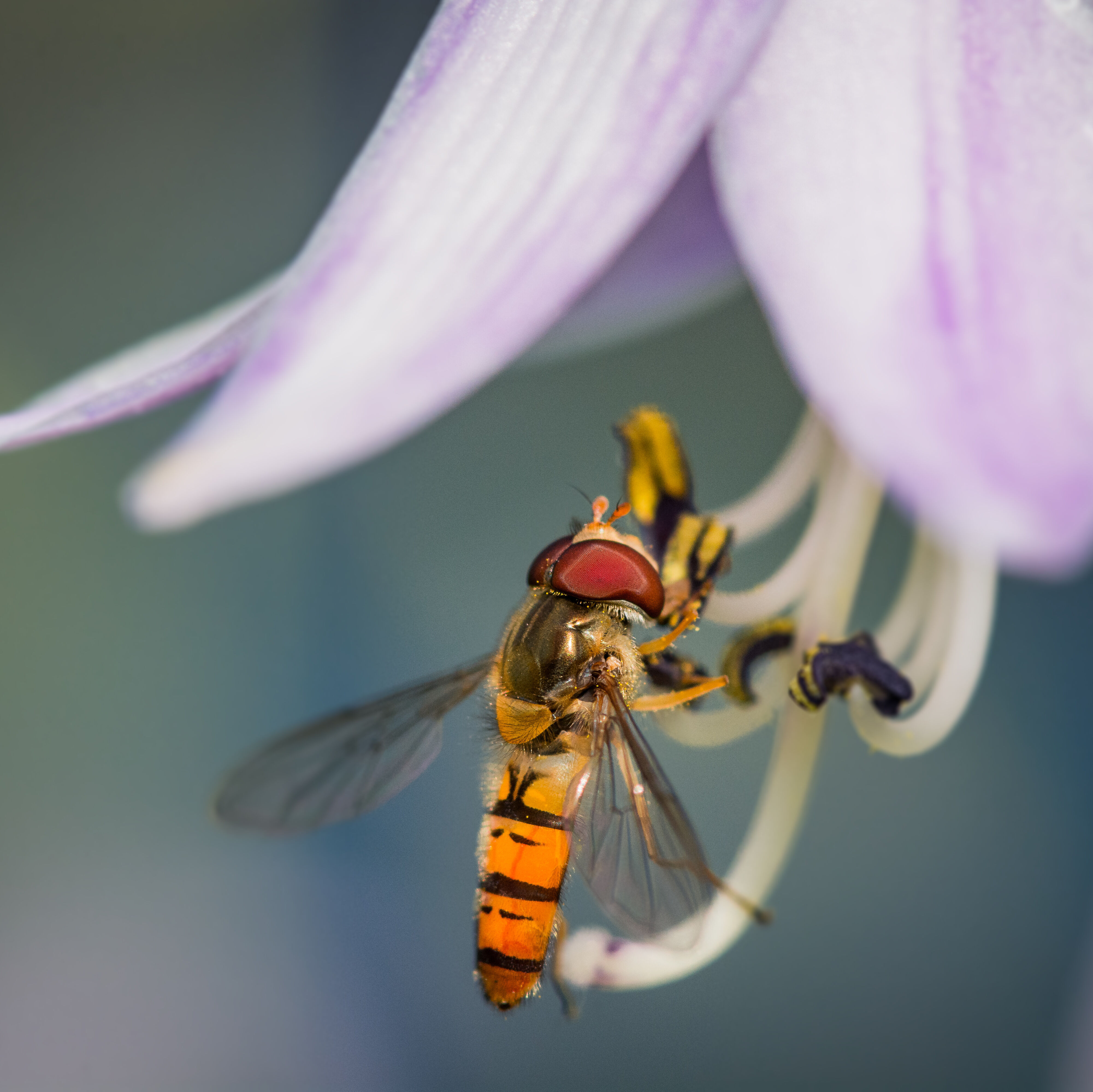
Eggs are oval, 1 mm long and white/grey colored. The larvae are up to 11 mm long, transparent/beige without legs. Pupae are beige/brown in color, and droplet shaped. The adults are 10-13 mm long and have a dark yellow face and golden abdomen with black stripes.
Eggs are laid close to aphid colonies. After hatching, E. balteatus goes through 3 larval stages, followed by a pupal stage. Adults emerge from the pupa. Total egg-adult development takes around 17 days at 22ºC.
Females can lay around 2000 eggs during their lifespan.
During its development, each larva of E. balteatus can consume around 1000 aphids, depending on aphid species and age.
Syrphidend can be used in both greenhouse and outdoor crops, whenever aphids are present. Adult hoverflies feed on pollen and nectar, and their activity is enhanced when flower resources are available.
Ants may remove pupae of Syrphidend and carry them to their nest. Avoid placing the boxes directly near ant visited aphid colonies.
Syrphidend consists of pupae which will hatch into adult hoverflies. At arrival, most pupae will not be hatched. Some pupae may not hatch due to natural mortality. This is already considered in the number of pupae included in the box.
Adult Episyrphus balteatus do not fly immediately after hatching, they require some time to fully extend their wings and being able to fly.