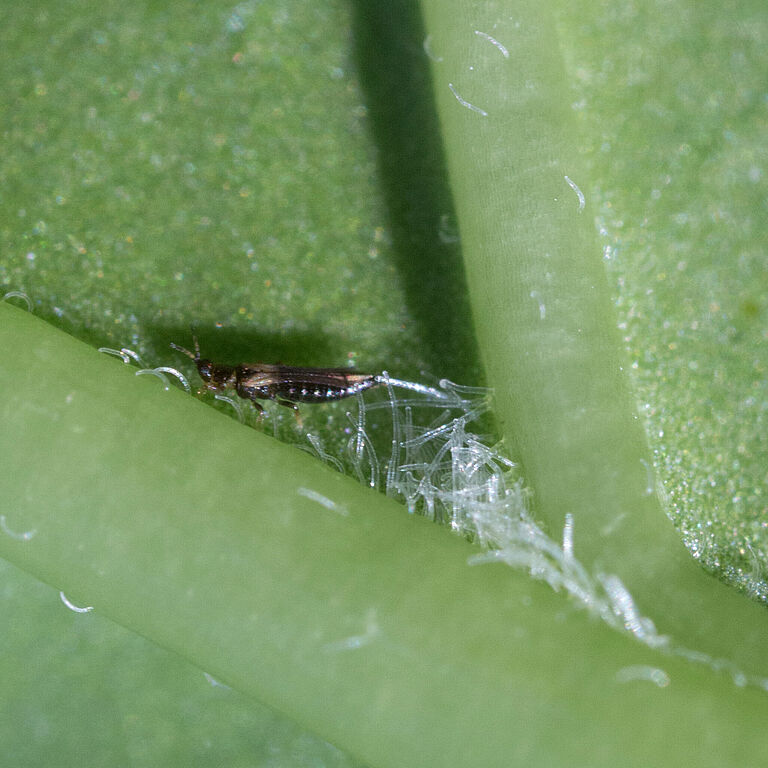

Damage symptoms
Despite its common name, the Japanese flower thrips is mainly a leaf-feeding thrips. However, in Hydrangea it also feeds on the flowers. Thrips cause damage to plants by piercing the cells of the surface tissues and sucking out their contents, causing the surrounding tissue to die. The resulting silver-grey patches on leaves and the black dots of their excreta indicate their presence in the crop. The vigour of the plant is reduced by loss of chlorophyll. When infestations become serious the leaves themselves can shrivel. In addition to the this direct damage, the Japanese flower thrips is also able to transmit tomato spotted wilt virus (TSWV).