
Skip to content
  • Jump to:
  • About
  • Life cycle & Damage

About Scirtothrips dorsalis

Scirtothrips dorsalis, commonly known as the chilli thrips, is an emerging pest of significant concern in greenhouse cultivation. Known for its ability to damage a wide variety of crops, including ornamentals, vegetables, and fruits, this species poses challenges due to its rapid reproduction and widespread adaptability.

Scirtothrips dorsalis is a quarantine pest under EU Plant Health Regulation 2016/2031/EC and EU Regulation 2019/829/EC. Any grower who suspects the presence of this species is legally required to report it to the local competent authority.

Biological solutions for Chilli thrips

Filters:
Clear all filters
Show all Show less
products found:

Questions or need help?

Find a reseller
  • Easy to use
  • Minimal resistance
  • No chemical residues
  • No pre-harvest intervals

Learn more about

Life cycle and damage of Scirthothrips

The life cycle of Scirtothrips dorsalis consists of six stages: egg, two larval instars, pre-pupa, pupa, and adult. Eggs are inserted into plant tissue, making them difficult to detect. Females can lay up to 100 eggs in the youngest plant tissues. Eggs are oval, whitish to yellow and kidney shaped. Nymphs are tiny, slender, fragile and yellowish straw in colour. Adults has heavily fringed wings and grey in colour. Life cycle is short and completed in 15 to 20 days as many as 25 overlapping generations per year. Reproduction is both by sexual and partheno-generic.

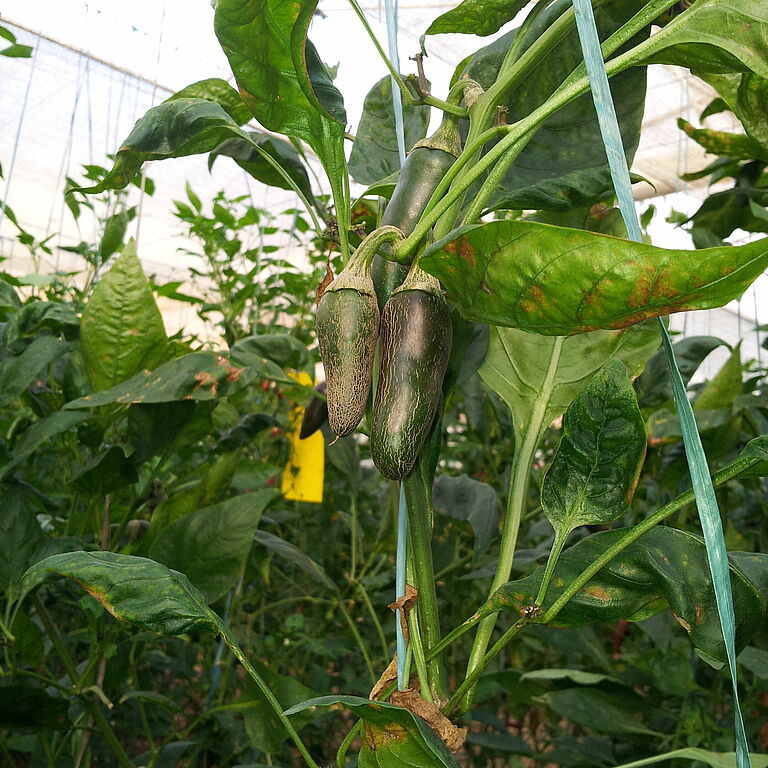
Larvae and adults feed on the underside of leaves, creating silvering, curling, and deformities in leaves and fruits. This feeding behavior also weakens plants by reducing photosynthetic capacity and may lead to secondary infections.
Need help?