
Skip to content

General

The banana rust thrips (Chaetanaphothrips signipennis) is a pest in banana in Asia, North and South America and Oceania. It also appears on dracaena, anthurium and some other ornamentals.

Biological solutions for Banana rust thrips

Filters:
Clear all filters
Show all Show less
products found:

Questions or need help?

Find a reseller
  • Easy to use
  • Minimal resistance
  • No chemical residues
  • No pre-harvest intervals

Learn more about

Damage symptoms

Thrips cause damage to plants by piercing the cells of the surface tissues and sucking out their contents, causing the surrounding tissue to die. Feeding of banana rust thrips in banana results in fruit lesions, known as ‘red spot’. Extensive damage may cover more of the fruit surface with reddish-brown or black discoloration and superficial cracks. The banana rust thrips is also known to cause leaf-rolling damage to decorative plants such as anthurium and strelitzia.

Life cycle and appearance of Banana rust thrips

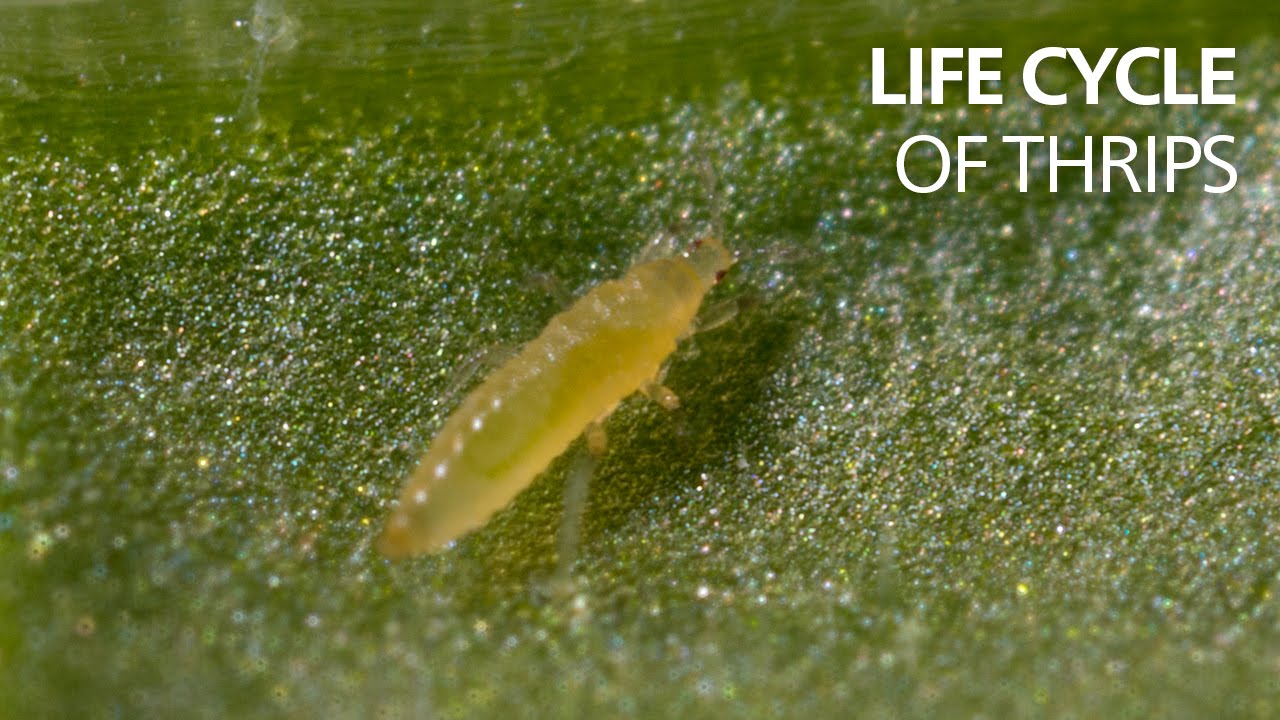
The banana rust thrips (Chaetanaphothrips signipennis) develops in six stages: egg, two larval instars, prepupa, pupa, and finally the adult insect.

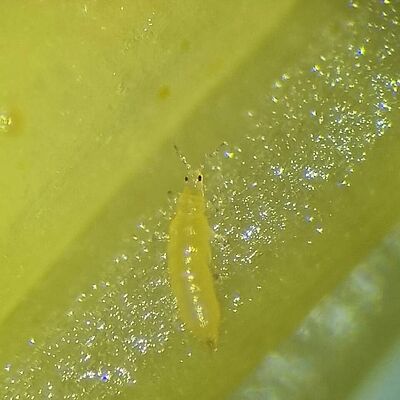
Adults are about 1 mm long, with a yellow body, pale forewing with brown cross bands at base and medially. Larvae are pale yellow.

Adults and larvae are usually found feeding in protected situations such as where two fruits touch each other, or within curled leaves and eggs are deposited in the plant tissue at such sites. After the eggs hatch the larvae immediately start feeding. Mature larvae migrate off the host plant into the soil and molt into prepupae and after a few days enter the pupal stage. Banana rust thrips can complete its life cycle in 4 weeks, but in cooler seasons it may take up to 3 months.

Need help?