
Skip to content

General

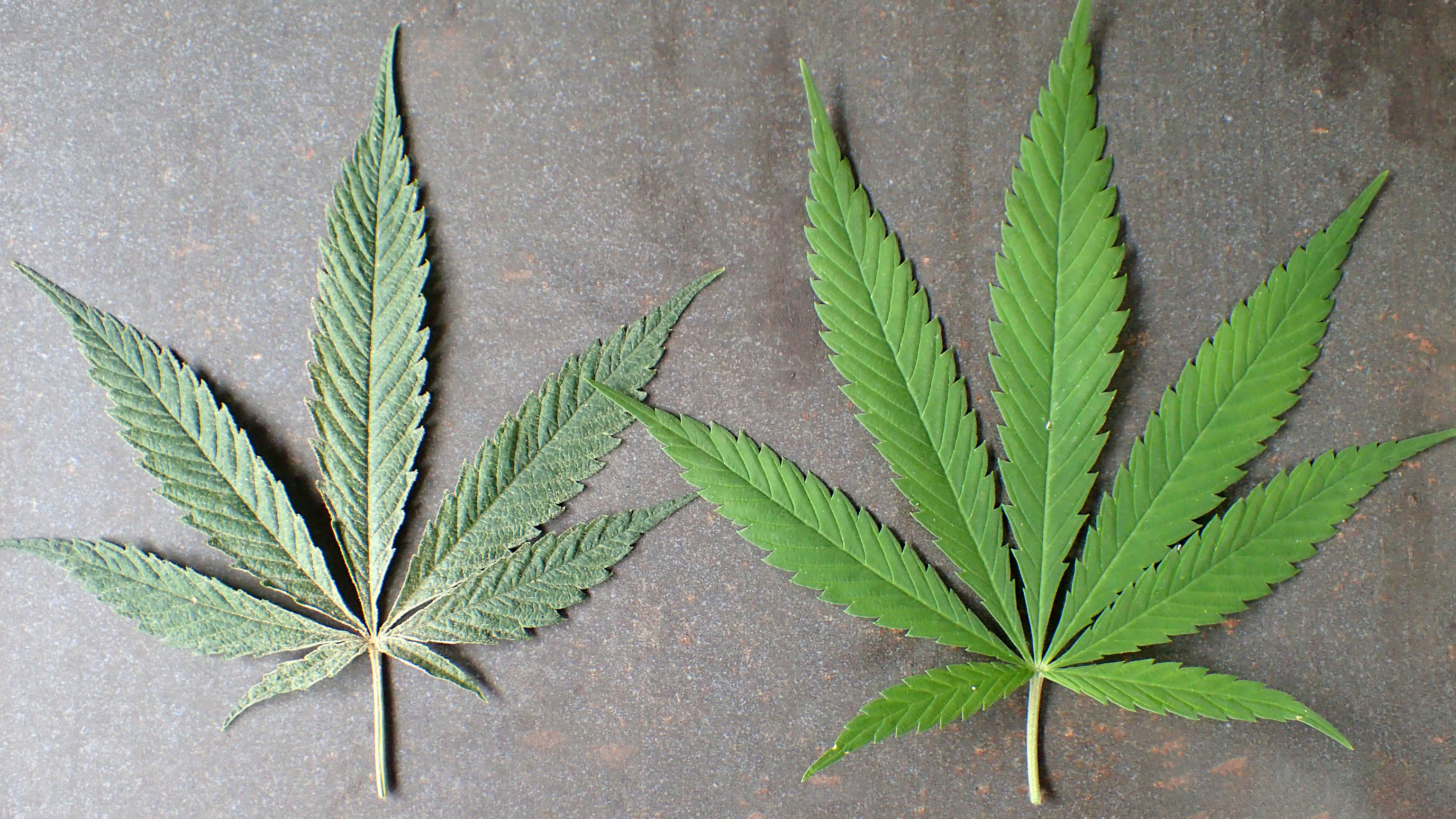
The hemp russet mite (Aculops cannabicola) belongs to the family Eriophyidae (gall and rust mites). It does not produce galls but lives freely (vagrant) on hemp/cannabis plants. Aculops cannabicola is host specific to hemp/cannabis (Cannabis sativa). It cannot survive on other plants.

Biological solutions for Hemp russet mite

Filters:
Clear all filters
Show all Show less
products found:

Questions or need help?

Find a reseller
  • Easy to use
  • Minimal resistance
  • No chemical residues
  • No pre-harvest intervals

Learn more about

Damage symptoms

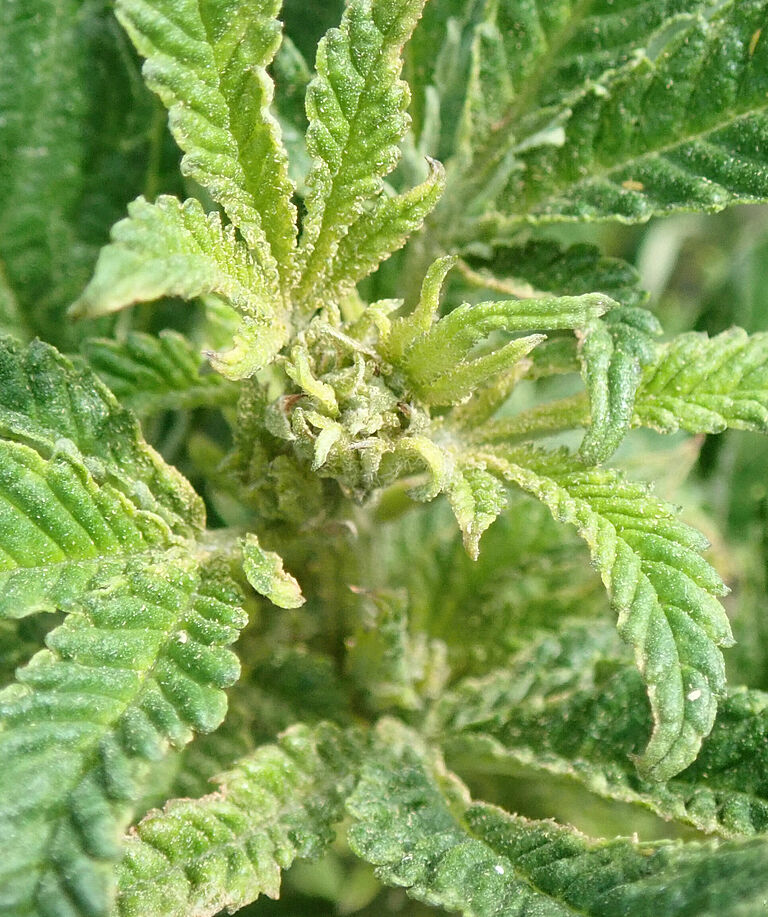
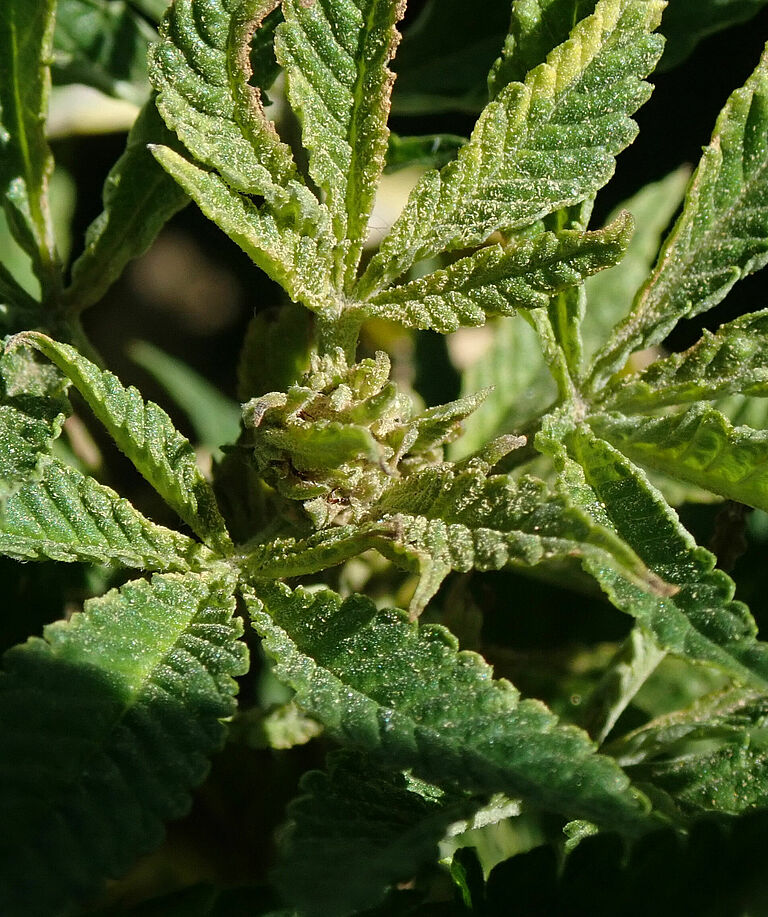
Damage is caused by the mites sucking out the contents of plant cells. Hemp russet mite develops on the stems and petioles of the hemp plant and can cause stunting. When populations are large, the mites can also be found on the underside of leaves. This results in smaller leaf size and suppressed bud growth leading to a reduction in the number of buds and dwarfed buds. This damage can reduce yield and quality. Other signs of damage include dull, greyish, or bronzed leaves and upward curling of leaf edges.
Life cycle and appearance of Hemp russet mite

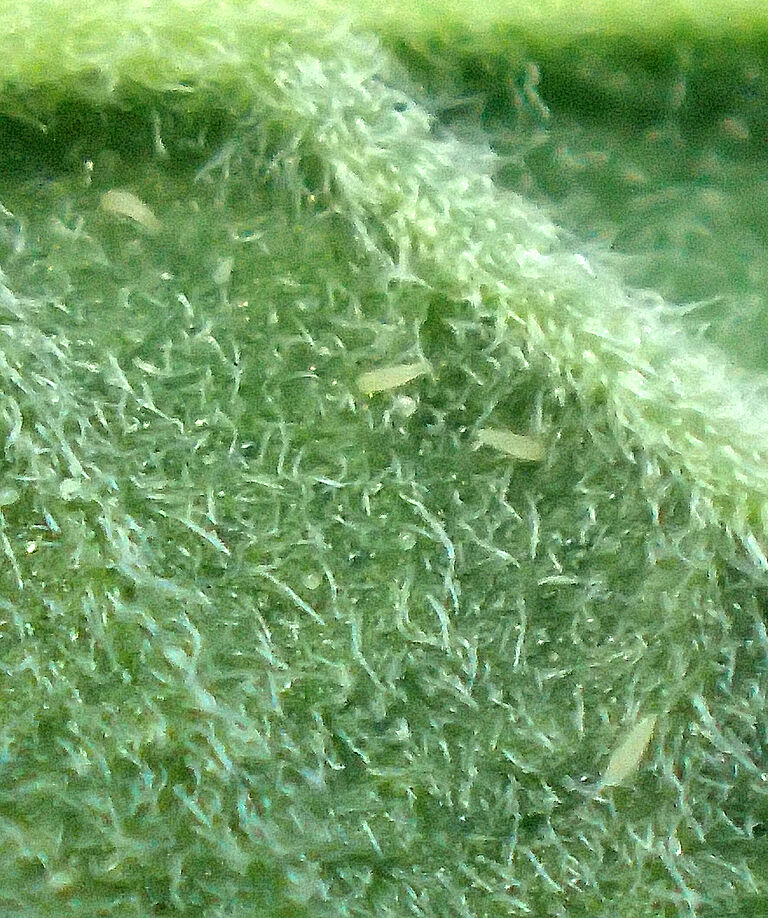
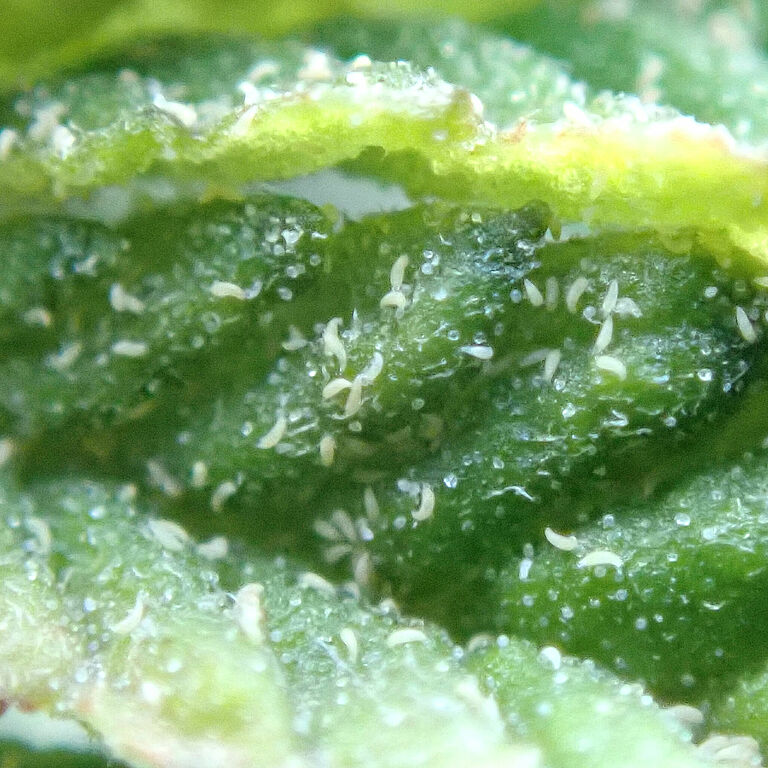
All life stages of the hemp russet mite are extremely small and difficult to observe. They are elongated (torpedo-shaped), soft and segmented. The body appears to be divided into two parts: the head with the mouthparts, and the rest of the body. All mobile stages have only two pairs of legs, whereas other mite groups have four pairs.

The hemp russet mite has four life stages: egg, two nymphal stages and adult. The nymphal stages are sometimes also called larva (1st stage) and nymph (2nd stage). The eggs are approximately 0.05 mm in diameter and adults are around 0.2 mm long. Nymphs and adults look very similar.

Need help?