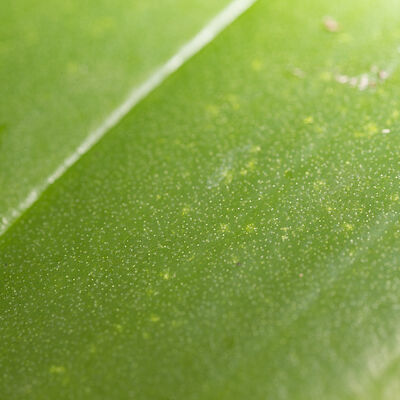
Damage symptoms
False spider mites (Tenuipalpidae) are usually found on the underside of leaves where they cause a brown, scabby discolouration spreading from both sides of the main vein into the leaf blade. The damage often leads to premature ageing of the plant. In some crops, plants can become misshapen, presumably because the mites secrete a substance while feeding, that is poisonous to the plant. In places where mites have been feeding, collapsed patches can often be found. The false spider mite (Brevipalpus phoenicis) also feeds on fruits of for instance citrus, papaya and pomegranate. Several Brevipalpus species are known to transmit plant viruses. Unlike most true spider mites, false spider mites (Tenuipalpidae) do not produce webs.