
Damage symptoms
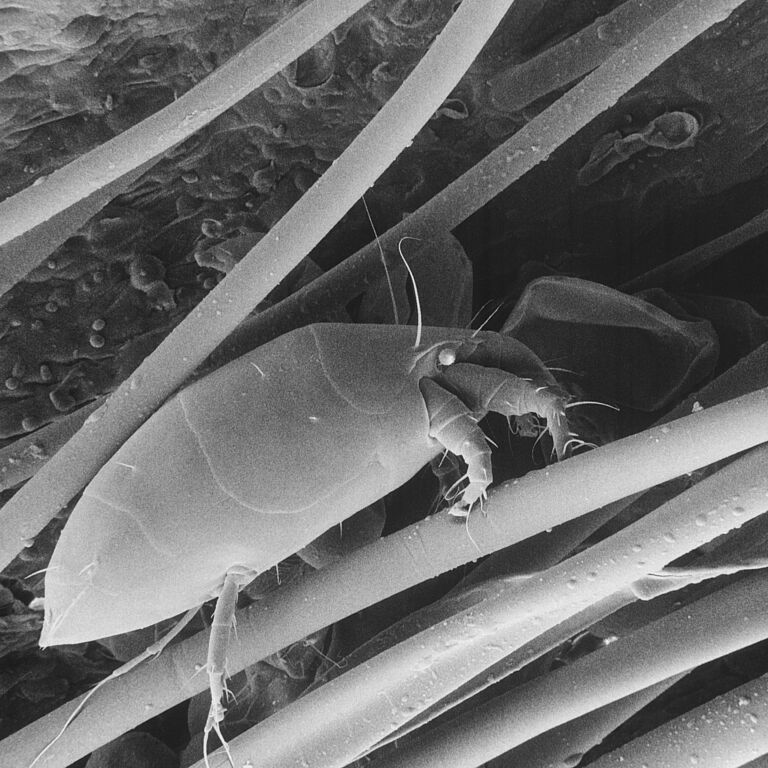
The cyclamen mite (Phytonemus pallidus) feeds on plant sap by penetrating the plant tissue with its piercing-sucking mouth parts. The mites are mostly found within the flower buds, growing tips and young folded leaves, where the humidity is highest and they are protected from direct sunlight. In such spots, they are difficult to observe. Damage occurs in localized patches, because the mite spreads very slowly.
Symptoms vary depending on the host plant and can resemble the damage caused by viruses. Infested leaves are twisted or curled, distorted, brittle and smaller than usual.
In cyclamen, the flowers are damaged and leaf growth is inhibited. In hedera, a mite attack can cause baldness in parts of the stem. Gerbera flowers deform and discolour with the leaves turning bronze, mainly along the midrib. Even a mild infestation can cause enormous damage, and with heavier infestations plant growth is arrested and the flower buds are so badly affected that they shrivel and die.
Damaged strawberry leaves are wrinkled and irregularly folded. Affected plants have an unnaturally dense appearance because the petioles remain short. Severely attacked leaves become brittle, turn brown or silvery and die. Flowers and young fruits become brown near the base.