
Skip to content

General

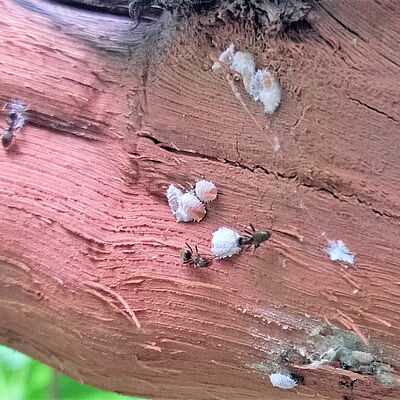
The vine mealybug Planococcus ficus belongs to the family Pseudococcidae, and is also known by the names Mediterranean vine mealybug and Grapevine mealybug. As the name indicates, this mealybug is mostly found on grapevines, but also on figs and pomegranates.

Biological solutions for Vine mealybug

Filters:
Clear all filters
Show all Show less
products found:

Questions or need help?

Find a reseller
  • Easy to use
  • Minimal resistance
  • No chemical residues
  • No pre-harvest intervals

Learn more about

Damage symptoms

Mealybugs inflict damage on the crop in various ways:

  • Nymphs and females extract the sap from the plant, stunting growth and causing deformation and / or yellowing of leaves, sometimes followed by defoliation. The overall effect is a reduction of photosynthesis and therefore the yield. Flowers and fruit often drop off.
  • Plant sap is rich in sugars, but low in proteins. In order to gain an adequate intake of protein, mealybugs must therefore ingest large quantities of sap, getting rid of the excess sugars in the form of honeydew. Characteristically, dark sooty moulds (Cladosporium spp.) are often found growing on this honeydew. Additionally, the white, waxy secretion of the mealybugs, reduces the ornamental value of the affected plants. Fruit and flowers are also fouled, rendering them unfit for sale, and the reduced level of photosynthesis in the leaves also reduces flower and fruit production.

The vine mealybug causes direct and indirect damage. If the population is high, whole bunges of grapes can be colonized. The taste can also be affected. An infection by Planococcus ficus can make the plants more susceptible to injury caused by other pests and fungal diseases.

Life cycle and appearance of Vine mealybug

The Mediterranean vine mealybug (Planoccoccus ficus) develops through 7 stages: egg, first, second and third instar nymph, prepupa, pupa and adult. The eggs are golden-yellow in color and are deposited in an cottony egg sac (ovisac) containing from 300-500 eggs.

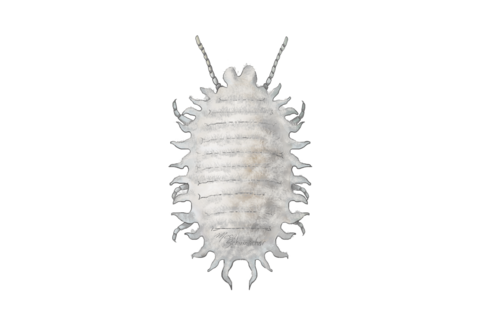
The nymphs are very similar to the adult female, even if they are smaller. The prepupa and pupa stages are present only in the male. After a complete metamorphosis, a winged male emerges from the pupa. The male is smaller (1 mm), dark orange in color with long tail filaments and transparent wings and has no mouthparts. The female is larger (3 mm) and voluminous, has an elongated oval shape and has no wings. The body is covered with a fine waxy material and have 18 pairs of wax rods round the edge of the body, and two slightly longer 'tail filaments' that project at the posterior end. There is often a darker longitudinal stripe running over the body.

Control Vine Mealybug

Need help?