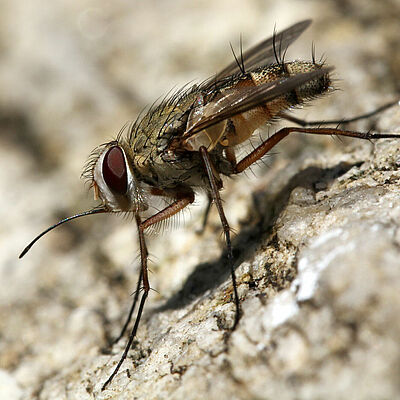

Damage symptoms
Stable flies typically congregate on the legs of livestock to feed, and the population size can be assessed by counting the number of Stomoxys on the animals’ front legs. The flies become an economic concern when the average number per leg is as low as two. When populations are very large (> 25 flies/leg), the insects will begin to cluster on the animals’ undersides and flanks as well. Stable flies are persistent, intermittent feeders, returning time and again to feed off animals in short 2–5 minute sessions. The bites are extremely painful, but the flies will typically ignore swatting, stamping and other strategies used by animals to avoid being bitten. Damage caused by parasitism of Stomoxys spp. on livestock includes:
- Weakened animals and potential anemia from continual irritation, stress and blood feeding.
- Lower livestock feeding due to stress and avoidance behaviours (animals spend more time trying to escape flies than they spend eating).
- Open feeding wounds can develop secondary infections.
- Overheating if animals begin to bunch together (an avoidance strategy to reduce fly bites) when temperatures are high.
- Transmission of blood-borne pathogens between animals including the bacteria that cause anthrax, leptospirosis and anaplasmosis, the viruses that causes equine infectious anemia (EIA) and hog cholera, and the protozoan trypanosomes that cause surra.