
Skip to content

General

Shore flies (Scatella tenuicosta) occur very commonly, often in the vicinity of water. They feed on algae. Other shore fly species have diverse feeding habits but the larvae of most species feed on rotting material. Shore flies are commonly found in greenhouses.

Biological solutions for Shore fly

Filters:
Clear all filters
Show all Show less
products found:

Questions or need help?

Find a reseller
  • Easy to use
  • Minimal resistance
  • No chemical residues
  • No pre-harvest intervals

Learn more about

Damage symptoms

Shore flies (Scatella tenuicosta) do not attack plants directly, as they feed on green algae. However, they can transmit plant diseases and can be a nuisance to greenhouse works by their sheer numbers. Frass deposited on leaves or flowers in ornamental crops, lettuce and herbs also causes cosmetic damage, and sometimes this can occur on such a scale that growth, particularly of young cuttings, can be retarded.

Life cycle and appearance of Shore fly

The life cycle of the shore fly (Scatella tenuicosta) has the following stages: egg, three larval instars, a pupa and the adult fly. The eggs are laid singly and are bean-shaped. A first instar larva is translucent white. Second instar larvae are brownish, less translucent and their body is cylindrical. The larvae are found in the top layer of damp soil, where they also pupate.

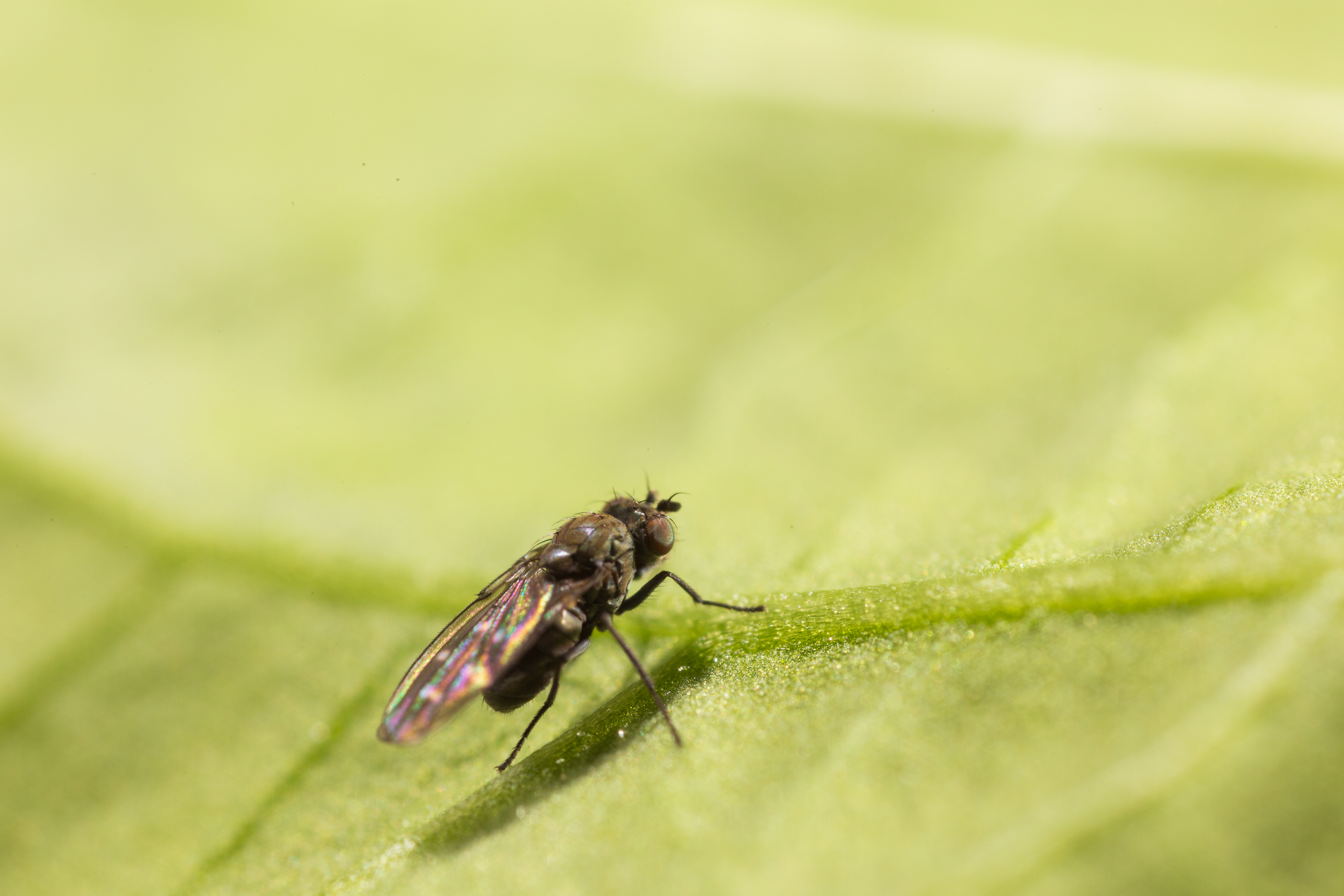
The adult shore fly is black, about 4 to 5 mm long, and stout with short antennae and short legs. The head of the adult has a pair of conspicuous eyes. The wings have grey-brown patches.

Although shore flies can occasionally be confused with sciarid flies (Bradysia paupera & Lycoriella ingenua), they are more stoutly built and have shorter antennae without beads.

Need help?