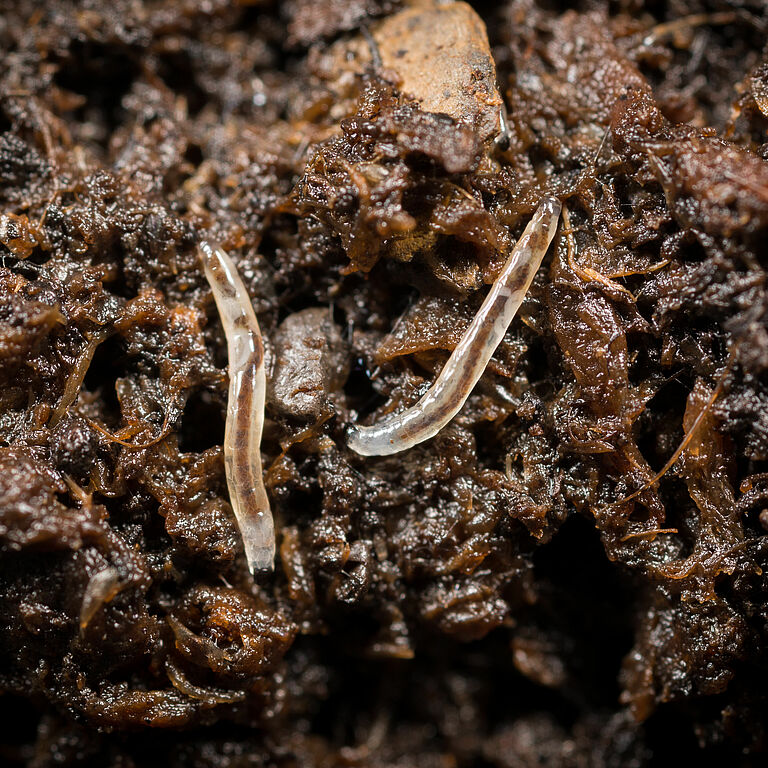

Damage symptoms
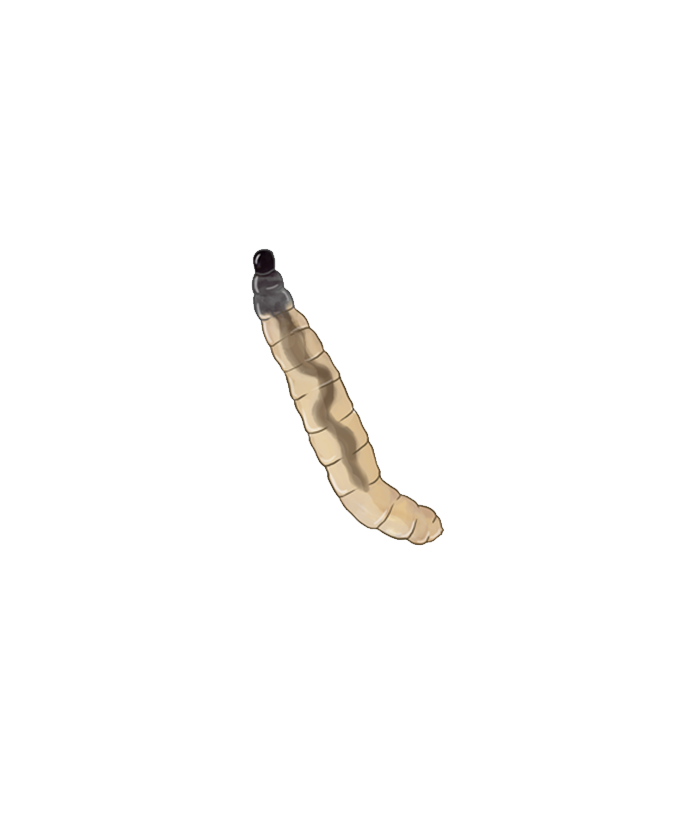
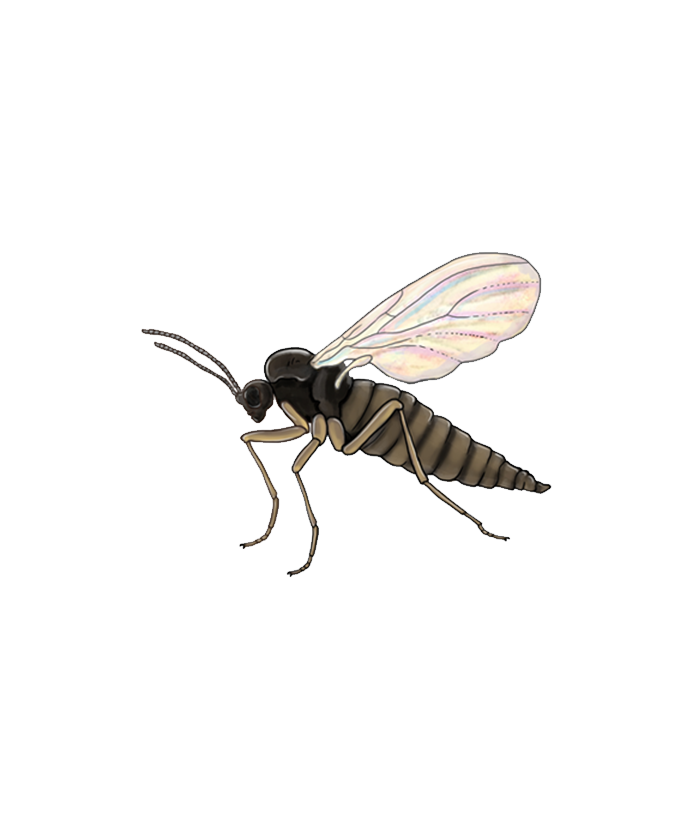
The larvae of sciarid flies feed mainly on organic remains and the fungi that grow on them, although some species can also eat living plant material. The adults prefer humid habitats and are attracted to a broad range of pathogenic and non-pathogenic micro-organisms for oviposition.
Indirect damage is caused by the larvae and adults transferring fungal diseases, such as Fusarium, Botrytis and Verticillium, from diseased to healthy plants.
Direct damage is the immediate result of larvae feeding on the roots. The larvae feed mainly on decaying plant material and on algae and fungi present in the soil. They, however, can also feed on root hairs, rootlets, and tender root, stem and leaf tissue. Later instars may even feed on plant stems. The injuries caused by feeding also provide invasion routes for various pathogenic fungi. Because the larvae move very little, plant death is generally local. Young plants that are kept humid and well-watered are particularly at risk.