Damage symptoms
The exit holes are visible on infested cherries. Infested fruits often rot, are unmarketable as fresh fruit and may be rejected by processors.
The cherry fruit fly (Rhagoletis cerasi)is the most important sweet cherries pest in Europe. In addition, it also attacks a few other species of the genus Prunus.

The exit holes are visible on infested cherries. Infested fruits often rot, are unmarketable as fresh fruit and may be rejected by processors.
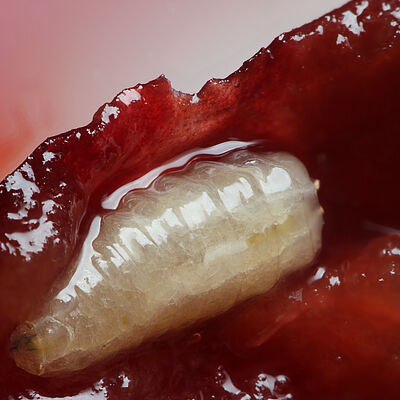
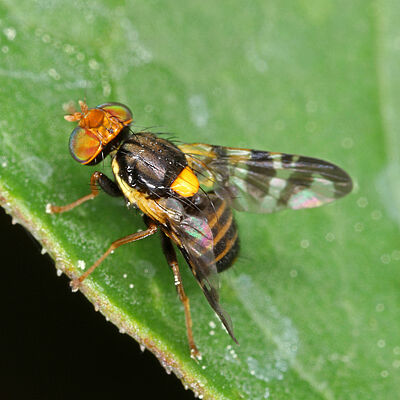
The adult cherry fruit fly is 3.5-5 mm long. It has a black body with yellow markings on the head and the thorax, and transparent wings with a distinctive pattern of dark, bluish-black stripes. Eggs are white, about 0.75 mm long and 0.25 mm in diameter. The larvae are up to 6 mm long and translucent white; the puparium is 3-4 mm long and pale yellowish brown.
The adults usually appear from late May to early June and are particularly active when it is hot and dry. Eggs are laid singly beneath the skin of a ripening fruit. They hatch after 1-2 weeks and the larvae feed on the flesh of the developing fruit for about four weeks. Around harvest time, the mature larvae leave the fruit to pupate in the soil. There is one generation per year; the flies overwinter as pupae.