Damage symptoms
The vegetative and flowering stages are most widely affected, but the seedling stage is sometimes affected in nurseries. Stored onions and garlic are also damaged.
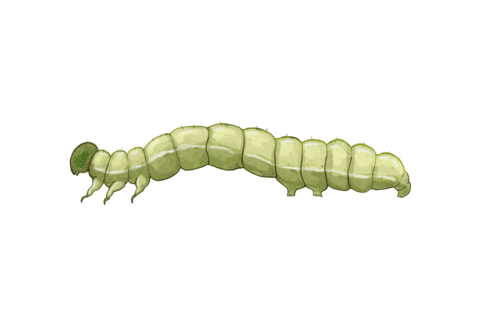
After hatching, the young larva explores the surface and mines the green leaves. On reaching the third instar, the larva penetrates the young leaves, the flower stalk or the inflorescence of the host plant. Feeding on the leaf tissue by the caterpillars causes a reduction in plant growth; if larvae are numerous, weakening or withering of the plant can occur. On old leaves, open galleries can be seen which decrease the economic value of the plant.
Severe damage also occurs on inflorescences of plants cultivated for seed production where serious seed loss can occur.
- On leeks, larvae mine the central leaves which have long, longitudinal grooves when growing.
- On onion leaves, the larvae feed on the parenchyma inside the hollow leaves, forming white windows closed by the epidermis. When feeding takes place at the base of the hollow flower stalk, this can be broken easily.
- On inflorescences, damage is characterized by the fall of the flowers where moth larvae have eaten the floral peduncles.