Life cycle and appearance of Goat moth
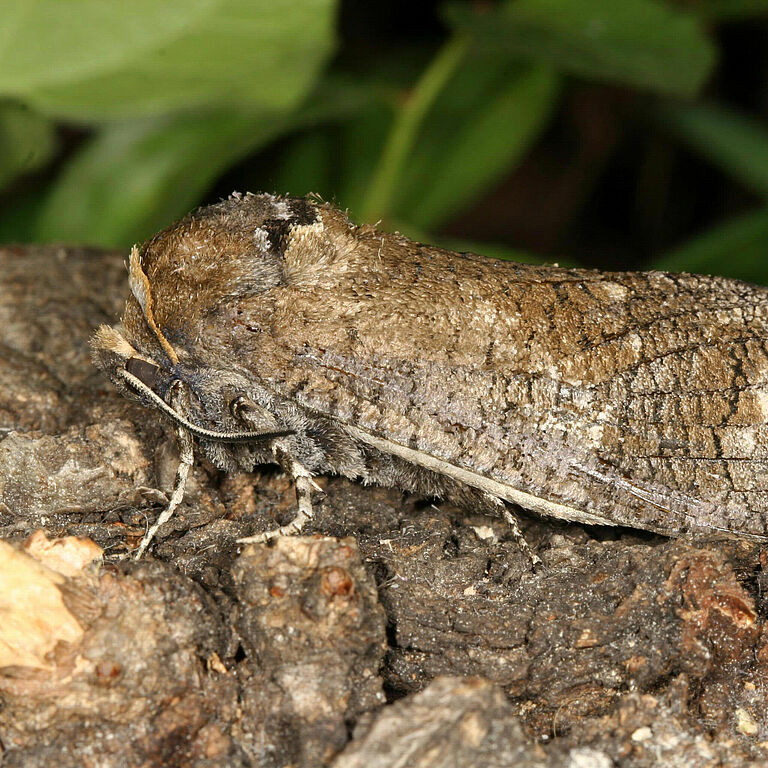
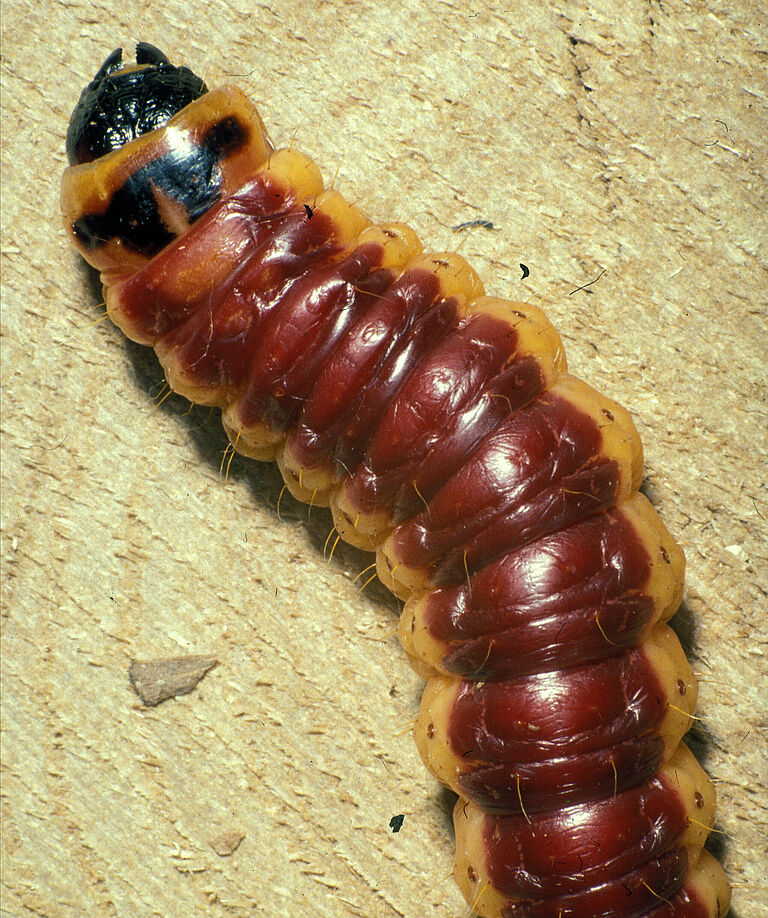
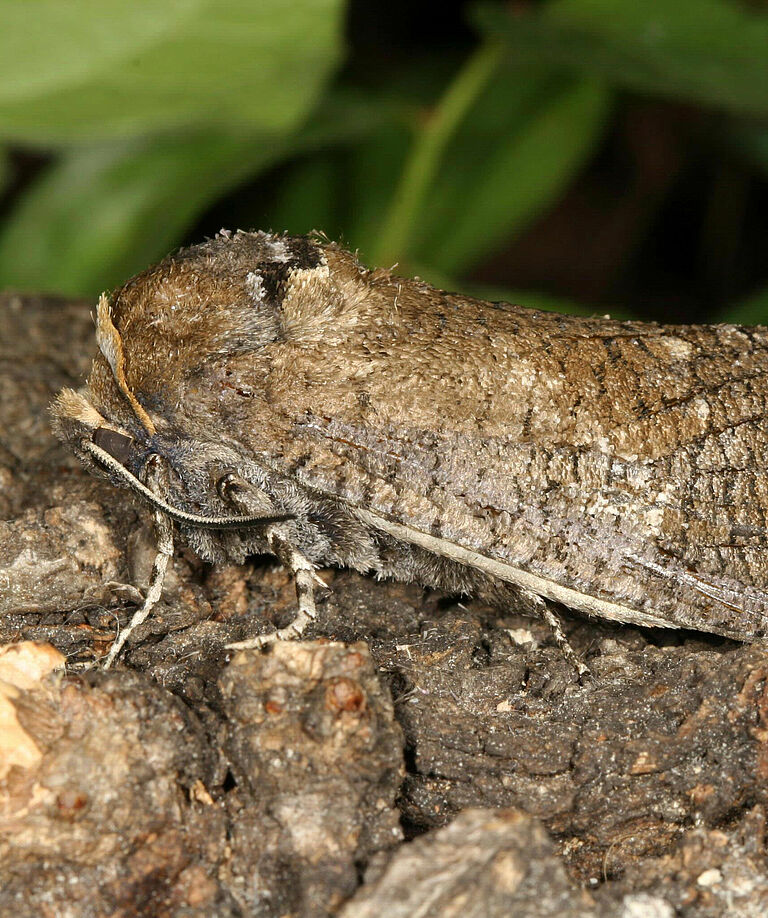
The wingspan of the adults is 70-100 mm; body and wings are dull greyish brown, partly suffused with grey and marked irregularly with black. Eggs are 1.7 mm long, oval and reddish brown. The caterpillars are up to 10 cm long, pink when young, later with yellowish sides and a dark red back with a black head. The pupa is 5-6 cm long, dark brown, with spines on the abdominal segment.
The moths fly at night in June or July and lay eggs on tree trunks in batches of up to 50. After the eggs hatch, the larvae bore into the bark and down to the sap wood. Development takes 3 or 4 years. The larvae feed on the wood most of the time hibernating in their galleries during the winter months. Pupation usually takes place just beneath the bark in a very strong silken cocoon incorporating chips of wood.