Damage symptoms
A part of the kernel of the chestnut is destroyed and replaced by blackish frass. Heavy infestation can lead to considerable crop losses.
The chestnut fruit moth (Cydia splendana) is a pest of chestnut and occasionally walnut. It is widely distributed in Europe.


A part of the kernel of the chestnut is destroyed and replaced by blackish frass. Heavy infestation can lead to considerable crop losses.
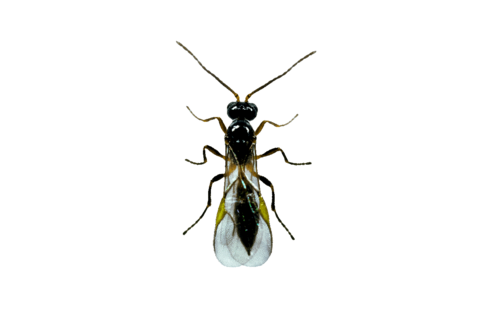
The adults have a wing span of 14-22 mm, greyish white forewings, suffused with darker grey and brown, and a large submarginal ocellus, with several black dashes. The hindwings are greyish brown.
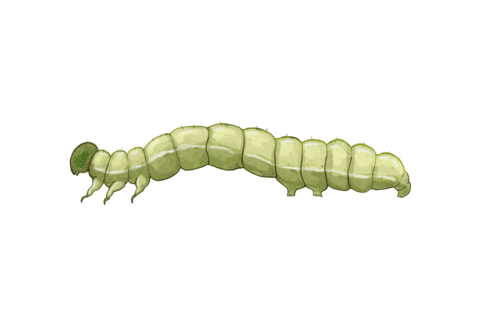
The eggs are about 0.7 x 0.6 mm and whitish when laid. Later the developing embryo is visible as a purplish-red ring. The larvae are up to 15 mm long, greyish green to yellowish with and translucent, with a yellowish brown head.
Fully developed larvae overwinter in a cocoon in the soil. They have an extended diapause and do not pupate until June or July. The adults appear 3-4 weeks later and fly form July to September. Some larvae remain in diapause for a second winter. Eggs are laid singly on leaves close to developing nuts and hatch after 10-12 days. Larvae then bore into developing chestnuts and feed there. They become fully developed in autumn.