
Damage symptoms
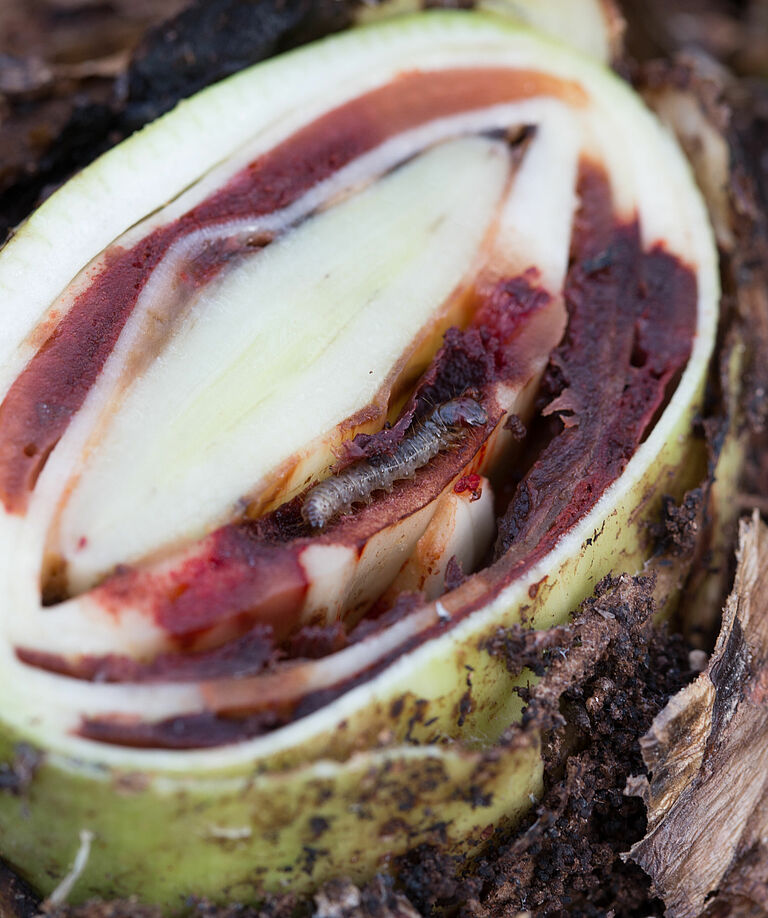
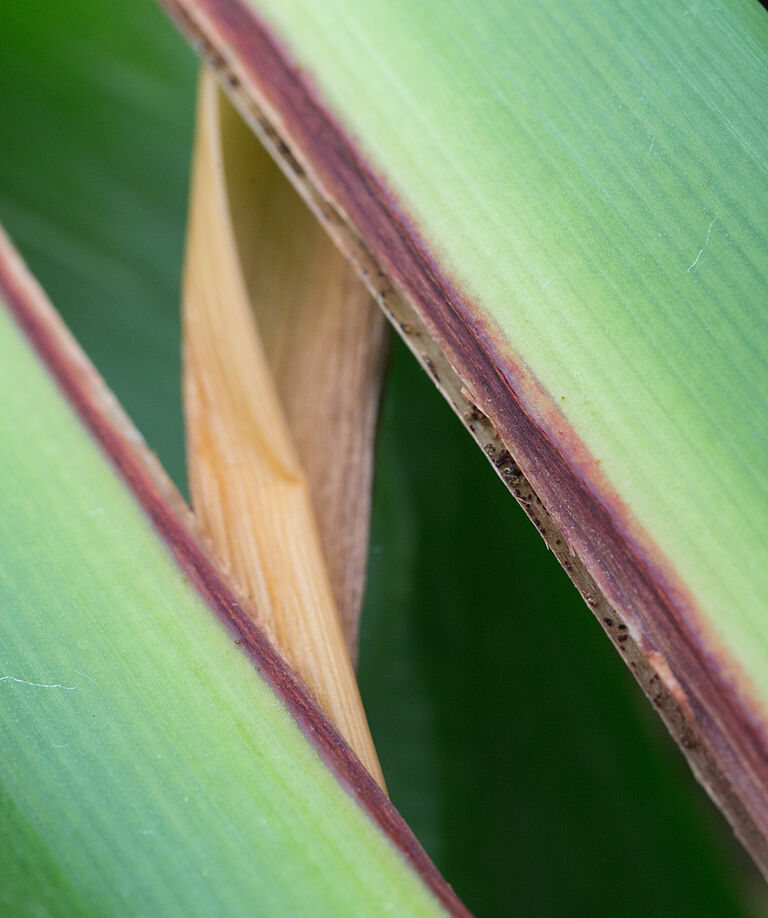
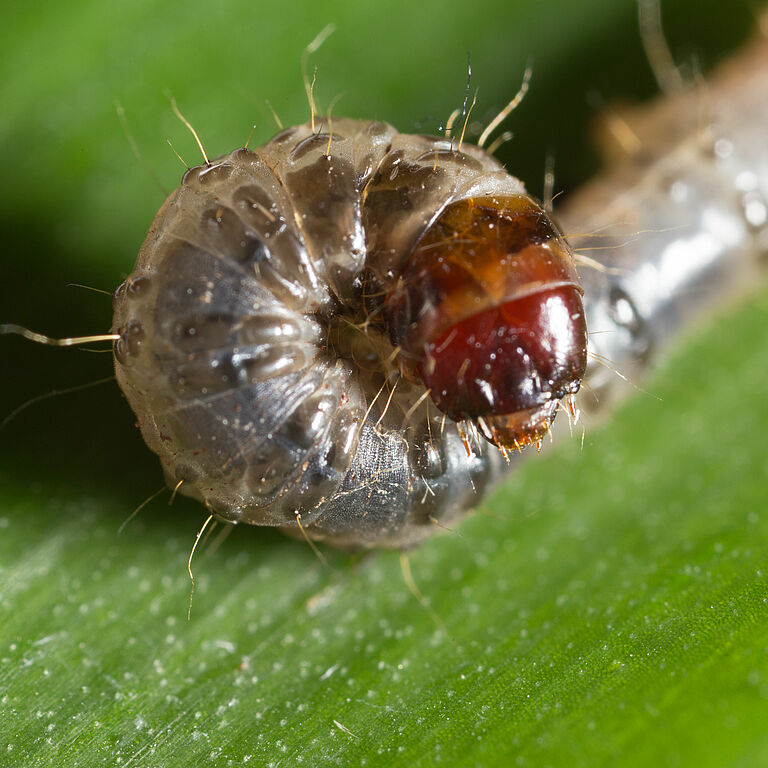
Caterpillars make passages and holes in both woody and succulent crops. In ornamental crops the larvae are found mainly in the stalks, and sometimes in leaves and cotyledons. The presence of yellow white dust left in the openings of bore passages is characteristic of an attack of the banana borer. Seedlings can be very badly affected. The attack is not usually recognized in its earliest stages. The caterpillars normally begin to eat into the phloem and woody tissues and leave the bark standing. Because the flow of sap is interrupted, the plant begins to wilt. In yucca, for example, the bark is flaccid to the touch and can be dented with the finger in the affected area. In cacti, yuccas and dracaena, for example, the stems may be completely hollowed out. Plants whose roots or stem base have been attacked, first lose a few leaves and then collapse (e.g. sanseveria and palms).
In addition to the direct damage they inflict, the indirect damage should also not be underestimated. Damaged areas can be invaded by moulds and bacteria and begin to rot as a result. This can exacerbate the damage and produce unpleasant odours.