Lifecycle and appearance of the pepper weevil
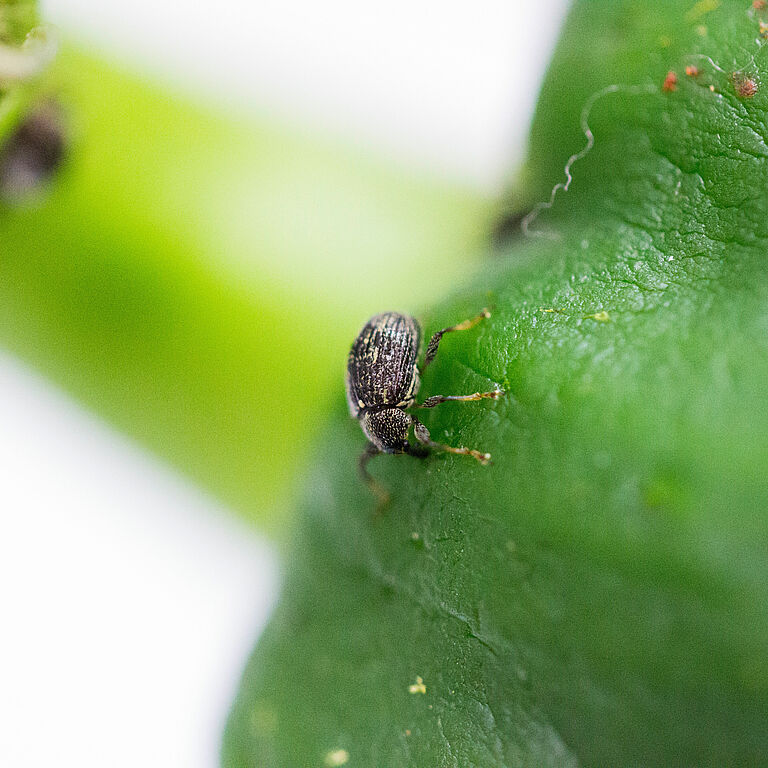
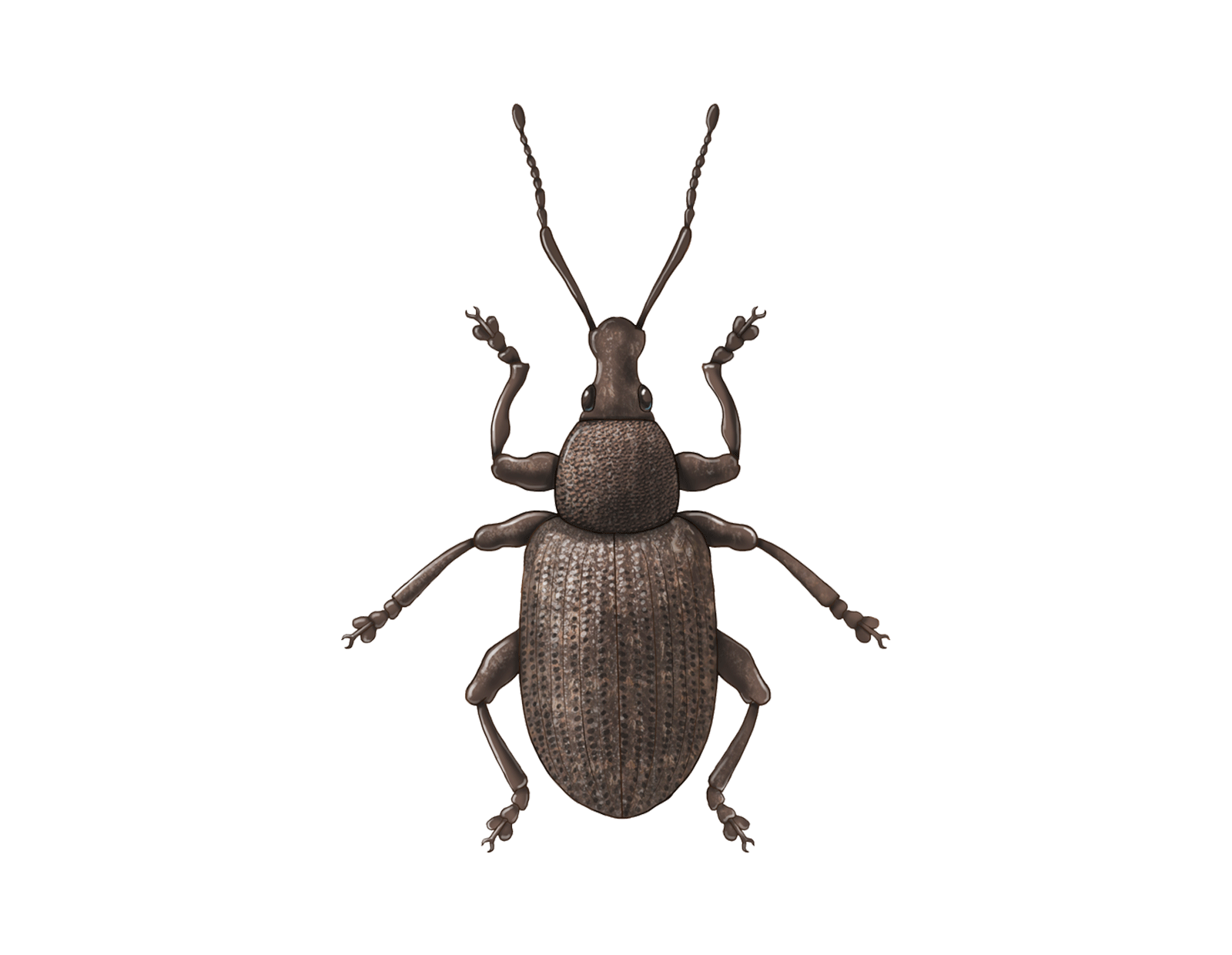
Newly hatched adults have a light brown colour, with an oval body measuring 2 to 3.5 mm in length, and over time they turn grey, reddish-brown, or nearly black. Their main distinguishing feature is a ‘snout’ which is longer than their head and prothorax. Two days after hatching and feeding, they begin to copulate and subsequently lay eggs in the flowers or immature fruit. On average, a female weevil lays 341 eggs over the full oviposition period, which hatch after four days. The larvae are whitish and plump, with large black spots and brown mandibles. When they hatch inside an immature fruit, they move towards the middle of the mass of young seeds; whereas, when they hatch inside the flower bud, they feed on immature pollen. In both cases, they begin to feed one to four hours after hatching. In total, the larva passes through three larval stages during which its only activity is feeding; the larval stage lasts around seven to eight days, depending on the temperature. When pupation begins, the larva forms a cavity and covers it with its excrement, creating a type of cell, to be used later when it begins its metamorphosis. It develops a shiny white colour and eyes which are yellow at first, and become darker after a few days; after three to six days, this stage is fully complete and it becomes an adult. On average, the cycle takes 21 days.