Damage symptoms
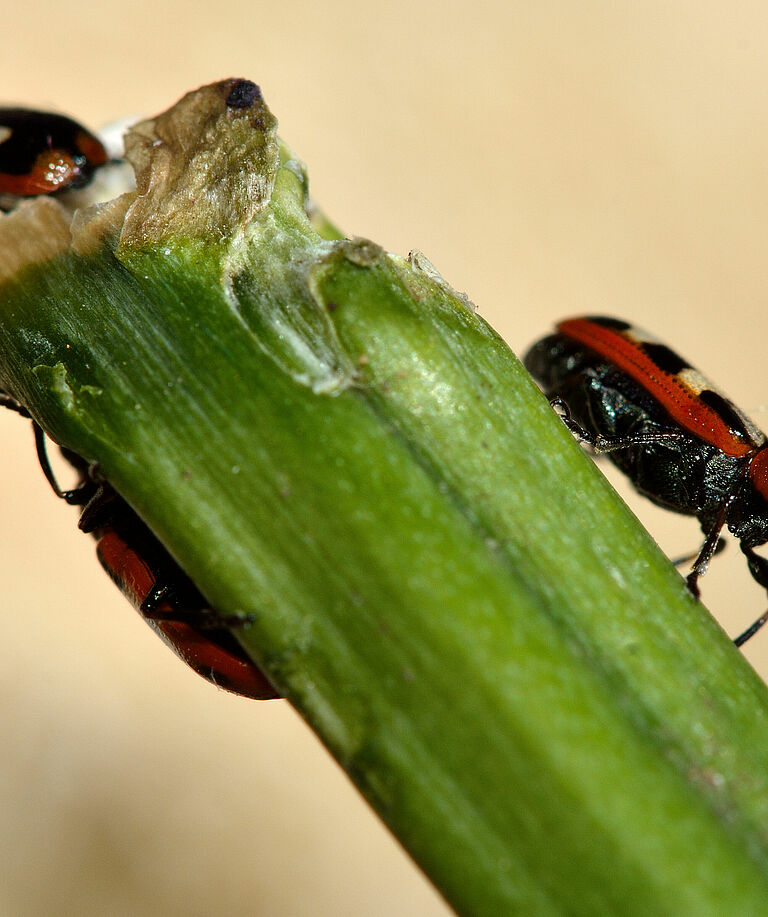
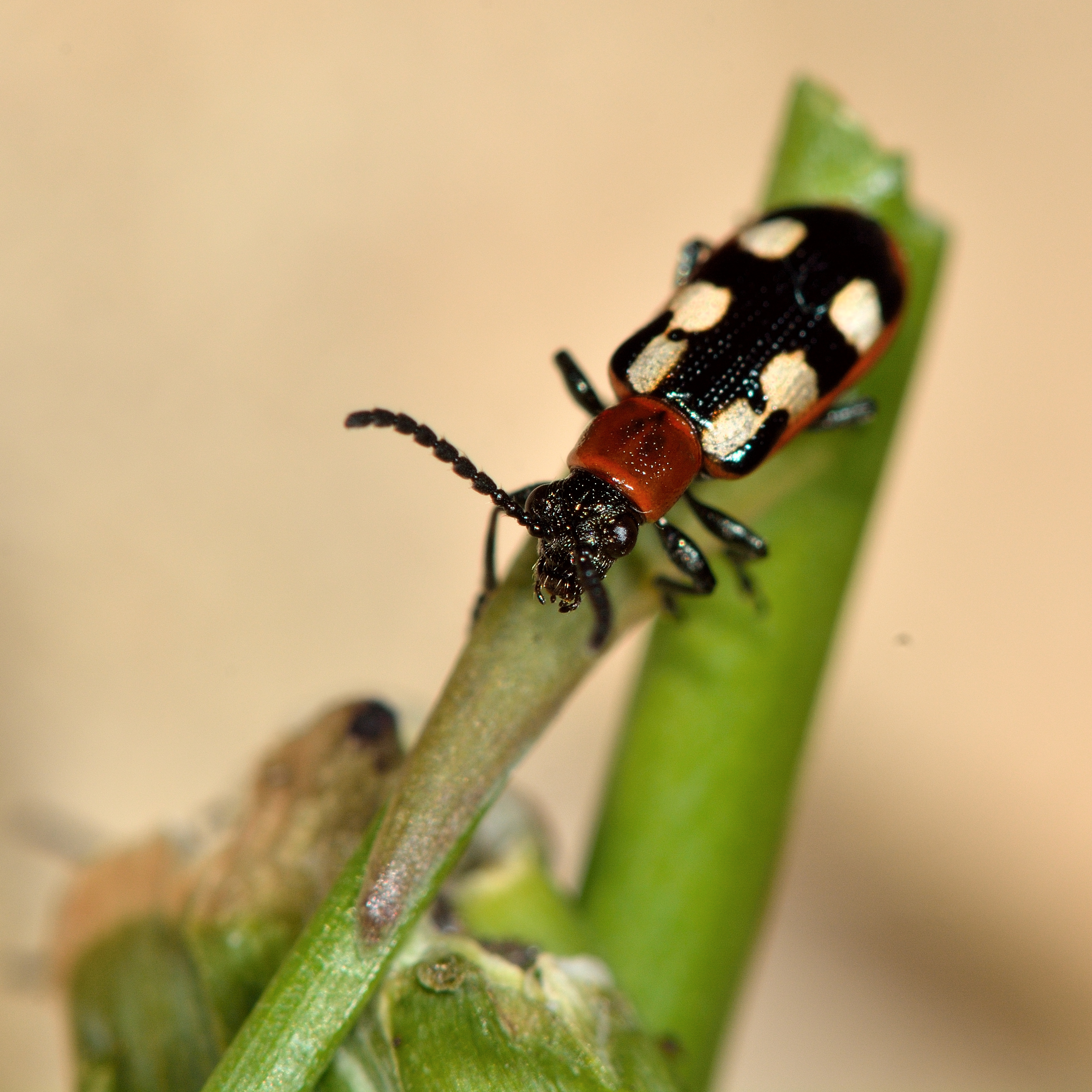
Both adults and larvae feed on the leaves of asparagus. As the larvae feed, they secrete a blackish fluid, consisting of faecal material, which may contaminate the plant.
The common asparagus beetle (Crioceris asparagi) is a major, host-specific pest of asparagus in most asparagus producing regions of the world.
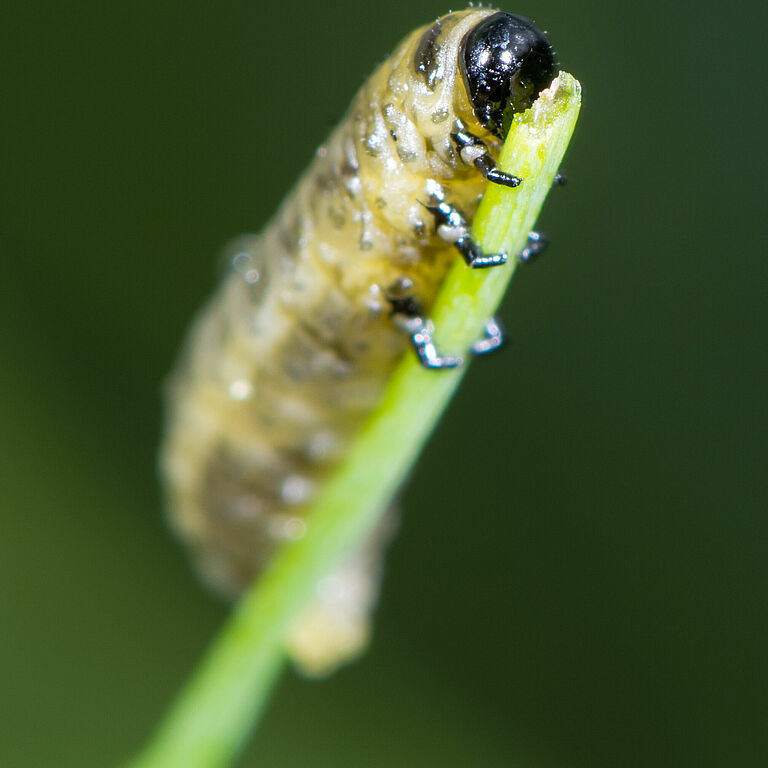

Both adults and larvae feed on the leaves of asparagus. As the larvae feed, they secrete a blackish fluid, consisting of faecal material, which may contaminate the plant.
The life cycle of the asparagus beetle has the following stages: egg, 4 larval instars, a pupal instar and the adult beetle.
Adult common asparagus beetles (Crioceris asparagi) have a shiny blue head, black antennae and a red thorax. The elytra have two distinctive rows of white or yellow spots. Eggs are oval and black to greenish brown and laid singly or in rows of 3 to 10 eggs, standing perpendicularly on the branches and leaves of the asparagus plants. Larvae are dark grey to whitish, have small black heads and three pairs of stout, light brown legs. When fully grown, the larvae drop to the ground to pupate. The adult stage overwinters and starts a new cycle next spring.