Coffee borer life cycle and appearance
The life cycle of the coffee berry borer has the following stages: egg, 2 (females) or 1 (males) larval instars, a pupal instar and the adult beetle.
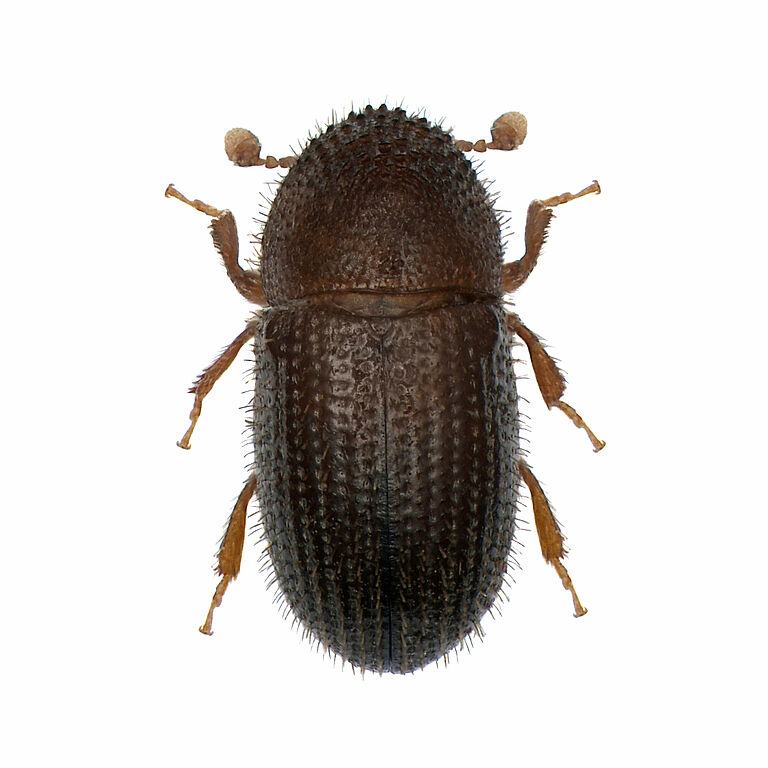
Adult coffee berry borers (Hypothenemus hampei) are shiny black beetles, with a cylindrical body slightly curved towards the rear. The elytra are lined with characteristic piriform bristles and scales. Adult females are approximately 1.7 mm long, males are smaller, with an average body length of 1.2mm. The males have reduced wings and cannot fly.
Eggs are elliptical or ovoid in shape, milky-white and shiny when first laid, 0.5-0.8 mm long and 0.25-0.35 mm wide.
Larvae are white, legless and vermiform and covered with fine but sparse hairs. They have well-developed mouth parts. The first larval instar is about 0.6-0.8 mm long, and a fully developed second instar female larva is about 2.2 mm long.
Pupae are white, becoming yellow after 10 days of development. Mandibles, eyes, antennae, elytra and membranous wings are differentiated and easily visible. Female body length 1.7 mm; male 1.2 mm.
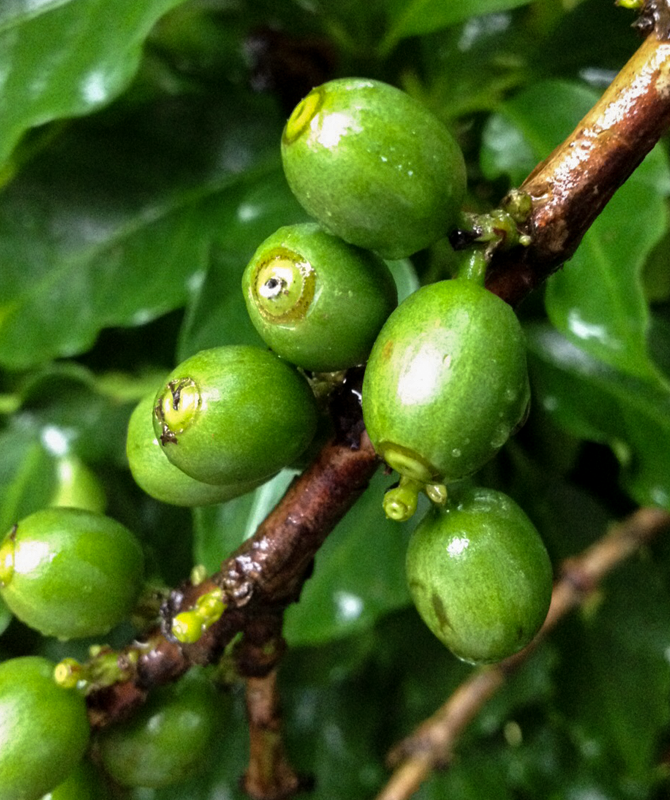
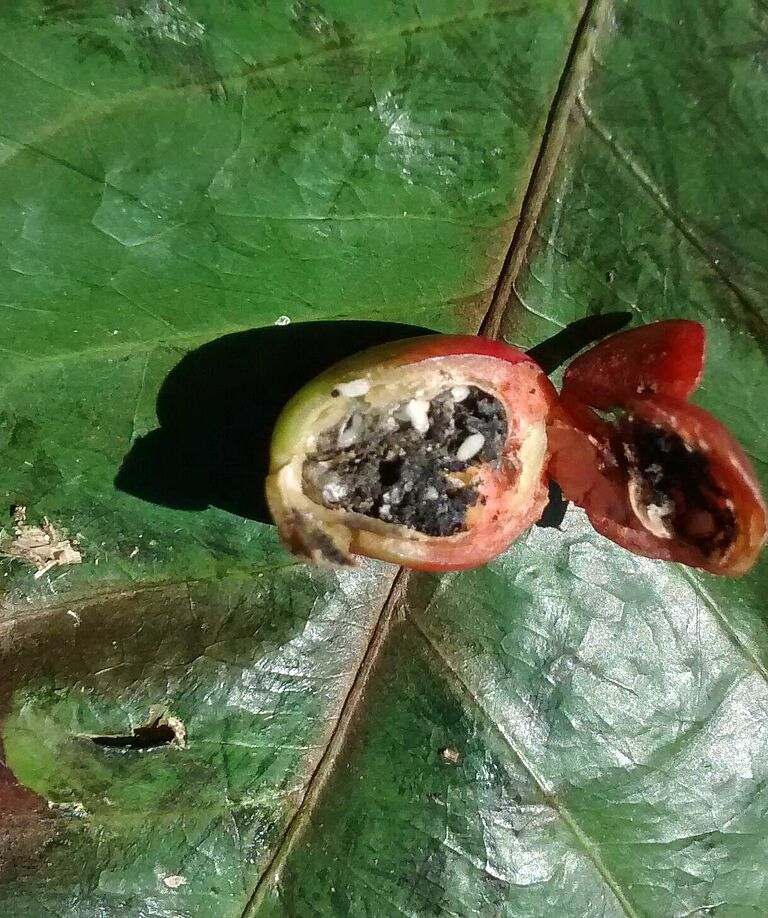
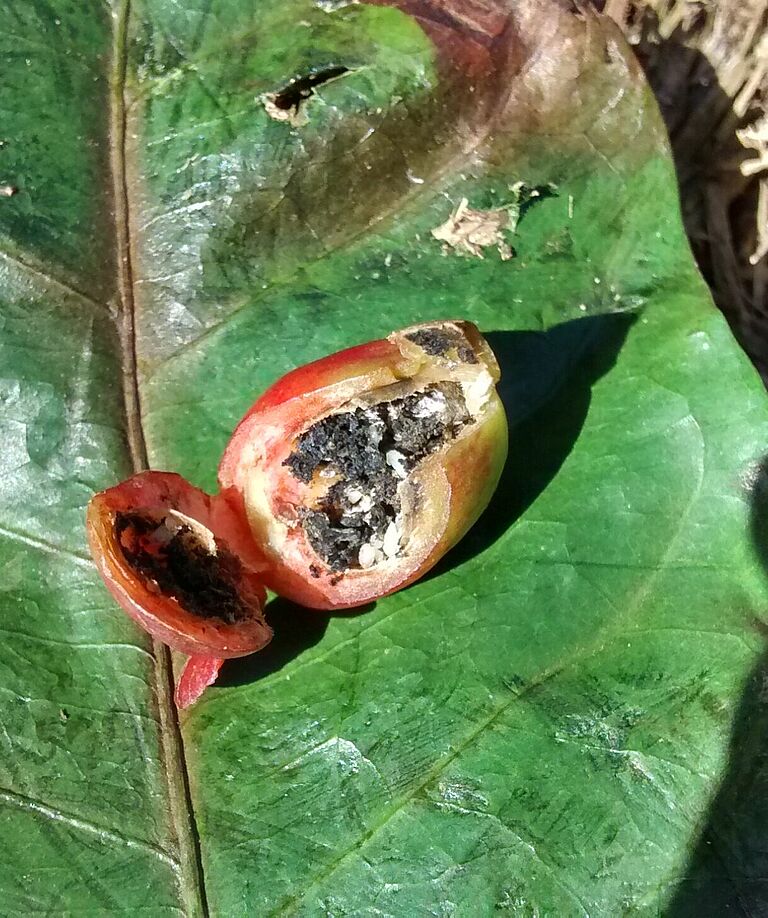
The cryptic nature of this pest makes control difficult. The female beetles enter the coffee fruits by boring a hole through the tip of the cherry and feed on the seeds. They lay 25-50 eggs within the fruit. The emerging larvae also feed on the seed within the fruit. When they have developed into adults, the females mate with their siblings and start to lay eggs again. It is possible to find up to 300 individuals in one fruit. Part of the females leave the fruit and attack other cherries.