Understanding the Broad Bean Weevil
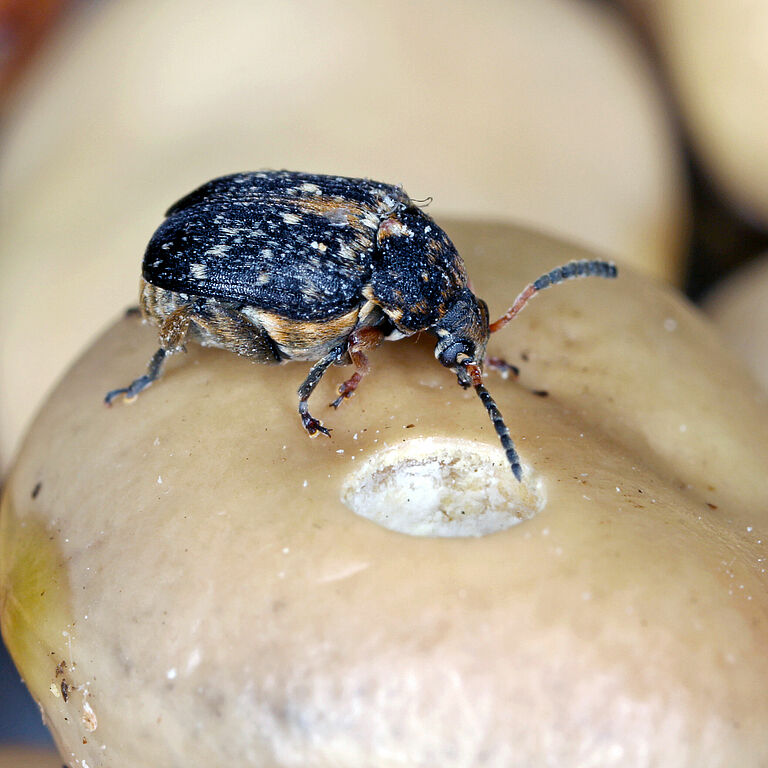
The Broad Bean Weevil (Bruchus rufimanus) is a persistent pest affecting legume crops, particularly broad beans (fava beans). As a professional grower, understanding the life cycle, detection, prevention, and control of this pest is crucial for ensuring optimal crop yields and maintaining high-quality standards for your produce.
The Broad Bean Weevil is a small beetle species measuring 3-5 mm in length, characterized by a compact body and a distinctive mottled appearance. Despite its name, it is not a true weevil but a member of the seed beetle family. The pest poses a significant threat to broad bean crops, as its larvae develop inside the seeds, causing internal damage that reduces both yield and marketability.
Life cycle
- Egg Stage: Female beetles lay eggs on the pods of flowering broad beans. Each female can lay up to 50 eggs, usually clustering them on the pod surface.
- Larval Stage: The larvae hatch and burrow into the pod and seeds. They feed inside the seeds, often going undetected until damage is extensive.
- Pupal Stage: Larvae pupate within the seed, emerging as adults ready to continue the cycle.
- Adult Stage: Adults overwinter in soil or stored seed stocks, becoming active in the spring to infest new crops.