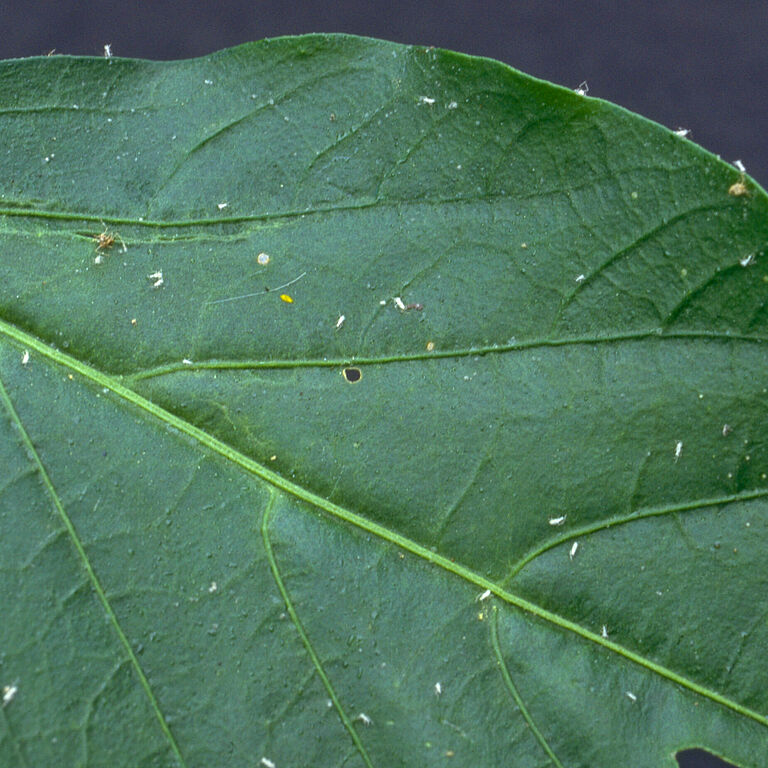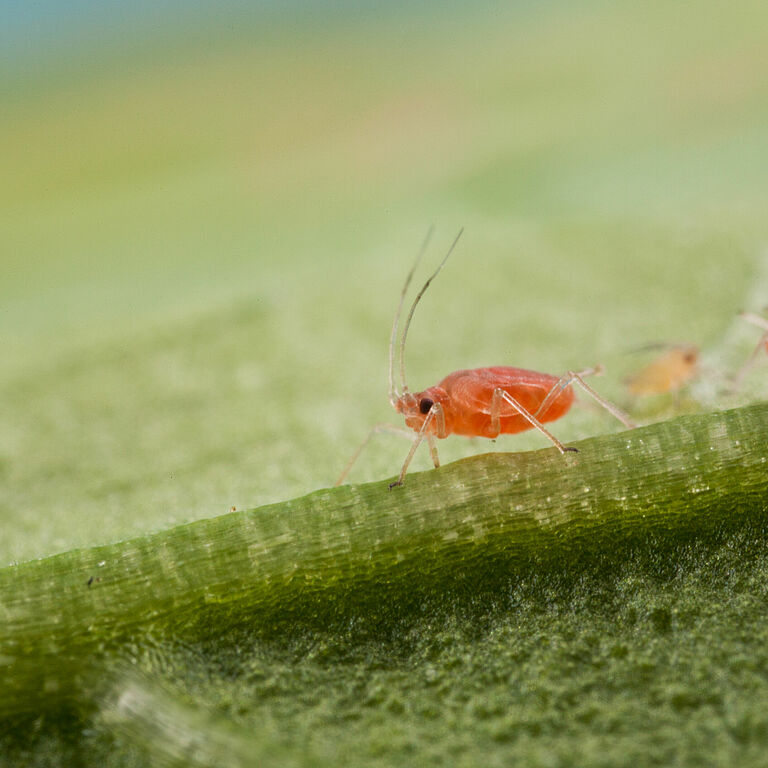

Damage symptoms
Nymphs and adults extract nutrients from the plant and disturb the balance of growth hormones. As a result, the plant’s growth is retarded giving rise to deformed leaves or, if the infestation occurs early enough in the season, the death of young plants. Retarded growth and defoliation reduce yield.
Plant sap is rich in sugars, but has a low protein content. Aphids therefore need to extract large quantities of sap to get sufficient protein. The excess sugar is secreted in the form of honeydew, making the crop and its fruit sticky. Black fungal moulds (Cladosporium spp.) grow on this honeydew, contaminating fruit and ornamental crops and rendering them unsuitable for market. At the same time, photosynthesis in the leaves is reduced, affecting production. They are usually found in closely packed colonies, although they are also capable of dispersing through the crop by walking. The tobacco aphid tends to form denser colonies, closer to the top of the plant, than the peach potato aphid. It is not known to what extent tobacco aphids (Myzus persicae subsp. nicotianae) can also transmit viruses.