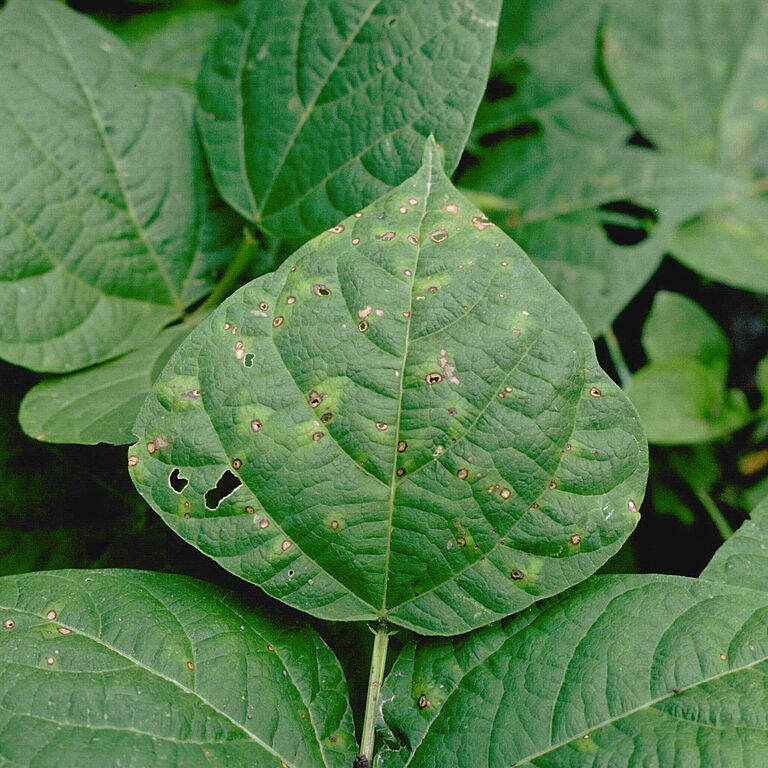

Rhizoctonia solani damage
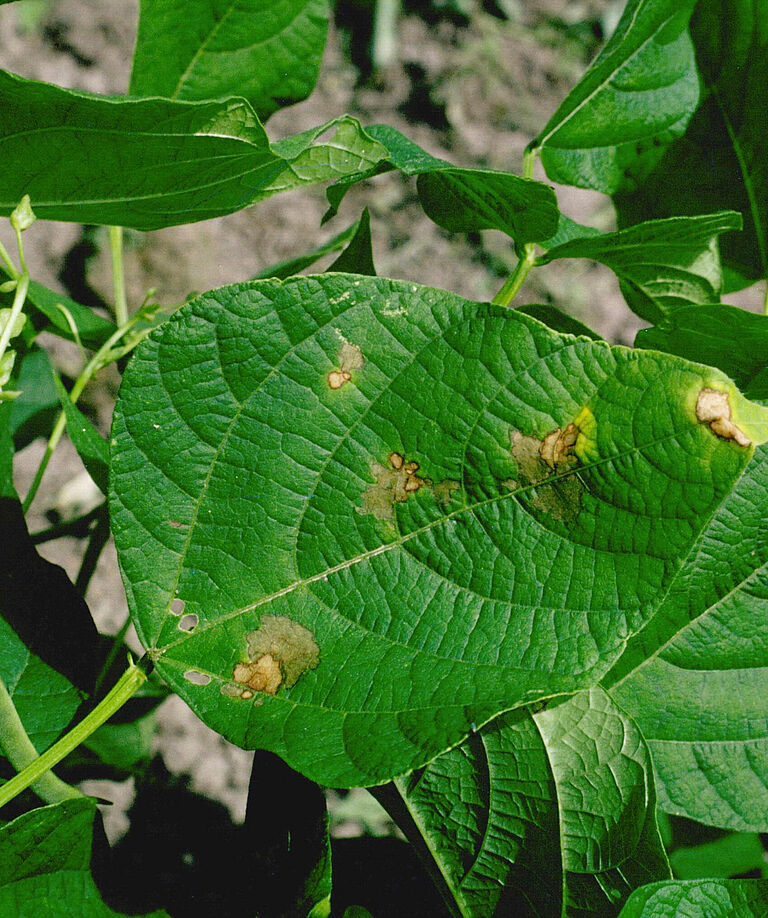
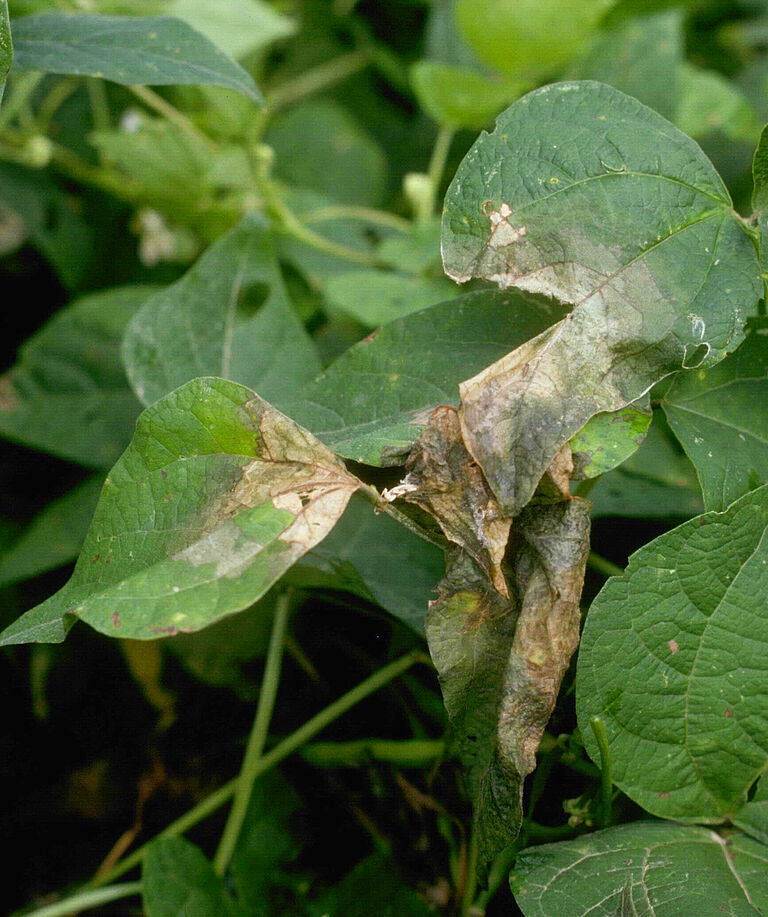
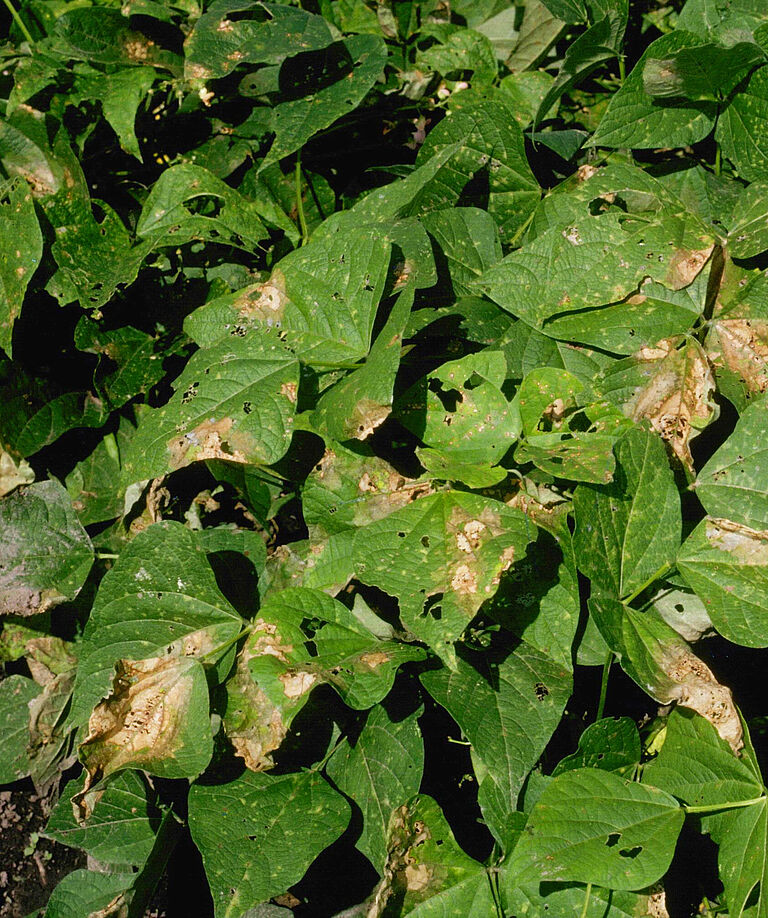
The symptoms caused by Rhizoctonia solani depend on the time of infection. In general, the fungus causes symptoms on all plant parts that are in or close to the soil. Early infection of the growing tips of the roots shortly after germination causes death of seedlings (‘damping-off’), both before and after emergence. A typical symptom of root infection is that the taproot is reduced to a thread. Reddish-brown lesions occur on the root just below the soil surface. A white collar of fungal mycelium occurs at the base of the stem. This crown rot may result from root infection or from direct infection of the foot. The fungus may also infect plant parts in contact with the soil and from there can grow upward. Lesions are brown and rot on fruits is brown, water-soaked and sunken. Late infection causes top leaves to curl up. The fruits stay firm. The disease may also show up in storage. Potato tubers get a crusty layer (black scab). Symptoms may differ between crops.
On the diseased areas, sclerotia can be seen, but they vary in size and colour and are therefore not a good feature to determine the cause of the disease.