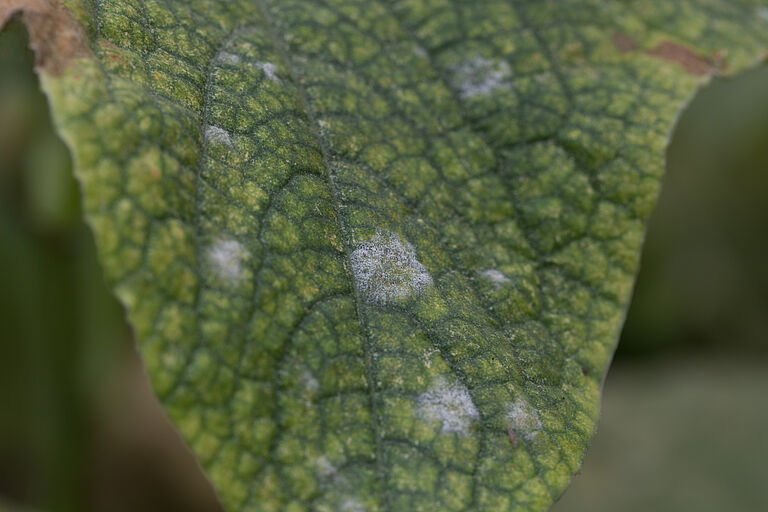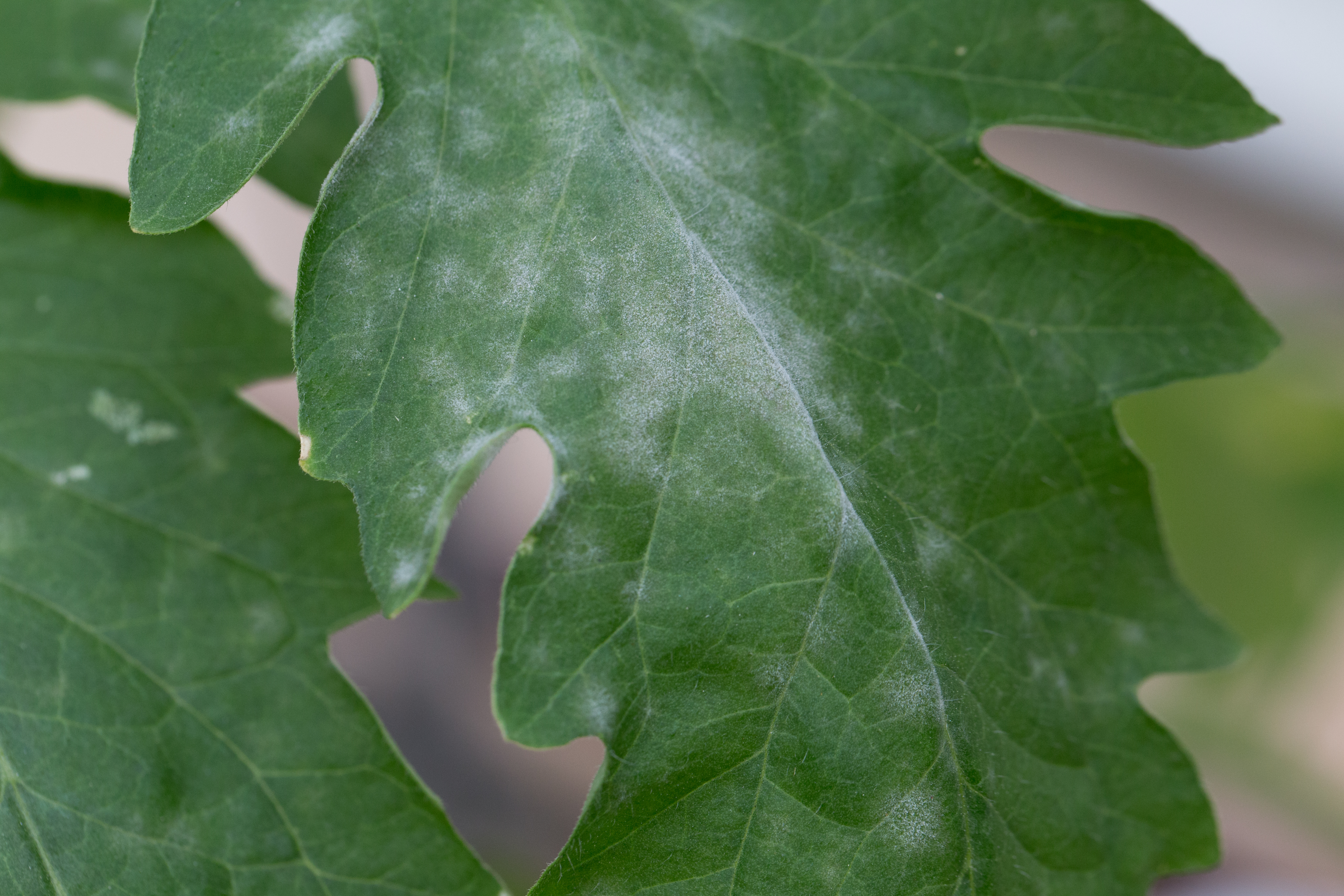

Damage symptoms
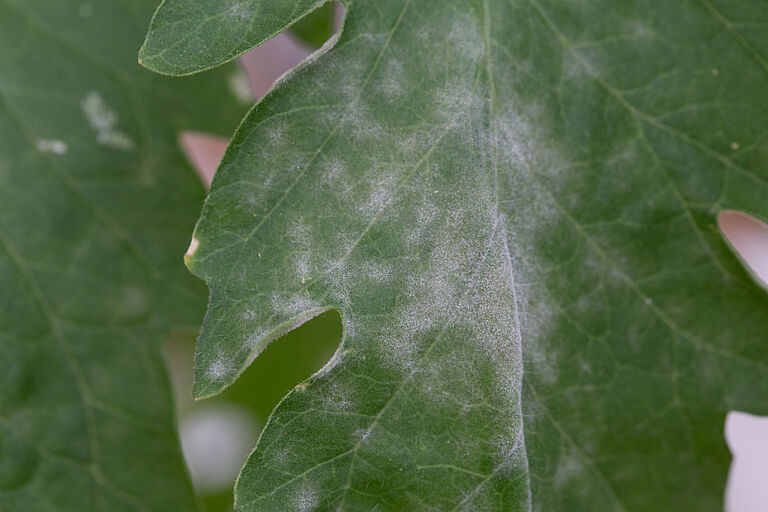
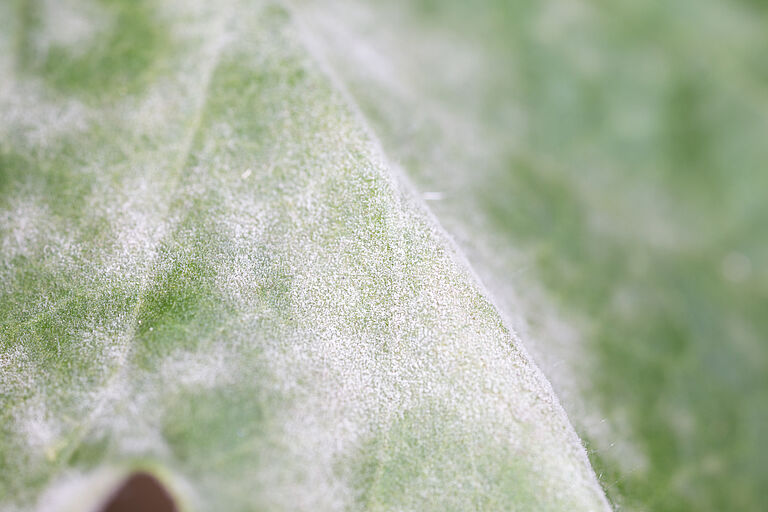
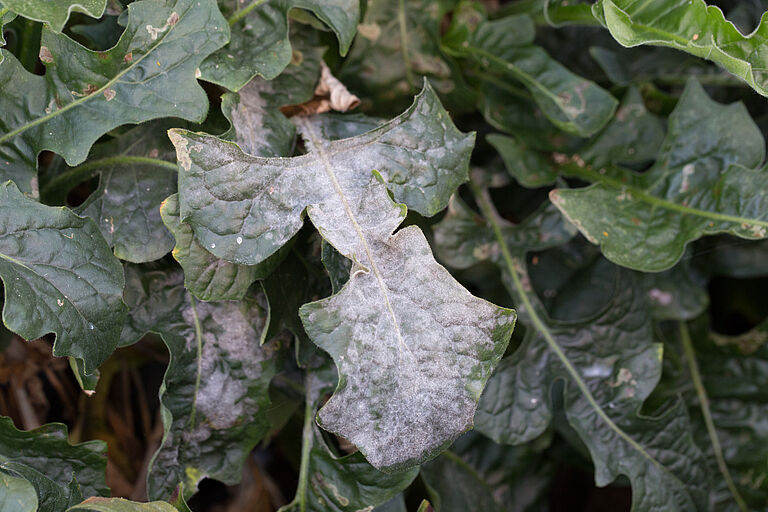
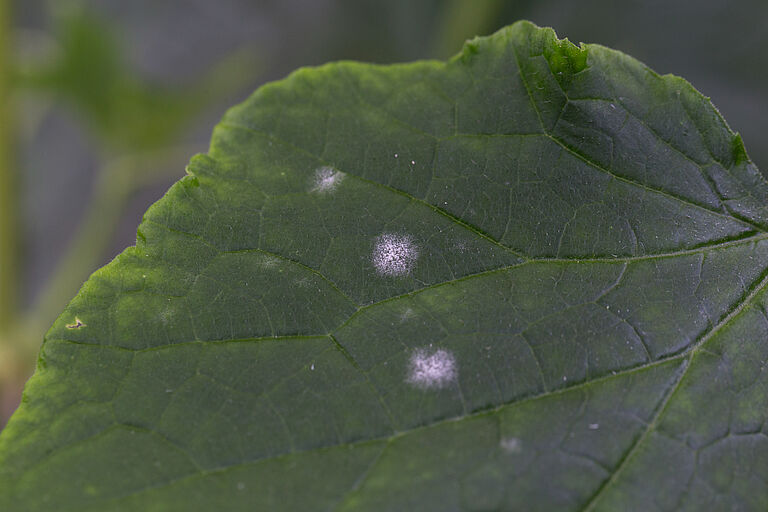
Powdery mildew symptoms are fairly similar in all plant-pathogen combinations. The symptoms are white fluffy colonies, first and foremost on the upper side of the leaf. In severe epidemics in cereals, the ears may also be infected.
In pepper, the fluffy colonies occur mostly on the underside of the leaf, because the fungus infects the plant by entering through the stomata and there are more stomata on the underside of the leaf. On the upper side, yellow spots are noticeable. In case of a severe epidemic, the fluffy colonies also appear on the upper side of the leaves. Many sweet pepper cultivars react to powdery mildew infection by dropping leaves that are not infected yet. It depends on the cultivar how soon after infection this happens.
In apple, pear, outdoor grown rose and other Rosaceae, the fungus causing powdery mildew is extremely sensitive to water and ‘hides’ on the underside of the leaves. Therefore, this is where the colonies mostly occur in these crops. In covered roses, the colonies appear first and foremost on the upper side of the leaves.
In most crops, the white colonies later turn brown or grey. Severely affected leaves may turn yellow, curl up or drop off.