Life cycle and appearance of Fusarium solani
Members of the F. solani species complex (FSSC) collectively have a very broad host range, and have been subdivided previously into formae speciales. Recent phylogenetic analysis has revealed that formae speciales correspond to biologically and phylogenetically distinct species.
F. solani is a soil-borne fungus found globally in agricultural soils. It produces macroconidia, microconidia, and chlamydospores, similar to Fusarium oxysporum, but differs in spore shape, pigmentation, and reproductive structures. Its macroconidia appear more robust, and cultures can exhibit blue, green, or creamy colors.
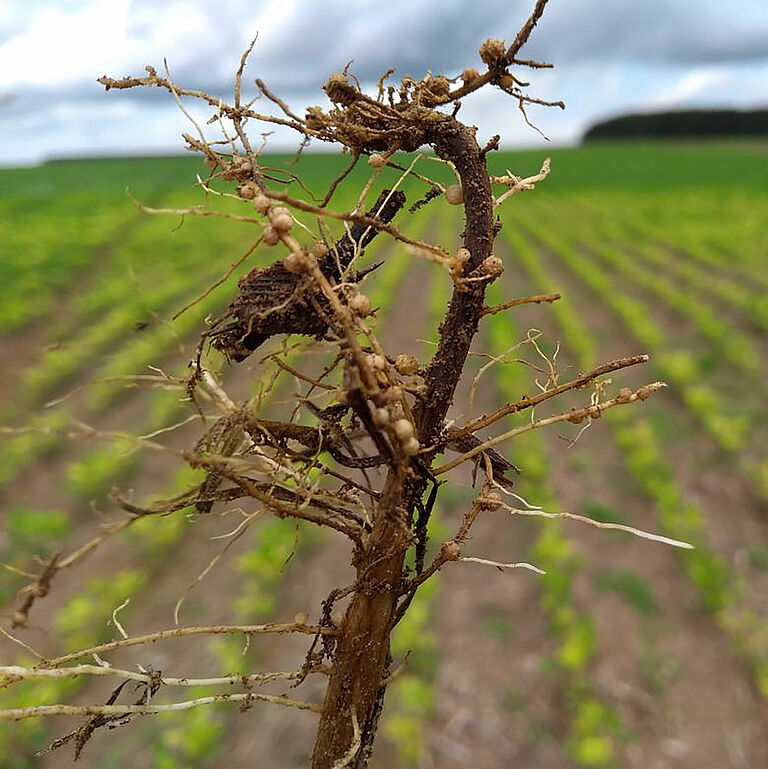
This species includes both saprophytic and plant-pathogenic members. The fungus mainly infects plants through weak points in roots or stems, leading to rots, especially in crops like beans, peas, squash, and cucurbits. Infection results in severe root rot, stunted growth, and reduced yields.
Certain isolates, such as those affecting peas and garbanzo beans, may also interact with other pathogens to increase virulence. Some forms attack woody plants, often producing perithecia and invading wounds or cankers.
Various formae speciales of F. solani target different hosts, including sweet potatoes, potatoes, faba beans, lupines and passion fruit. In woody plants, infections may develop above soil level, causing significant damage.