Damage symptoms
M. nivale is the primary pathogen in the group that causes seedling blight. Seedling blight causes pre- and post-emergence damping off. This can result in seedling death and poor establishment. Surviving seedlings may develop a brown lesion around soil level. This can develop into foot and root rot. Symptomless infections can also occur.
Foot rot becomes obvious from late stem extension onwards. It results in dark-brown staining of the lower nodes. Long dark streaks may also appear at the stem base. On older plants, infection can produce a true foot rot, where the stem base becomes brown and rotten, resulting in lodging and whiteheads. This symptom is less common but can develop very dry seasons.
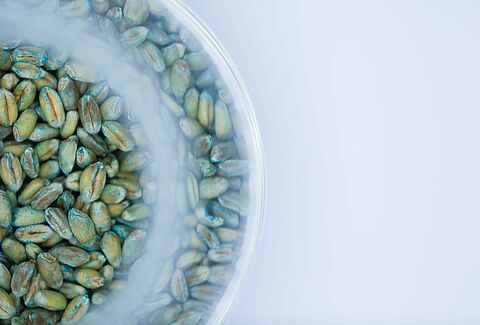
Bleached ears often show above the point of infection around the milky ripe stage (GS 75). Later infections may result in infection of the grain without obvious bleaching of the ears. The presence of orange/pink spores may also be visible on infected spikelets. As the crop ripens, symptoms become less visible. At harvest, ear blight can result in shrivelled grains with a chalky white or pink appearance, although this is not always the case.