
Skip to content

General

The only known stage in all Alternaria species is the asexual stage. Conidia and mycelium overwinter in the soil and on crop residues and cause primary infection of the leaves. Survival can be several years, up to eight years for several Alternaria spp.

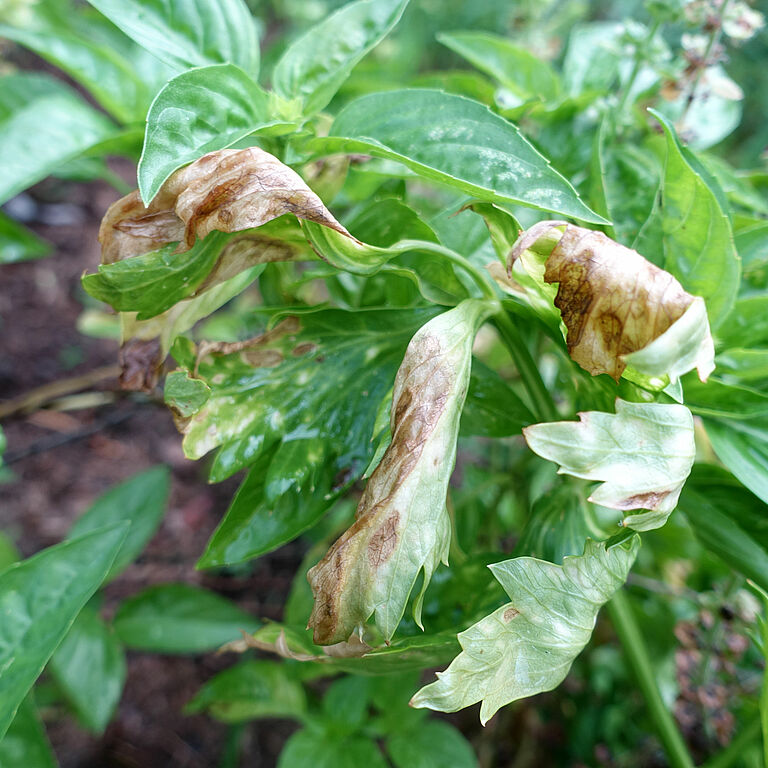
Typically, Alternaria causes early blight of potato and early blight of tomato, which presents itself as spots on leaves, petals and stems. These spots can be distinguished by the dark and brown concentric rings that are caused by sporulation. Species may differ in specific symptoms.

Biological solutions for Early blight

Filters:
Clear all filters
Show all Show less
products found:

Questions or need help?

Find a reseller
  • Easy to use
  • Minimal resistance
  • No chemical residues
  • No pre-harvest intervals

Learn more about

Damage symptoms

Alternaria solani causes small green to dark brown spots to occur on leaves. Those spots then turn into dark brown angular lesions with a yellow halo restricted by leaf veins. Lesions can easily rupture. Other symptoms are brown lesions on stem and foot. On fruits, dark sunken, leathery lesions occur at the side of the stem.
Life cycle and appearance of Early blight

From the primary infection of leaves, Alternaria solani can spread to the flowers (especially dangerous in crops for seed production) and to the crown.

Sporulation of Alternaria occurs at temperatures from 2-4 °C up to 28-30 °C (optimum temperatures lie between 15 and 28 °C) and at a relative humidity (RH) of over 90% or when the leaves are wet. Small differences in optimum temperature occur between species, but in general the risk of Alternaria infection is larger under quite warm and humid conditions. Infection may take place within a few hours, with lesions occurring as rapidly as two to three days later and sporulation within five days. Infection is both direct and through wounds and stomata. Spores are dispersed by wind and in some species through the splash of rain.

How to prevent Early blight

  • Remove crop residues, weeds and volunteer plants.
  • Use clean seed and propagation materials.
  • Practice crop rotation, in particular when spores surviving in the soil are the main source of infection. Especially wheat and barley reduce the number of surviving conidia in the soil.
  • Use resistant cultivars against early blight (Alternaria solani).
  • Prevent damage during harvest (in potato and carrot).
  • Post-harvest storage at 0-1oC.
  • A. brassicae and A. brassicicola: adjust the sowing date to avoid conditions conducive to infection.
  • In greenhouses: avoid high RH.

Prevent plant diseases by optimizing plant potential and crop resilience.

Need help?