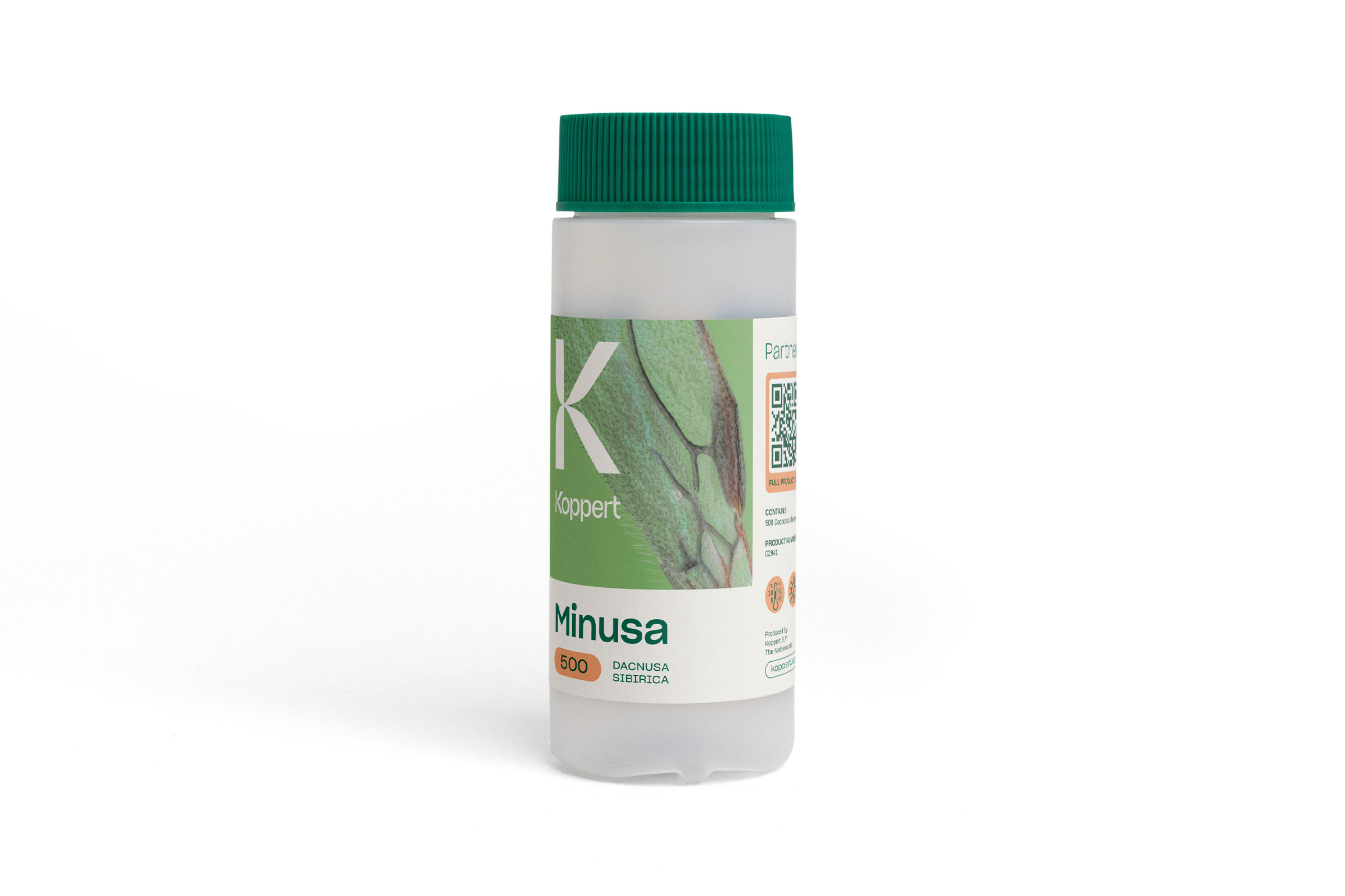
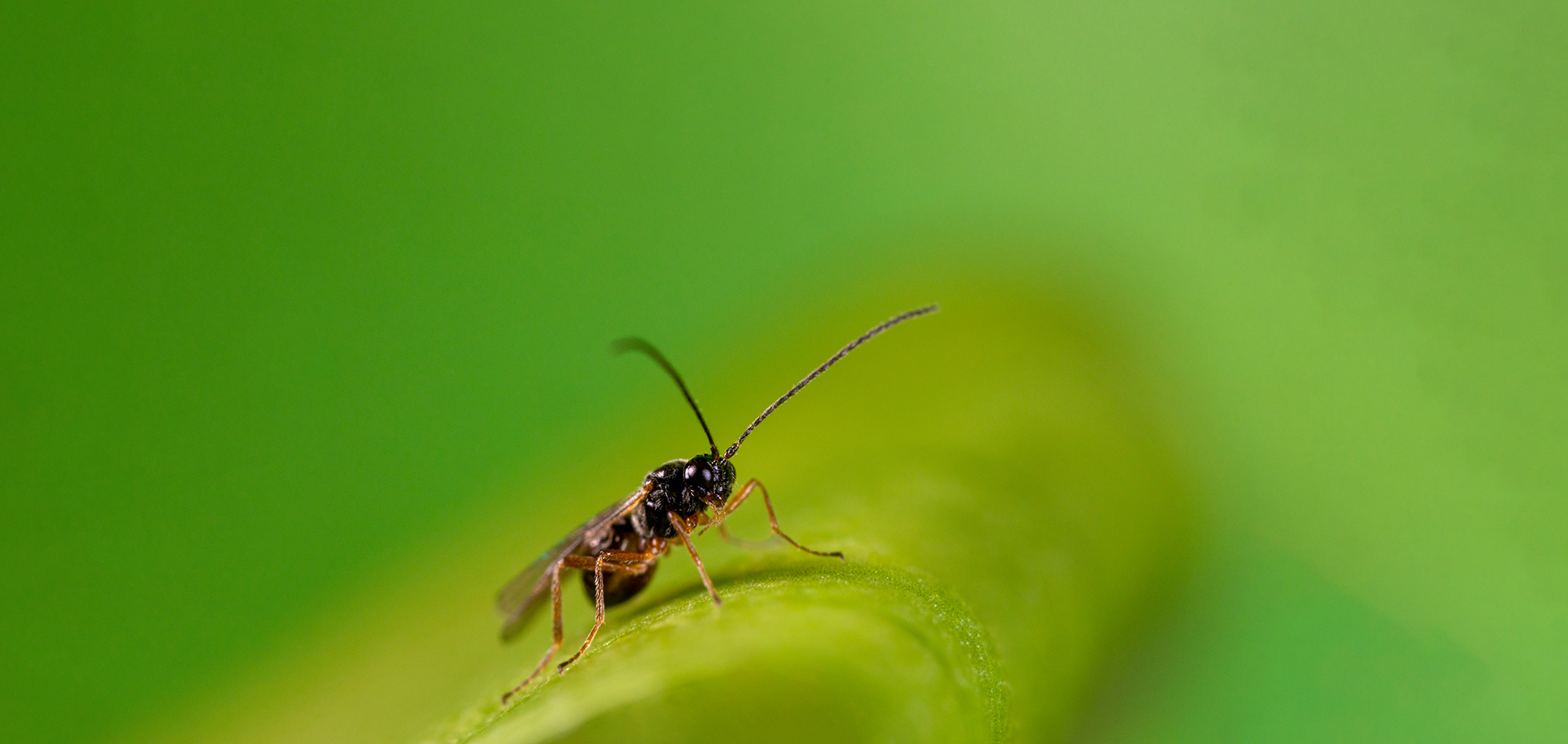


Minusa
- Dacnusa sibirica
- Parasitic wasps
Use for:
-
For the control of leaf miners
-
Effective at low leaf miner densities
-
Also effective at low temperatures
- Jump to:
- Use for
- Product details
- Directions for use
Use for
Pests
Leaf miners (Lyriomyza spp.).
"The general conditions of Koppert (Koppert B.V. and/or of its affiliated companies) apply. Only use products that are permitted in your country/state and crop. Always comply with the conditions specified in local product registrations. Koppert cannot be held liable for unauthorized use. Koppert is not liable for any loss of quality if the product is stored for longer than recommended and/or under incorrect conditions."
Product details
Mode of action
The adult female parasitic wasps of Dacnusa sibirica preferably lay their eggs inside first and second instars of the leaf miner larva. The parasitic wasps develop inside the leaf miner pupa. The adult wasp will emerge from the pupa.
Visual effect
It is not possible to see on the outside if the leaf miner larvae or pupae are parasitized.
Product specifications
| Pack size | 500 adults. |
| Presentation | 100 ml bottle. |
| Carrier | None. |
Directions for use
Dosage
The dosage of Minusa depends on climate, crop and leaf miner density and should always be adjusted to the particular situation. Start introduction as soon as the first mines are visible in the crop. Introduction rates typically range from 0.25-0.5 per m2/release. Releases should be repeated at least 3 times at weekly intervals or until control is achieved. At higher temperatures (>25°C/77°F) and/or higher infestation rates it might be better to use Miglyphus. Consult a Koppert advisor or a recognized distributor of Koppert products for advice on the best strategy for your situation.
Environmental conditions
Minusa is more effective than Miglyphus at lower temperatures (<20°C/68°F). When temperatures rise Minusa can be supported by Miglyphus.
Combined use
Can be combined with Miglyphus.
Side effects
Pesticides can have (in)direct effects on biological solutions. Find out which pesticides have side effects on this product.
Koppert One – Side EffectsStorage time after receipt
Apply as soon as possible after receipt. If necessary, the product can be stored for 1-2 days.
Storage temperature
8-10°C/47-50°F.
Storage conditions
In the dark, bottle standing.