
Skip to content

Biological solutions for Avocado

Filters:
Clear all filters
Show all Show less
products found:

Questions or need help?

Find a reseller
  • Easy to use
  • Minimal resistance
  • No chemical residues
  • No pre-harvest intervals

Learn more about

Integrated Pest Management in avocado
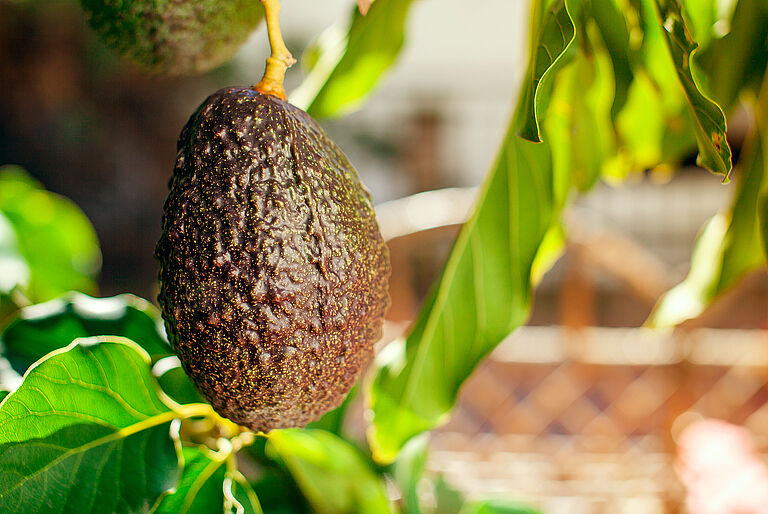
Integrated pest management (IPM) is an important component of avocado protection to manage pest populations and minimize the impact of pesticides on the environment. This approach combines a range of methods, including pest monitoring, cultural practices, biological control, and chemical control as needed.

In avocado production, trees are susceptible to a range of pests, including thrips, spider mites and ants. These pests result in reduced yield and economic losses of this valuable product.

Beneficial insects such as predatory mites and ladybugs can be introduced to prevent significant damage to the trees. Using biological pest control in avocado production can reduce the reliance on harmful chemicals, preserving the natural balance of the ecosystem.

Avocado trees are also susceptible to a range of root diseases which can have a considerable effect on the growth of trees and fruits. Antagonistic fungi help to prevent infestations by these fungi.

In several countries, regulations are in place that limit the use of certain pesticides and require farmers to implement sustainable farming practices. IPM allows farmers to comply with these regulations and ensure safe and environmentally friendly crop production.

Pests in avocado

Avocado trees are susceptible to a range of pests that can cause significant damage to the trees and fruits. Such pests are thrips, spider mites and ants.

Thrips

Thrips are a concern as they feed on avocado flowers and young fruits, resulting in scarred surfaces and deformities. Common species in avocado are Western flower thrips (Frankliniella occidentalis), Blossom thrips (Frankliniella insularis) and Avocado thrips (Scirtothrips perseae).

Spider mites

Spider mite is another common pest that attacks avocado trees, causing discoloration of leaves, webbing, and leaf drop. In avocado the species Oligonychus perseae and Avocado brown mite (Oligonychus punicae) are commonly occurring.

Leafcutter ants

Leafcutter ants can be an important pest especially in young trees as they can defoliate entire trees and use the leaves to cultivate their fungus gardens.

By monitoring avocado trees for these pests and using appropriate control methods, growers can effectively manage pest populations and reduce the risk of damage to their crops. 

Biological pest control in avocado

Biological pest control plays a crucial role in avocado crops. It offers an environmentally friendly alternative to chemical pesticides, reducing the negative impacts on ecosystems and human health. By utilizing beneficial insects and organisms, biological pest control minimizes the need for synthetic chemicals, thereby promoting a more sustainable agricultural system. Additionally, biological control methods are often highly specific, targeting pests while minimizing harm to beneficial organisms and pollinators. This helps maintain a balanced ecosystem within the papaya crop, preserving biodiversity and promoting long-term ecological stability. Moreover, biological pest control can help manage pesticide resistance, as pests are less likely to develop resistance against natural enemies. Overall, adopting biological pest control measures in avocado crops contributes to sustainable farming practices, reduces environmental risks, and ensures the production of healthy and high-quality fruits.

Thrips control

Thrips can be controlled with the use of predatory mites such as Amblyseius swirskii (Swirski-Mite, Swirski Ulti-Mite), the predatory bug Orius insidiosus (Thripor-I) and larvae of the lacewing Chrysoperla carnea (Chrysopa) which feed on thrips larvae. The entomopathogenic fungus Paecilomyces fumosoroseus (NoFly) can also be used to control thrips. Sticky ribbons (Rollertrap) and sticky traps (Horiver) combined with a luring substance (Lurem-TR) help in monitoring and trapping thrips.

Spider mite control

Spider mites are tiny pests that can quickly infest avocado trees, causing leaf damage and reducing fruit quality. They can be controlled with the use of predatory mites like Neoseiulus californicus (Spical, Spical Plus, Spical Ulti-Mite) and Amblyseius swirskii (Swirski-Mite, Ulti-Mite Swirski) which feed on spider mites and their eggs.

Leafcutter ant control

Leafcutter ants can be an important pest especially in young trees as they can defoliate entire trees. They can be managed by applying a glue around the stem, which prevents the ants from climbing in the trees. Koppert offers the product Pegafit for this purpose.

Pest monitoring in avocado

Pest monitoring in avocado cultivation is an essential practice to detect and manage pests effectively. By regularly monitoring the orchard, growers can identify pest populations early, assess their impact on avocado trees, and make informed decisions regarding pest control measures. Installing insect traps, like Horiver and Roller Traps, in the avocado orchard is a method to monitor thrips.

Diseases in avocado

Root diseases

Root diseases such as Phytopthora cinnamoni, Pythium spp. and Fusarium spp. can cause significant problems including wilting of entire trees.

Disease control in avocado

Soil treatments with the antagonistic fungus Trichoderma harzianum (Trianum-P) prevent problems with fungal diseases. Another product to help controlling diseases is the natural fungicide Nopath.

About

The avocado (Persea americana), also named ‘alligator pear’ is a tree originating in South Central Mexico. Its nick name points to its fruit which is botanically speaking a large berry with only one seed. The berry is green-skinned and fleshy and its shape resembles a pear or (large) egg. The avocado tree belongs to the flowering plant family of Lauraceae.

Commercially speaking, avocados are very valuable and the fruit is produced in tropical and Mediterranean regions. Avocados ripen only after they are harvested.

Need help?