Skip to content

Coleobug

  • Coleomegilla maculata
  • Predatory beetles
Testimonials
Downloads

Use for:

  • Aphids
  • Mealybugs
  • Versatile and voracious predator of a wide variety of aphids

  • High reproductive capacity and adaptability

  • Ideal for curative strategies in aphid infestations

  • Jump to:
  • Use for
  • Product details
  • Directions for use

Use for

Coleobug is an efficient predatory beetle that feeds on a wide range of prey such as aphids. It also consumes pollen and nectar, allowing it to survive in the absence of prey and remain in the crop until pests reappear. It has a high reproduction rate and a relatively short life cycle, allowing populations to establish quickly.

Pests

Effective against different aphid species.

Crops

Coleobug can be used on a wide variety of crops thanks to its adaptability and generalist diet.

"The general conditions of Koppert (Koppert B.V. and/or of its affiliated companies) apply. Only use products that are permitted in your country/state and crop. Always comply with the conditions specified in local product registrations. Koppert cannot be held liable for unauthorized use. Koppert is not liable for any loss of quality if the product is stored for longer than recommended and/or under incorrect conditions."

Product details

Mode of action

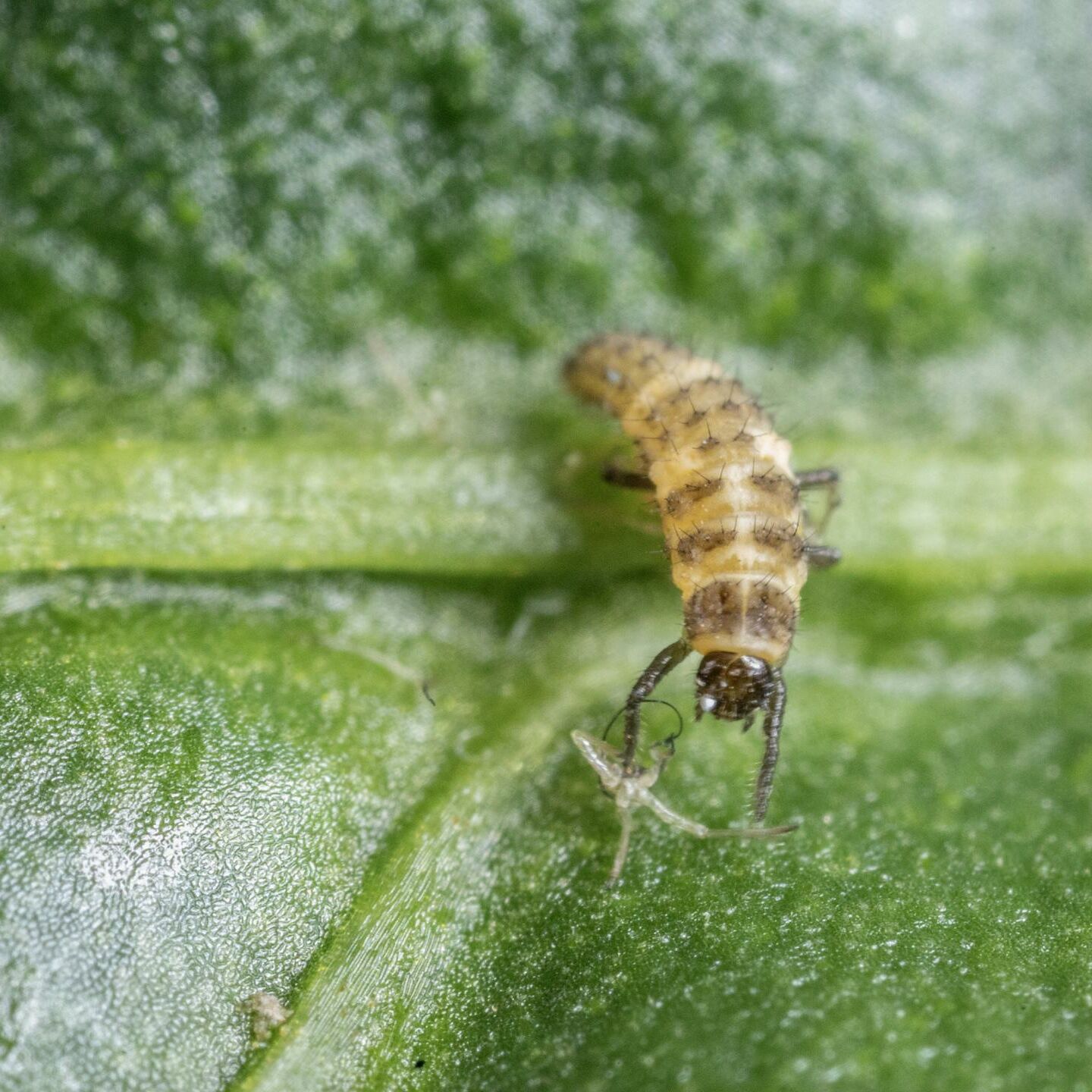
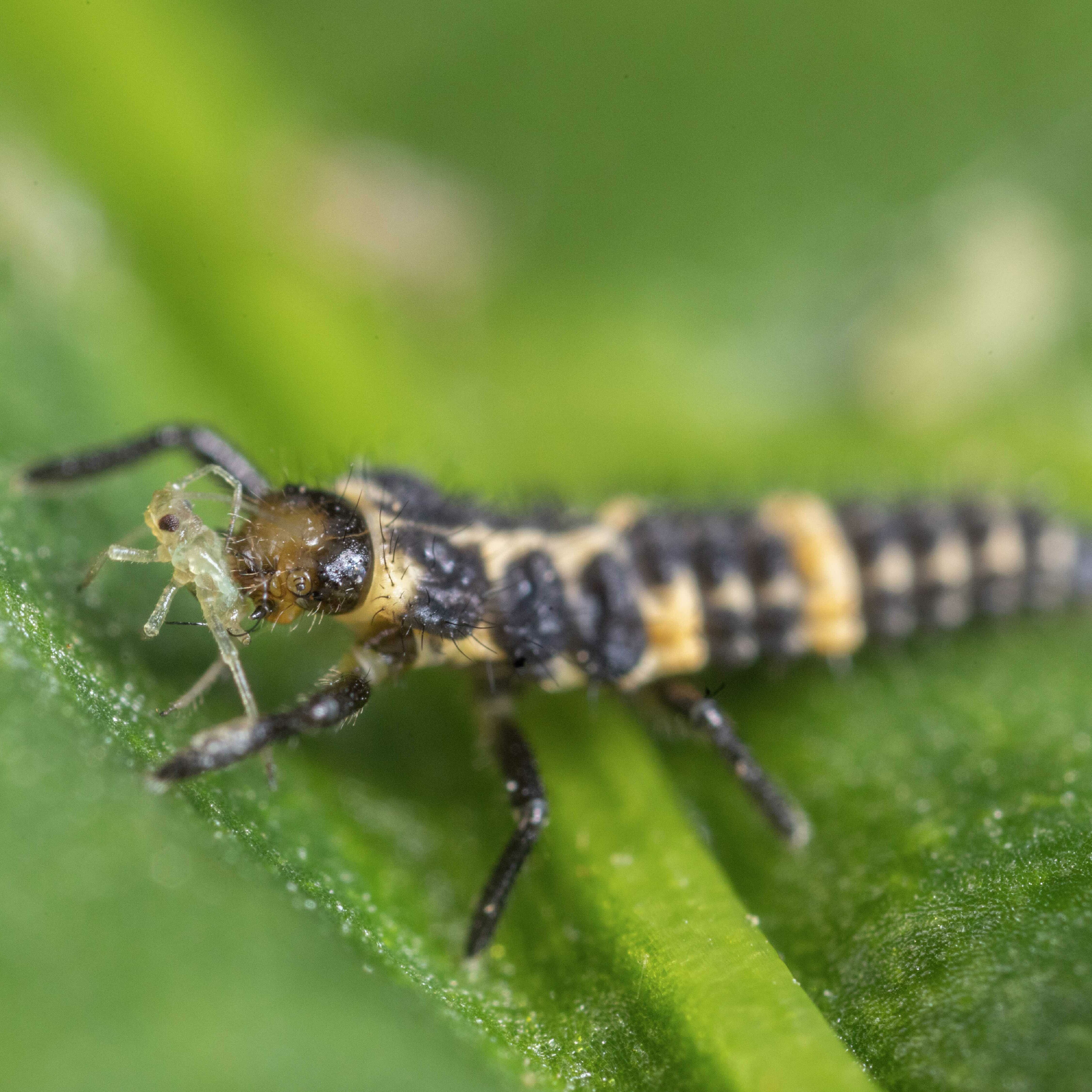
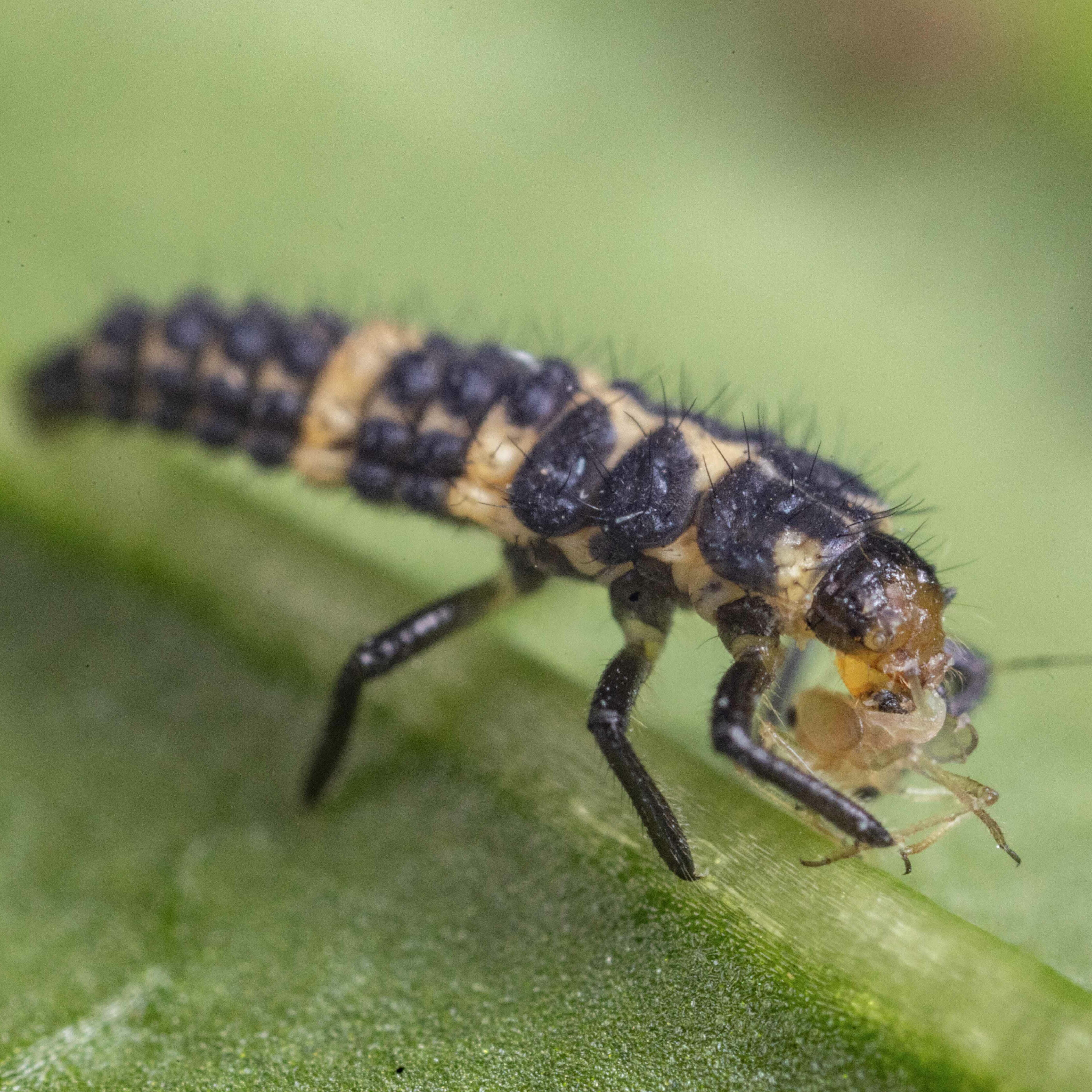
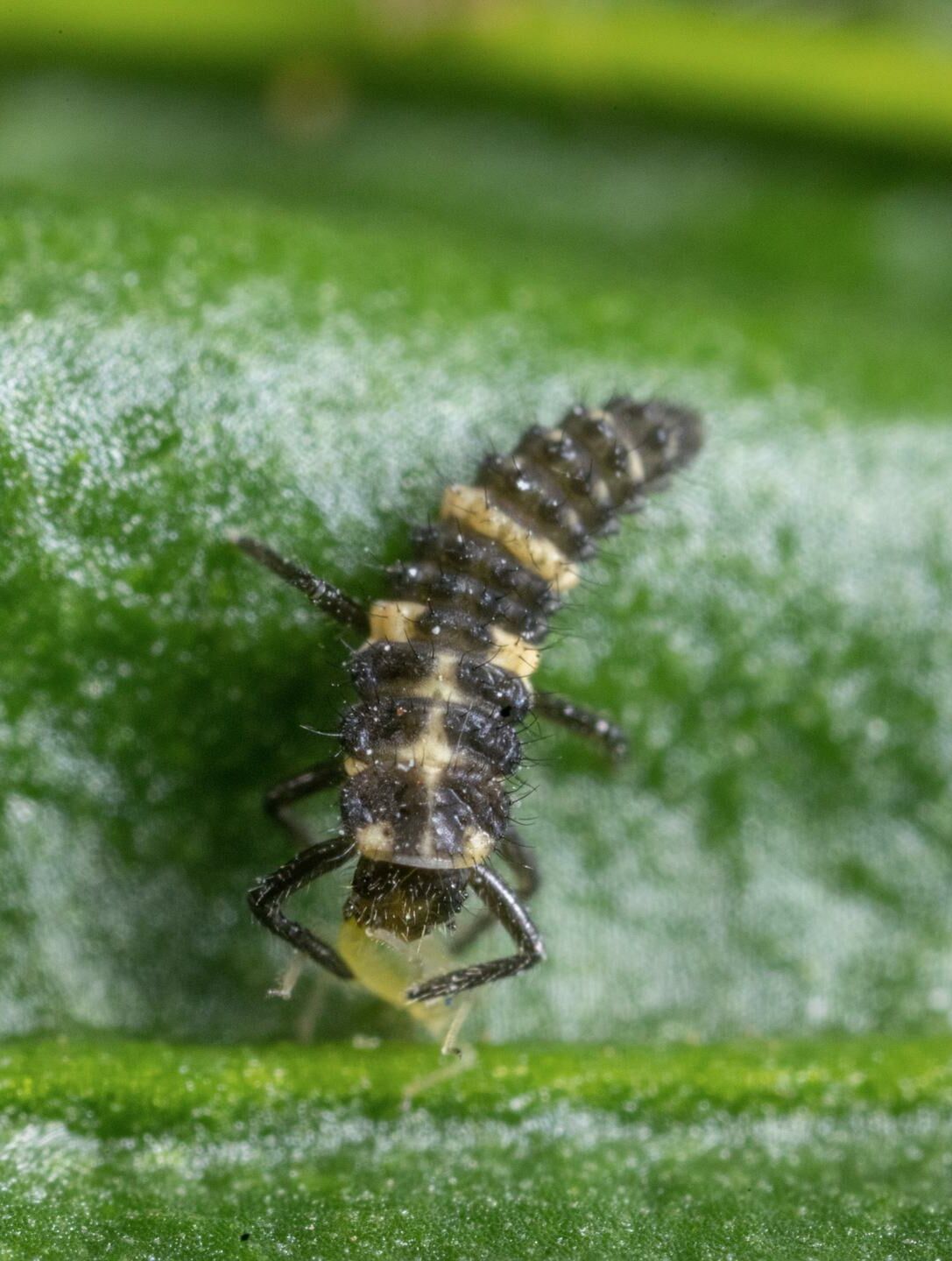
Both larvae and adults actively explore the environment in search of prey, guided by visual and chemical cues (such as aphid pheromones). Once located, the prey is captured with their mouthparts and consumed directly. The larvae are especially voracious and can consume more than 30 aphids per day. Adults also maintain a high consumption rate. Both life stages feed on all aphid instars, including winged ones (alates).

This mode of action makes it especially useful in biological control programs, as it acts quickly and can complement other agents like parasitoids or entomopathogens.

Apparence

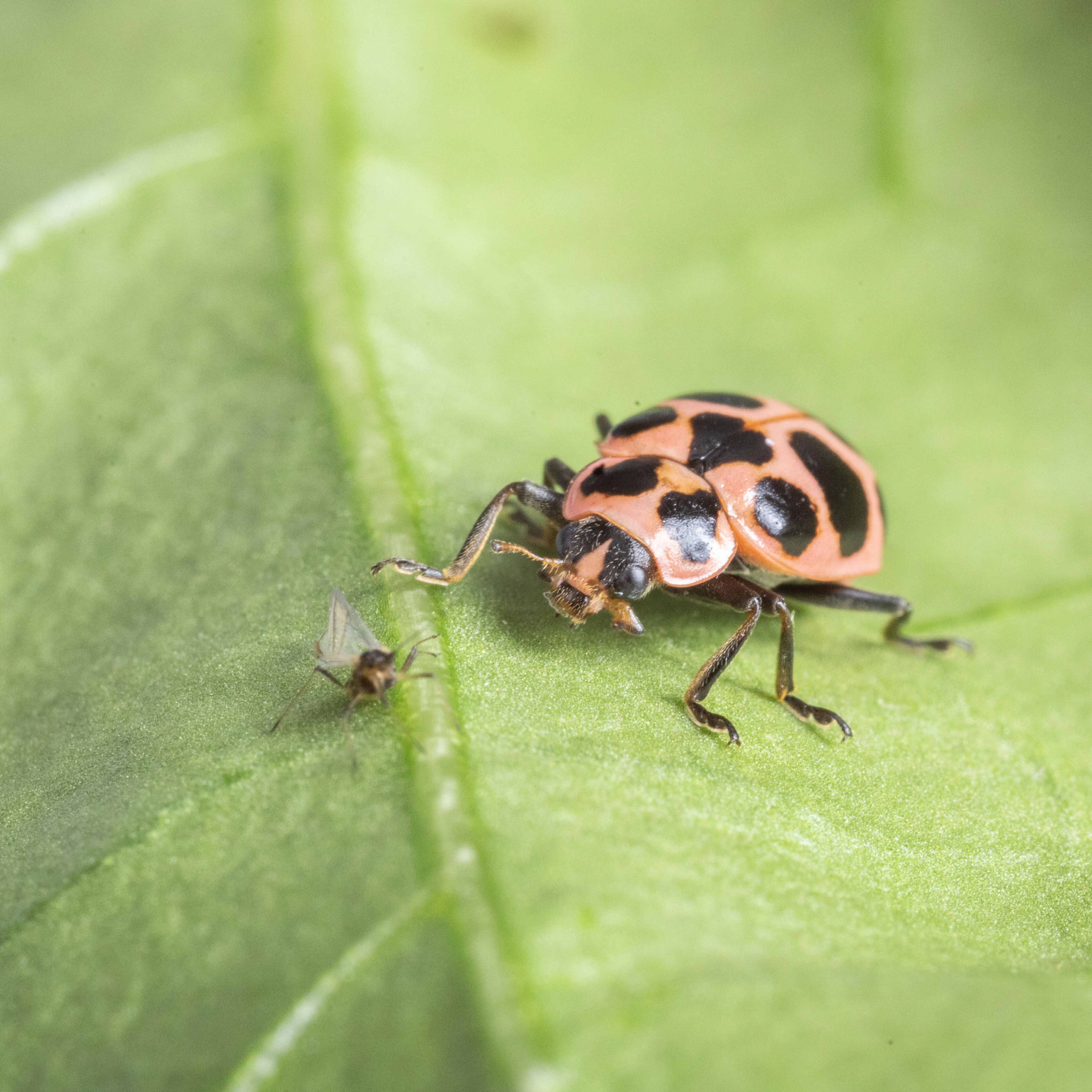
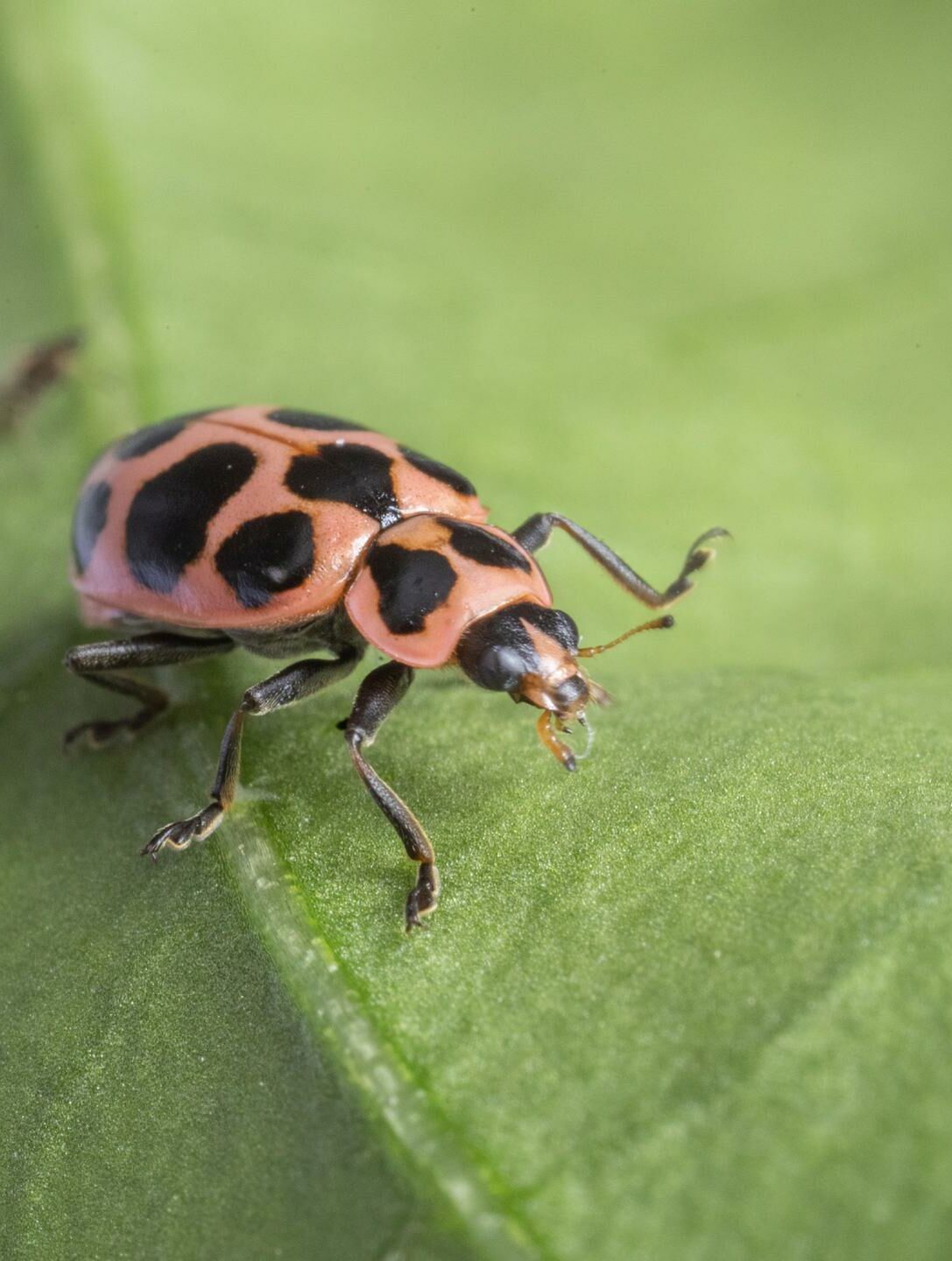
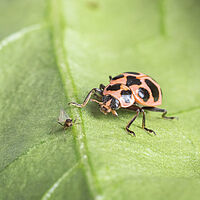
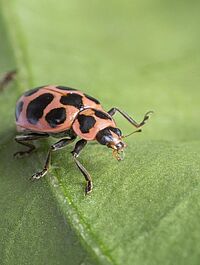
Coleobug has a distinctive and easily recognizable appearance among lady beetles. Adults are 4–7 mm long and have a bright pink or reddish-pink body. They typically have 6 black spots on each elytron (hardened wing), although the number can vary slightly. Like other coccinellid beetles, they have an oval and slightly convex shape.

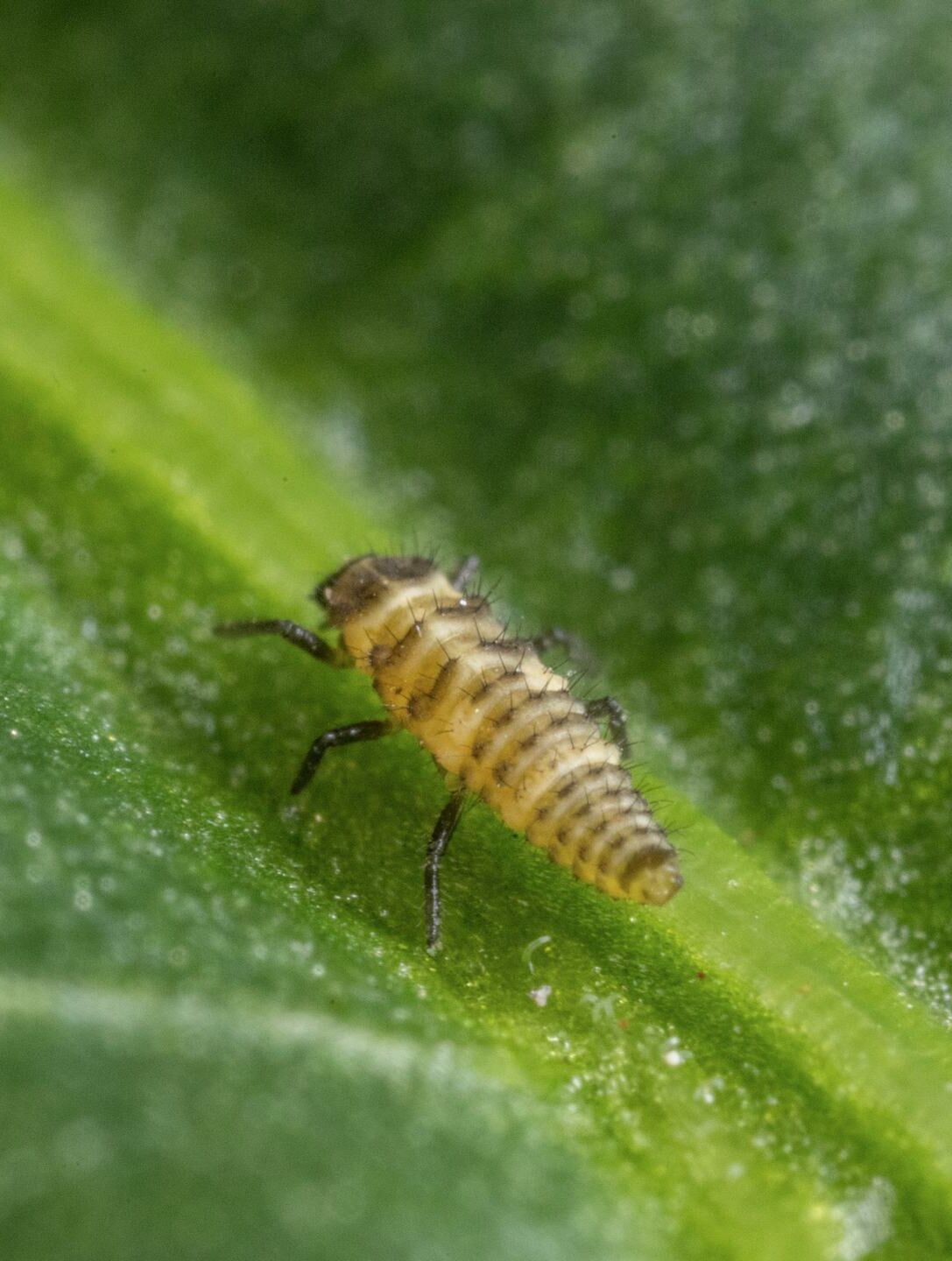
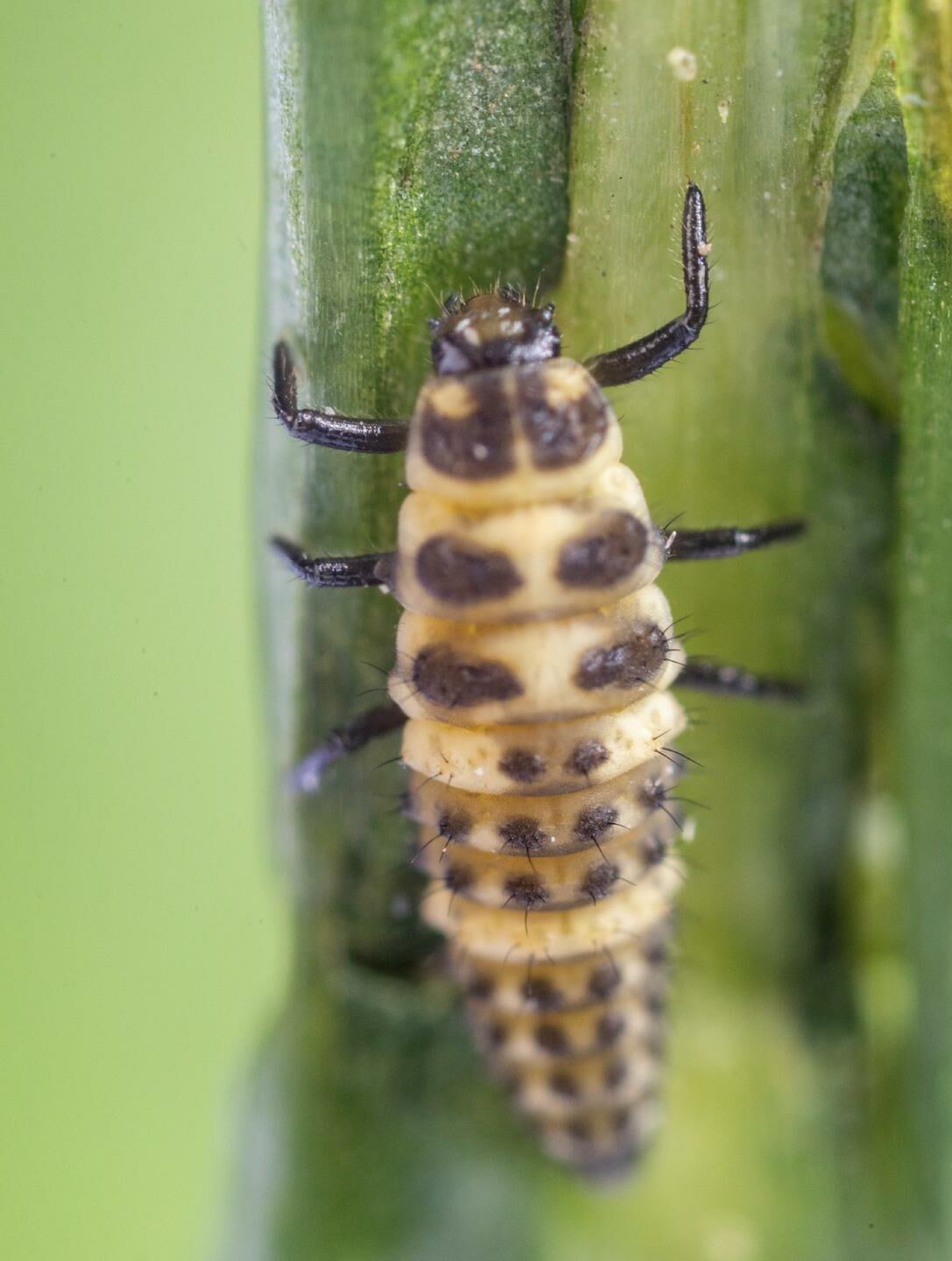
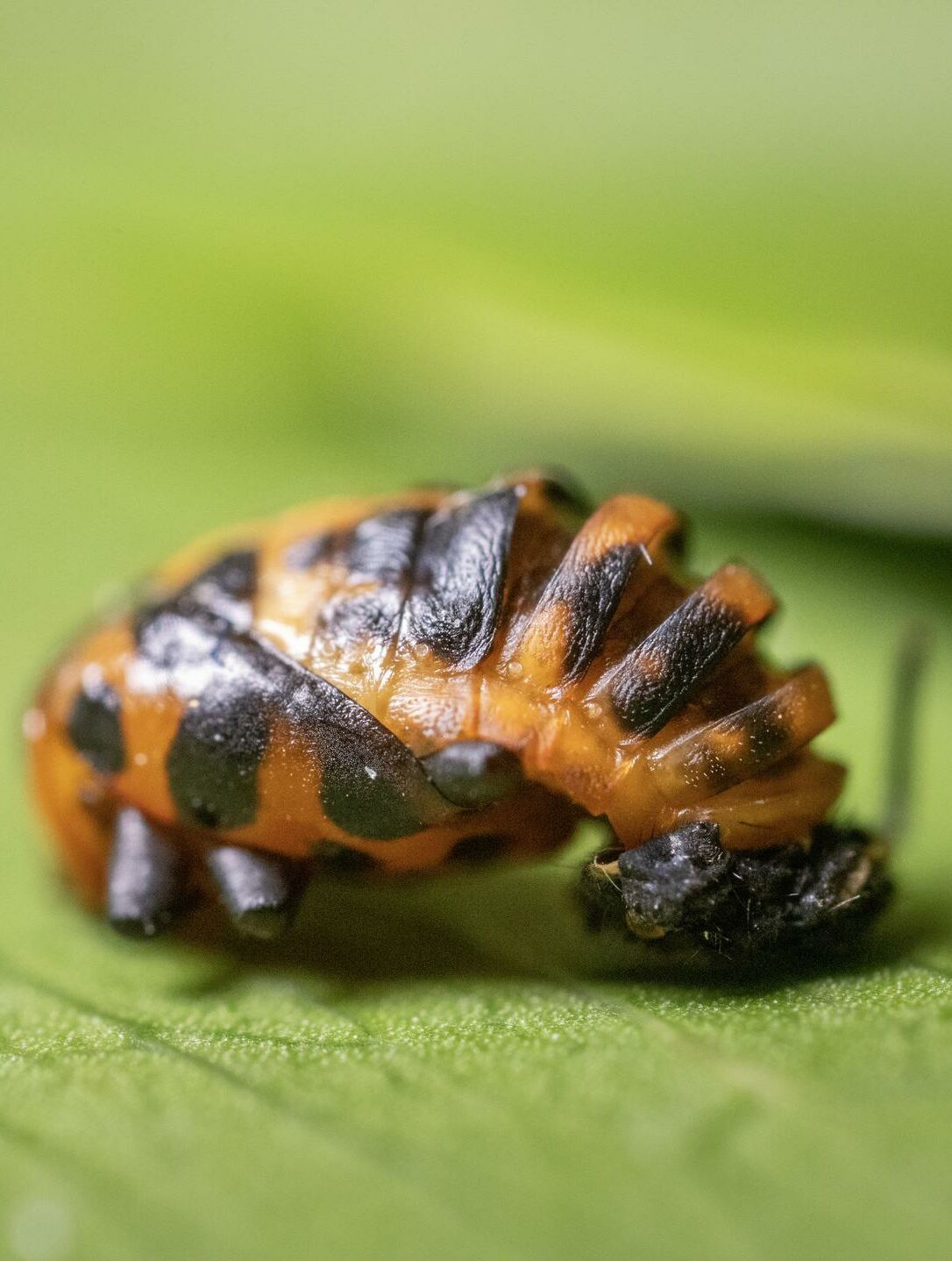
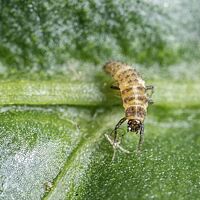
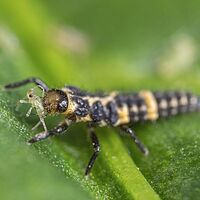
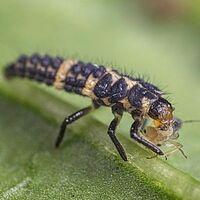
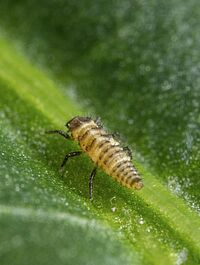
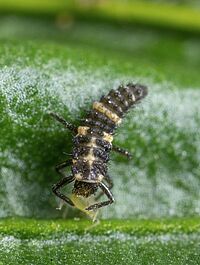
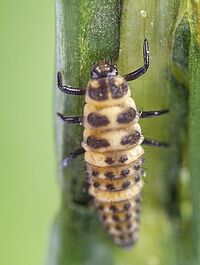
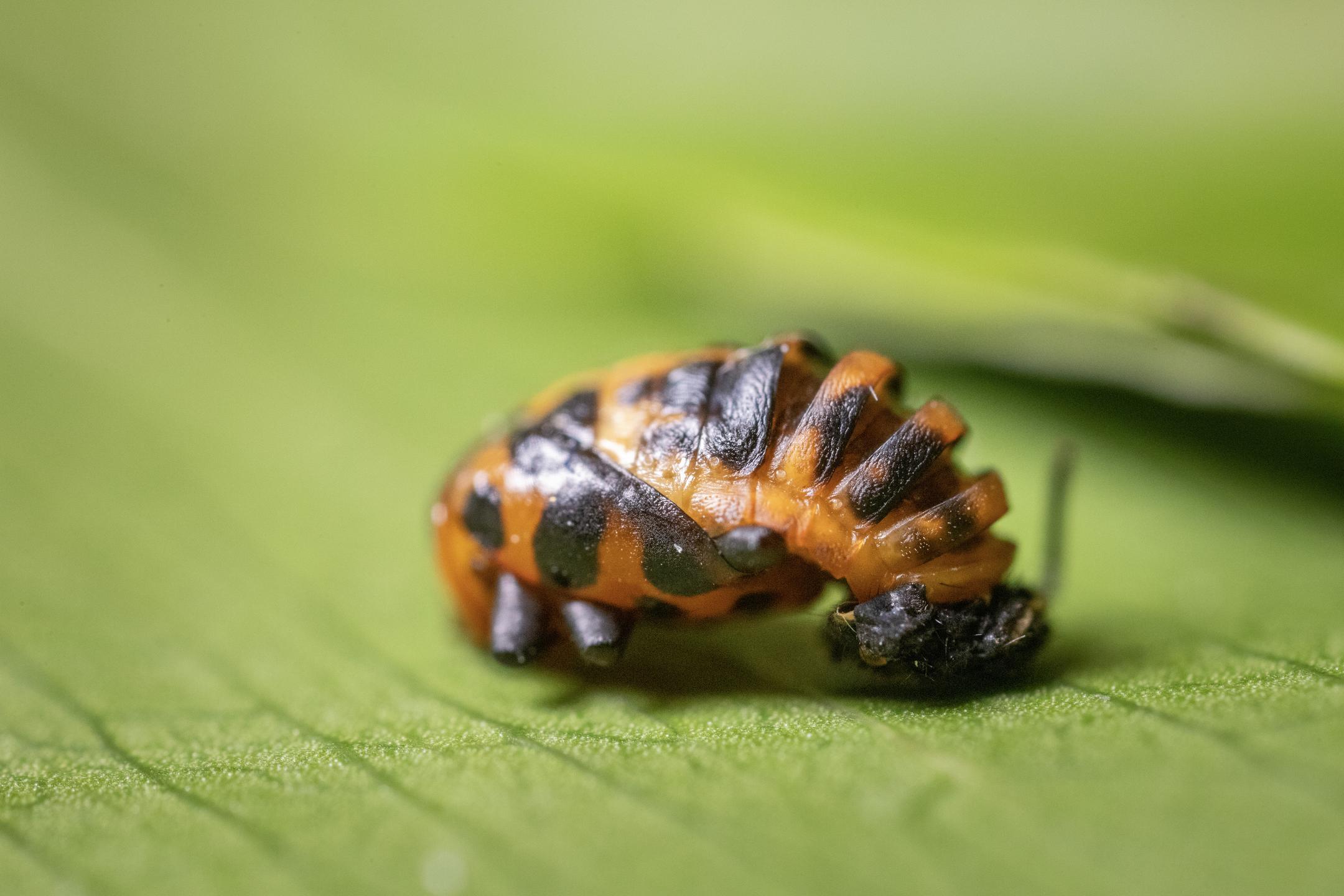
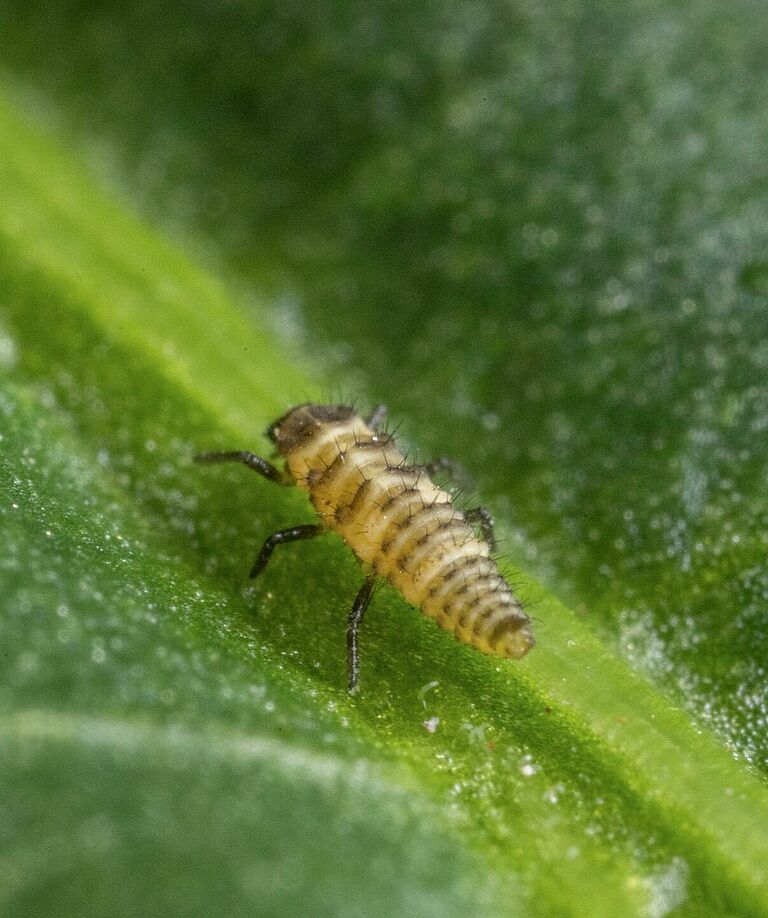
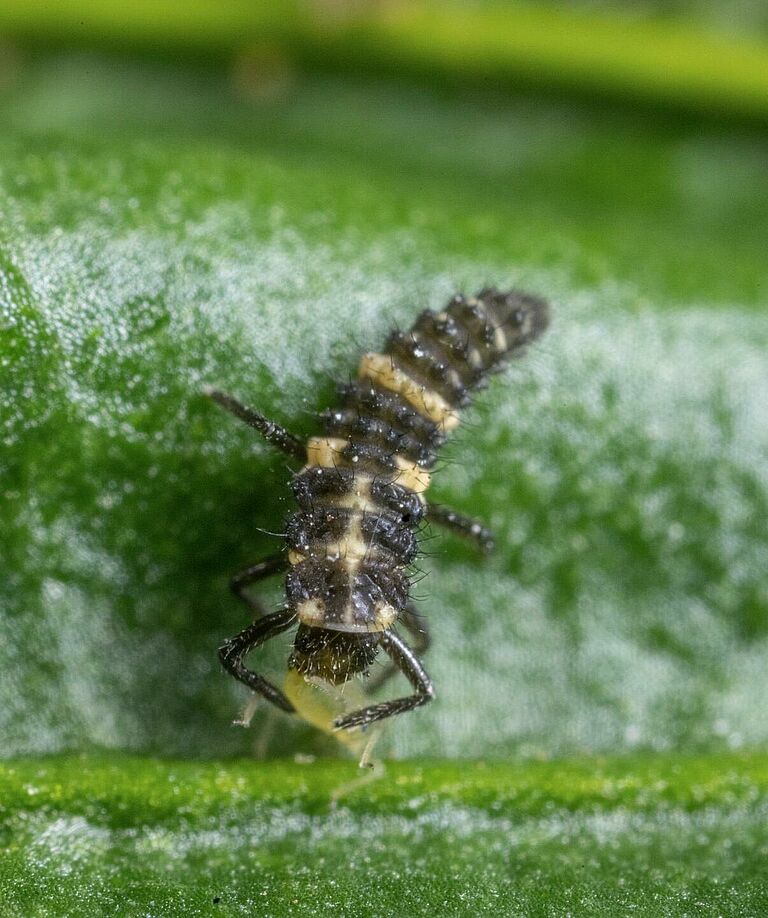
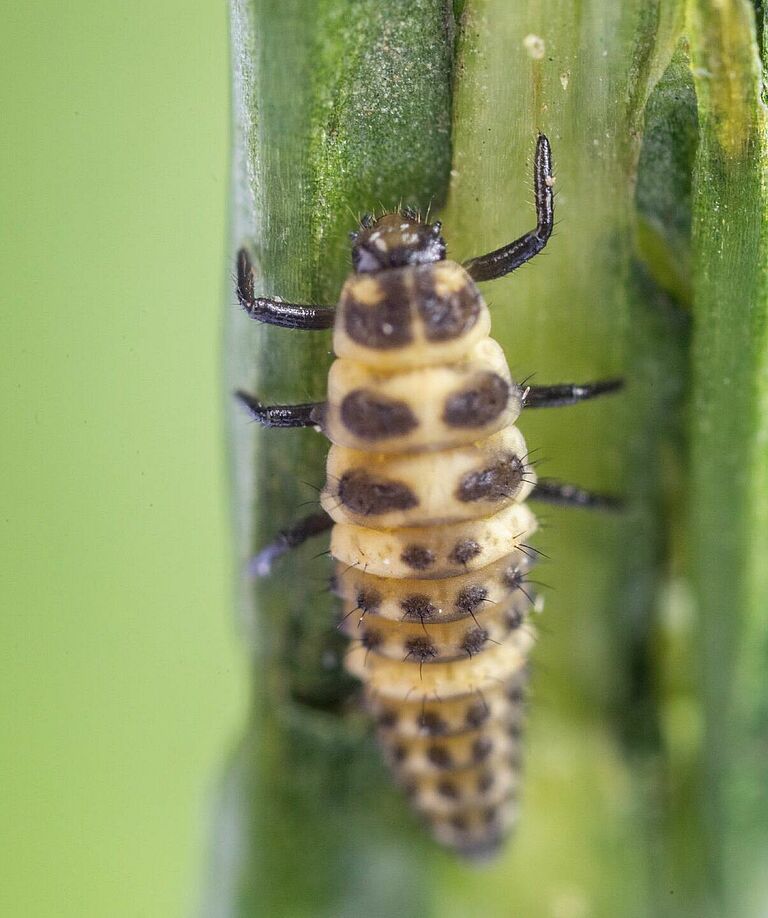
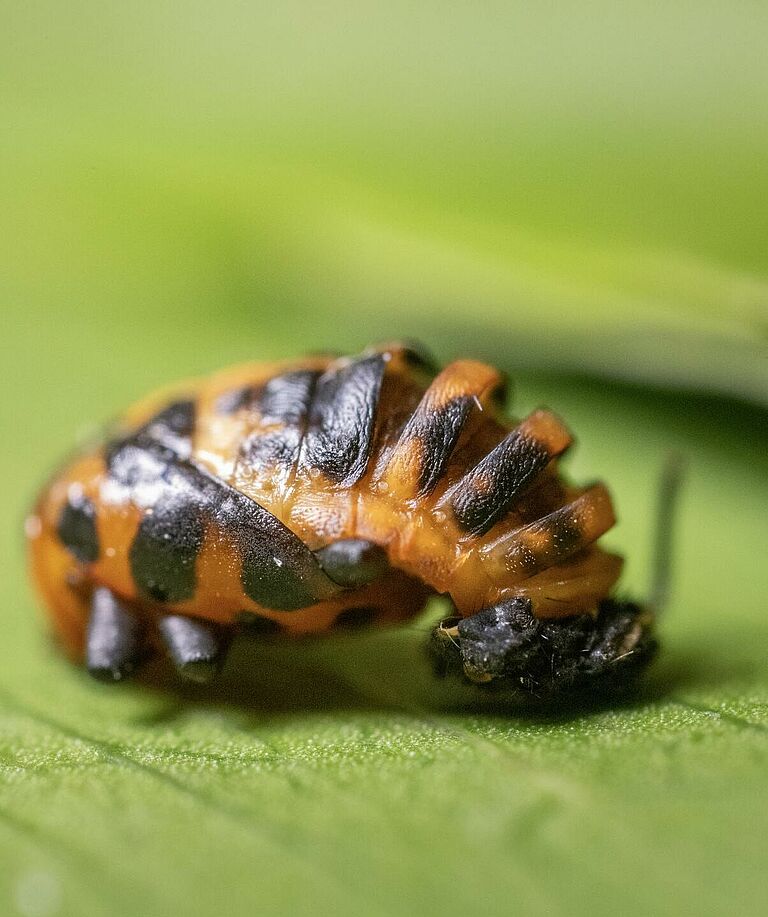
The larvae are dark gray or black with orange or pinkish spots. They are elongated and segmented, with the youngest being about 1 mm long. By the final larval stage before pupation, they can reach 1.4 mm. Pupae can range in color from yellowish to deep orange with dark spots.

Eggs are laid in clusters of 10 to 40 and are light yellow.

Product specifications

Pack size 1,000 predator beetle larvae.
Presentation 1 L cardboard bottle.
Developmental stage 2nd and 3rd instar larvae.
Carrier Buckwheat.
Food Lepidoptera eggs.

Directions for use

Application

  • Remove the product from the cooler and allow it to reach ambient temperature.
  • Lay the bottle horizontally and rotate it to homogenize the mixture with the carrier material.
  • Remove the cap and start applying small portions so that larvae are placed directly on or near aphid hotspots.
  • Depending on the infestation, apply the necessary amount directly onto aphid colonies according to your target dose.

C. maculata larvae are very active and quickly disperse among the crop leaves.

If needed, Diboxes can be used for release.

Dosage

The Coleobug dose depends on climate, crop, and pest density and should always be tailored to the specific crop situation. Begin introduction preventively or as soon as the first populations of aphids or mealybugs are detected. Repeat applications may be necessary based on recommendations from your advisor.

Enviromental conditions

Both larvae and adults of Coleomegilla maculata are voracious predators capable of consuming an average of more than 30 individuals per day under optimal temperatures of 77–78.8 °F. However, predatory activity can occur between 59°F and 91.4°F.

Combined use

Para un manejo efectivo del pulgón, es fundamental adoptar un enfoque preventivo, seleccionando la estrategia más adecuada según el cultivo y combinándola con otros enemigos naturales disponibles. Coleobug puede combinarse con avispas parasitoides de pulgones como Aphilin, Aphipar, Aphipar-M y Ervipar, aunque puede haber depredación de momias; depredadores como Chrysopa-L y Aphidend y el hongo entomopatógeno NoFly WP.

Storage time after receipt

1-2 days.

Storage temperature

10-15ºC/50-59 °F.

Storage conditions

Keep in the dark and stored horizontally.

Need help?