What is Thrips parvispinus?
Tobacco thrips (Thrips parvispinus) is an insect native to Asia. Its presence in Spain dates back to 2017 after its detection in pots of ornamentals on the Mediterranean coast. The first identification in Andalusia was in 2018, on the coast of Granada, being detected in 2020 in Almeria in ornamentals and also in other crops such as bell pepper.
Thrips parvispinus is particularly problematic in greenhouse crops, where it can multiply rapidly due to variable temperature and humidity conditions. This pest has a short life cycle and the ability of females to lay many eggs exacerbates the problem.
The presence of T. parvispinus in greenhouses in Almeria grew rapidly since 2021, especially in bell pepper greenhouses, although it is also present in protected vegetable crops such as eggplant, cucumber and ornamentals. The pest of T. parvispinus also currently affects greenhouses in Murcia, Granada and Malaga, although its expansion is beginning to be detected in other geographical areas where it has already appeared in outdoor crops such as citrus and lettuce.
This pest causes numerous damages to the plant, even stopping its vegetative cycle, with the consequent production losses. In addition, it can cause serious damage that decreases the commercial value of the fruit.
General aspects of Thrips parvispinus
Description
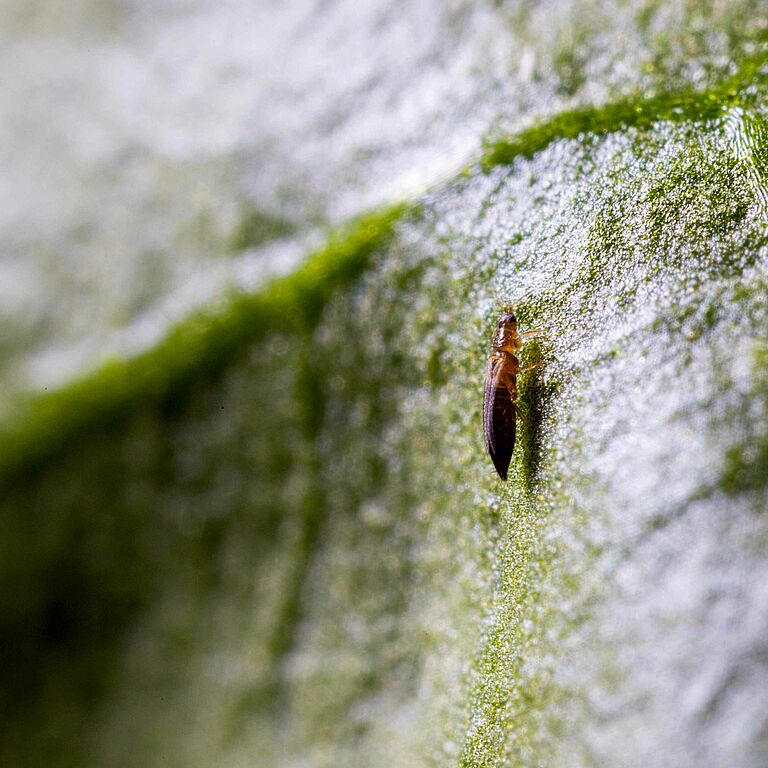
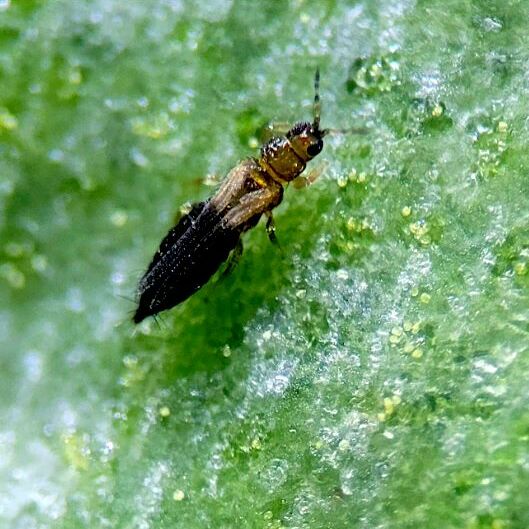
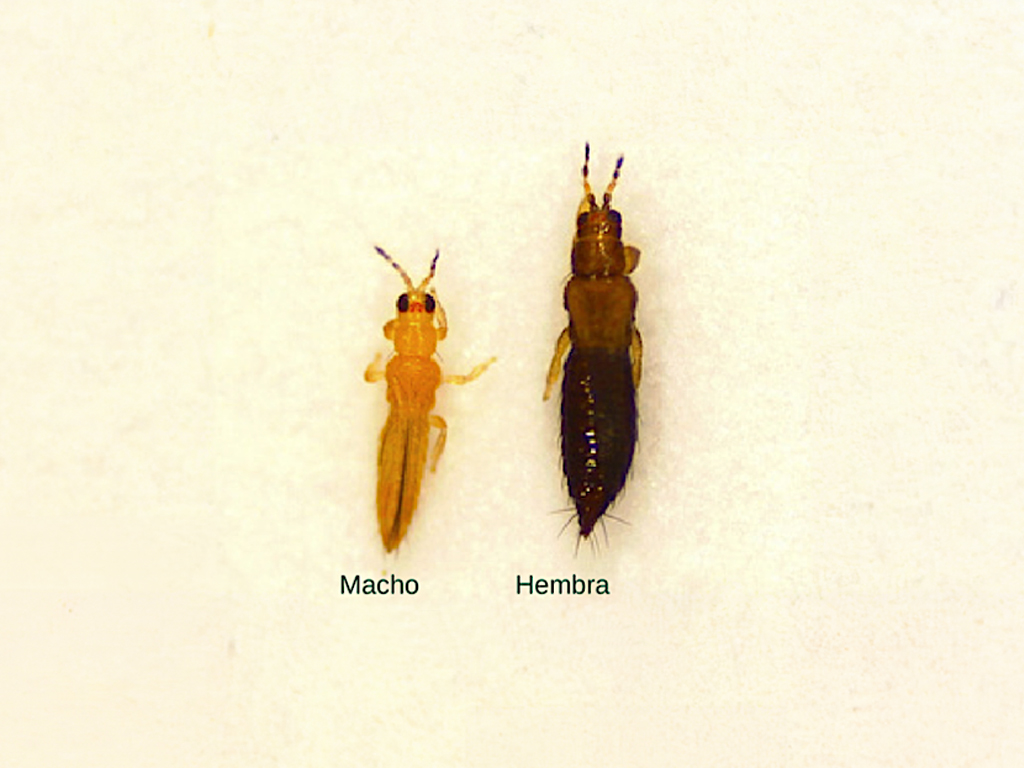
Adult female dark colored with head and thorax lighter than the abdomen. Female size: 1.2-1.5mm. Adult male yellow-orange. The female is larger than the male.
- Antennae: 7 antennal arties, the first two are dark in the adult female. In the male, the first segments are light and the last ones are dark.
- Body: Head longer than wide. Interocellar silks outside the triangle.
- Thorax: 2 long silks on the posterior angles of the prothorax.
- Wings: Transparent. Wing bases clear. Basal plate of the anterior wing with 5 silks.
It is very important to know how to correctly identify Thrips parvispinus, whose appearance is very similar to other thrips that are also present in greenhouse crops.
Koppert has prepared a Thrips Identification Guide with photos and explanations so that you can learn how to correctly identify each type of thrips and act in time with the most appropriate strategy.
Life cycle of Thrips parvispinus
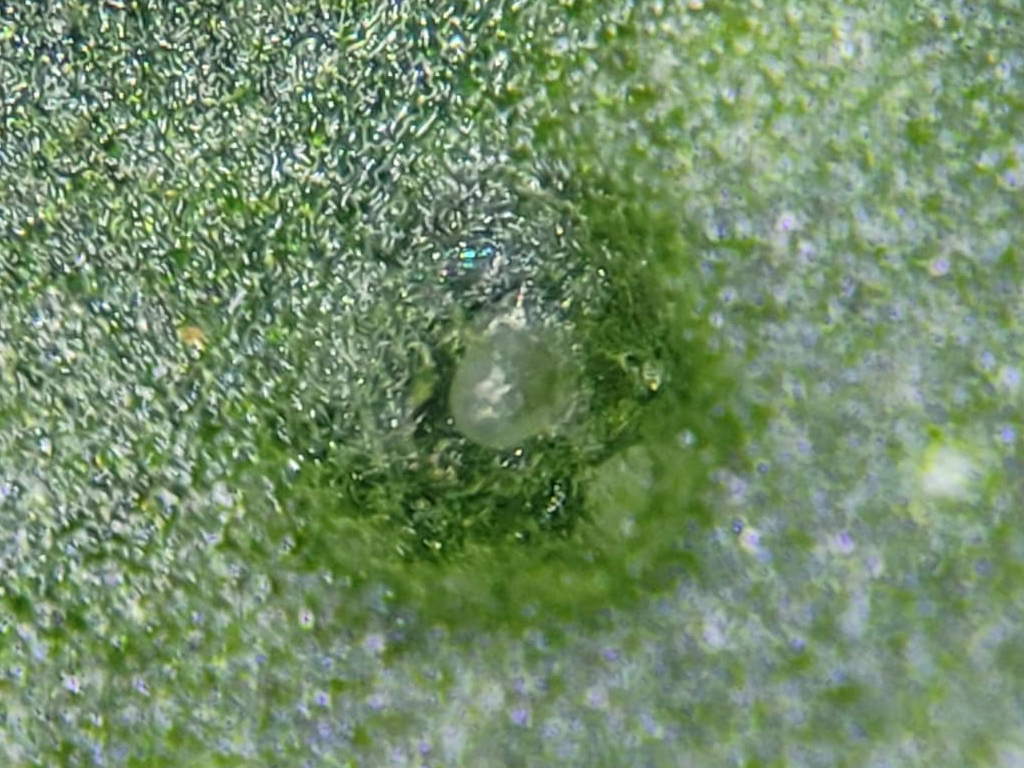
- 14 days at 24º C
- 65% relative humidity
- Photoperiod: 16 hours of light/day.
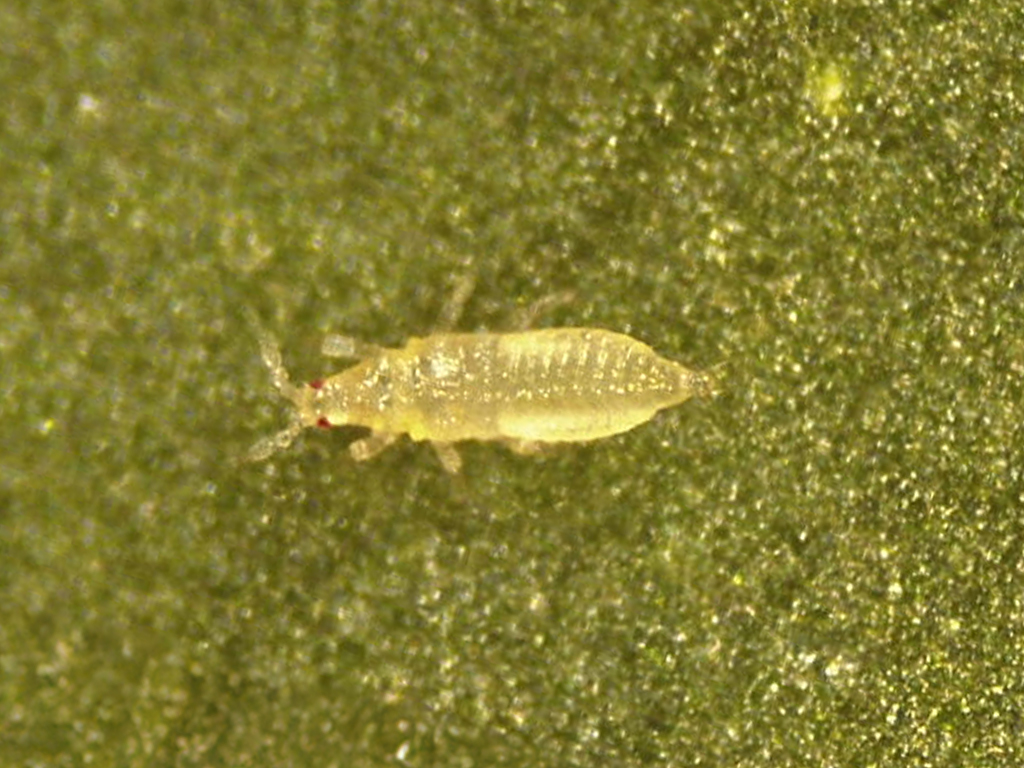
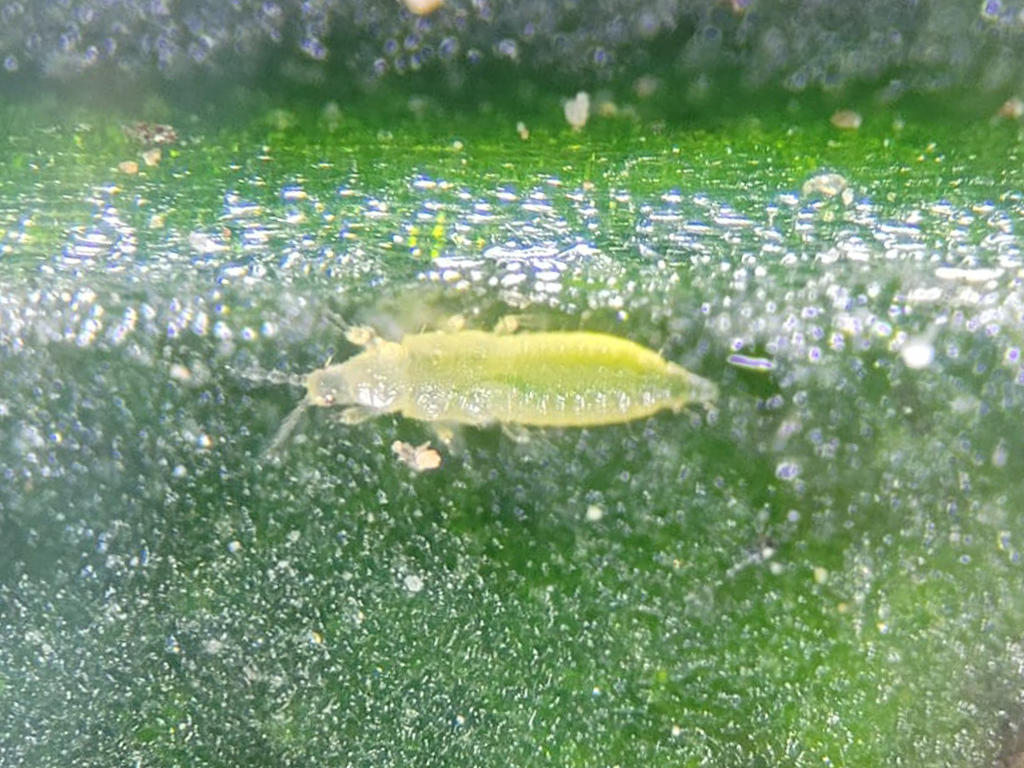
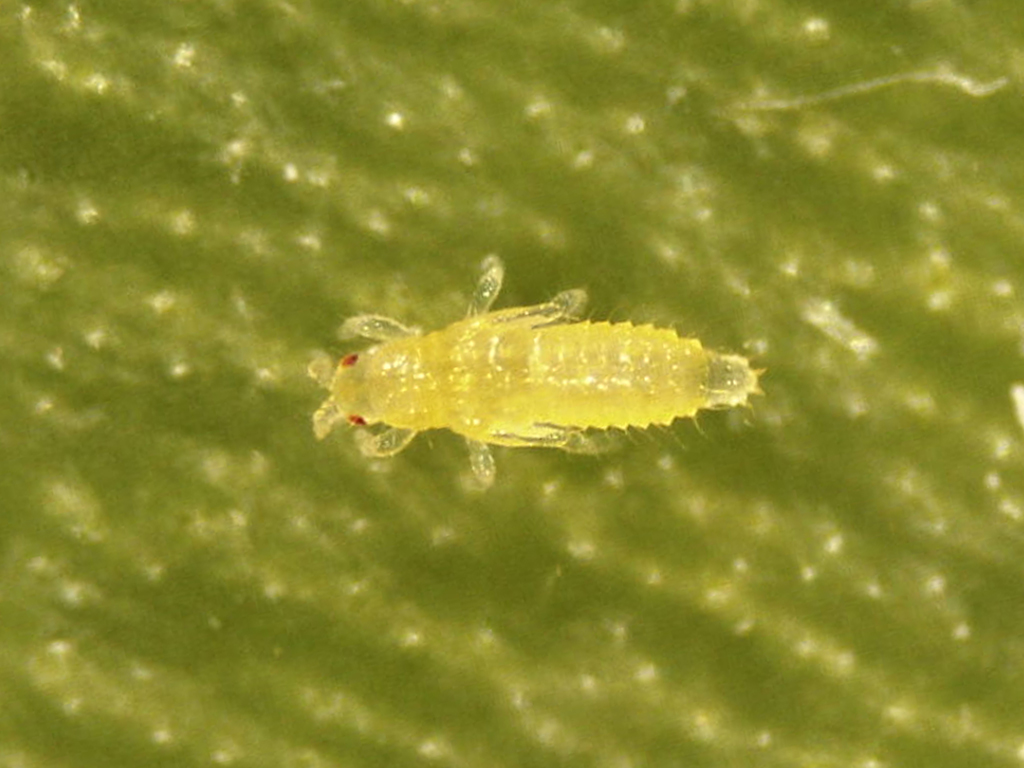
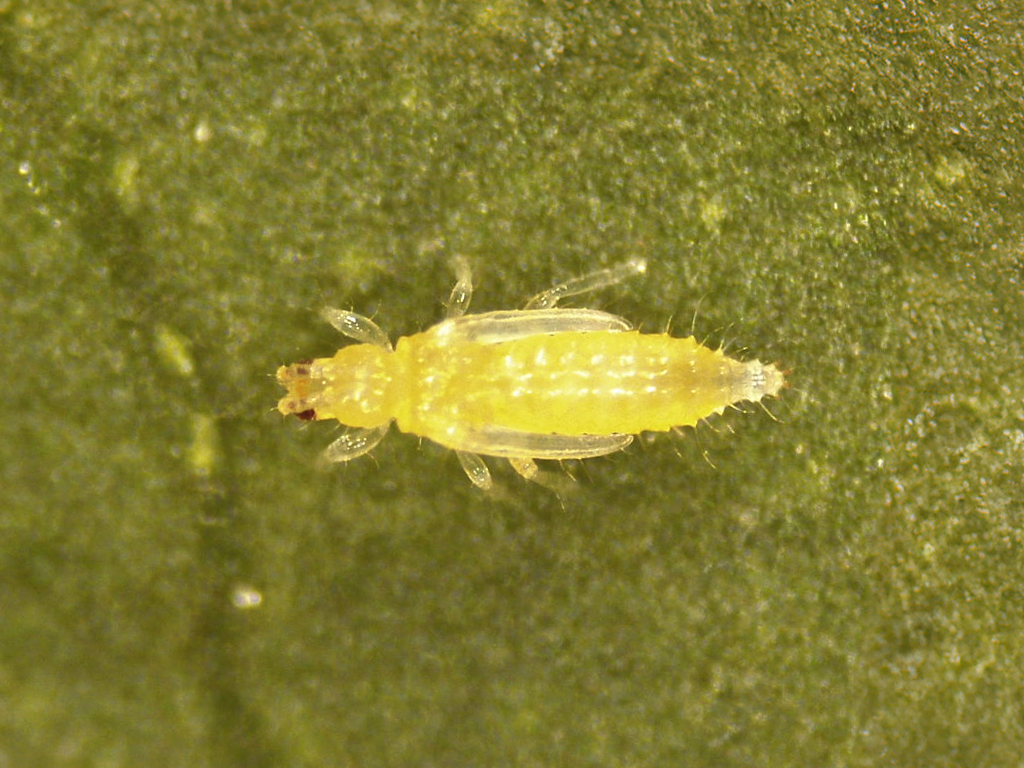
Dispersion
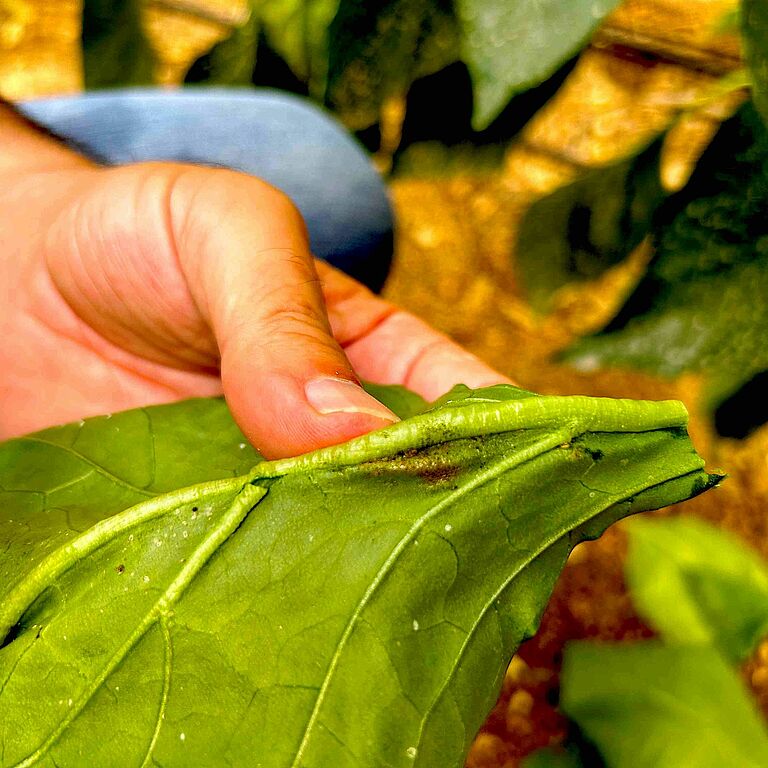
Thrips parvispinus is located on the underside of leaves and flowers, although it is also visible on the upper side of leaves when the level of infestation is very high. Larvae are found mainly on young leaves and, to a lesser extent, on flower buds. Adults are sometimes observed on the plant, but usually remain hidden.
In greenhouses, this pest begins to be observed during April and reaches its maximum presence in October. In winter, the presence is minimal, but environmental conditions in Mediterranean areas do not seem to limit its activity throughout the year.
The active flights of the adults are short. Larvae are apterous and prepupae or pupae have reduced mobility. Long distance dispersal will occur on plant material (some plants are asymptomatic carriers).
Preventive and cultural measures
- In greenhouses, place nets (minimum 10x20 threads/cm2) in zenithal and lateral openings and doors. Monitor and control their condition, especially those that coincide with the direction of the prevailing winds".
- In greenhouses, make sure that there are no holes in the plastic covering.
- Eliminate weeds and crop residues, since they can act as pest reservoirs.
- Use healthy plant material from authorized nurseries or seedbeds. The Phytosanitary Passport should be kept for one year.
- Use blue and yellow chromotropic sticky traps from the beginning of the crop.
- Do not associate crops in the same plot.
- Do not abandon crops at the end of the cycle.
- In greenhouses, place double doors at the entrances, or doors and mesh of equal density to the outside (minimum 10X20 threads/cm2).
- Space out in time the realization of the new plantation.
- Fertilize in a balanced way to avoid excess vigor. Avoid excess nitrogen fertilization.
- Carry out crop rotations.
- If manure is to be applied, make sure it is well fermented and free of pests.
- Remove and destroy pruning remains.
- Encourage the proliferation of beneficial insect populations.
Damage
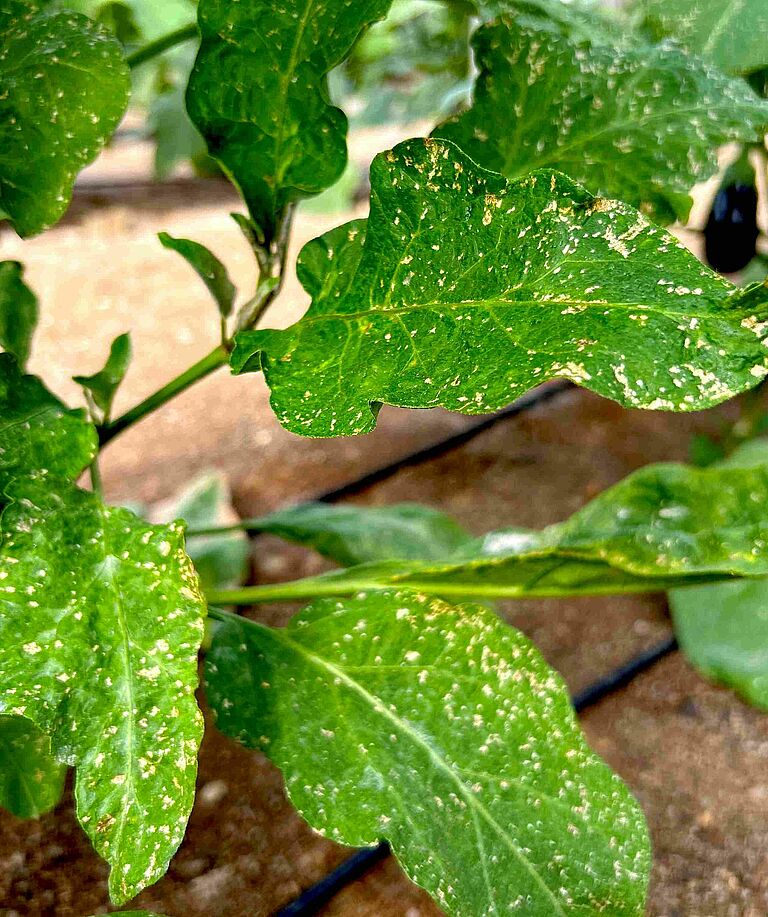
- Deformation on tender shoots and younger leaves.
- At high levels of infestation the leaves appear to be burned.
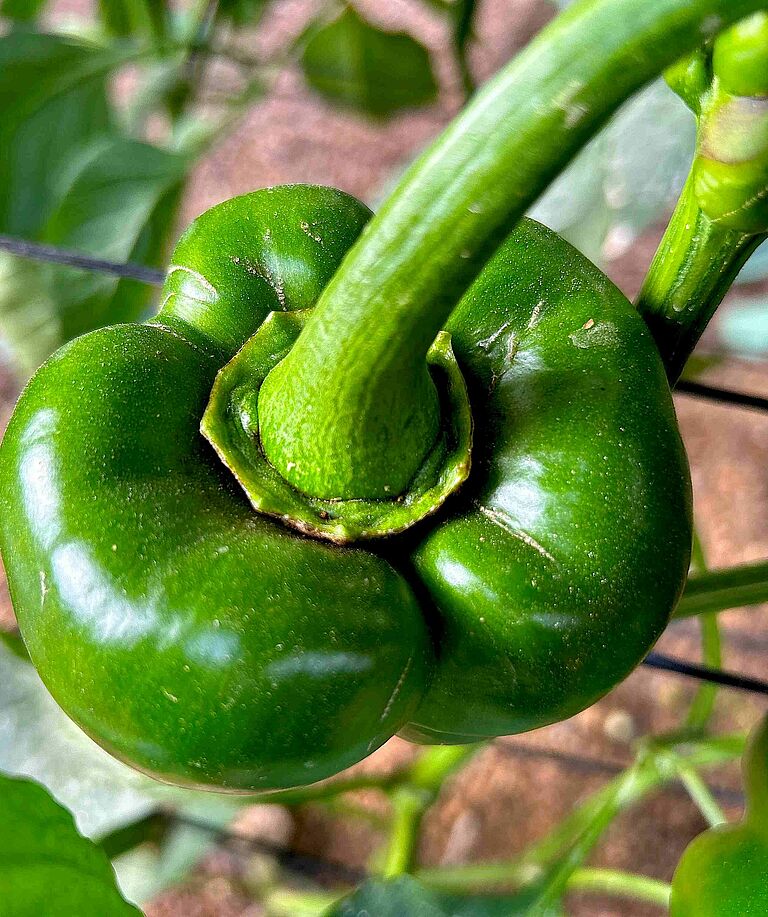
- Zippers are formed on the fruit.
- If the infestation is very high the damage will be greater, similar to Scirtothrips dorsalis.
Biological control of Thrips parvispinus
After several years of research and field trials, Koppert has succeeded in developing a unique strategy for highly effective biological control of Thrips parvispinus in horticultural greenhouse crops. Our innovative strategy is based on the use of the predatory mites Amblydromalus limonicus and Transeius montdorensis in combination with Orius laevigatus (Thripor-L) and Koppert Horiver sticky traps.
-
Limonica Ulti-Mite (Amblydromalus limonicus)
Limonica Ulti-Mite combines the predatory mite Amblydromalus limonicus with Ulti-Mite slow-release sachet technology to provide consistent control of thrips and whiteflies. The sachet contains a built-in food source that supports reproduction inside the envelope, eliminating the need for additional feed. Predatory mites are released gradually over several weeks, ensuring continuous crop protection and reducing the risk of population gaps compared to conventional paper sachets. An improved carrier material helps maintain stable humidity levels within the sachet, supporting mite development and performance. The outer film is resistant to water, sunlight and varying weather conditions, while being industrially compostable, making it suitable for practical and sustainable use in integrated pest management programs to control Thrips parvispinus.
-
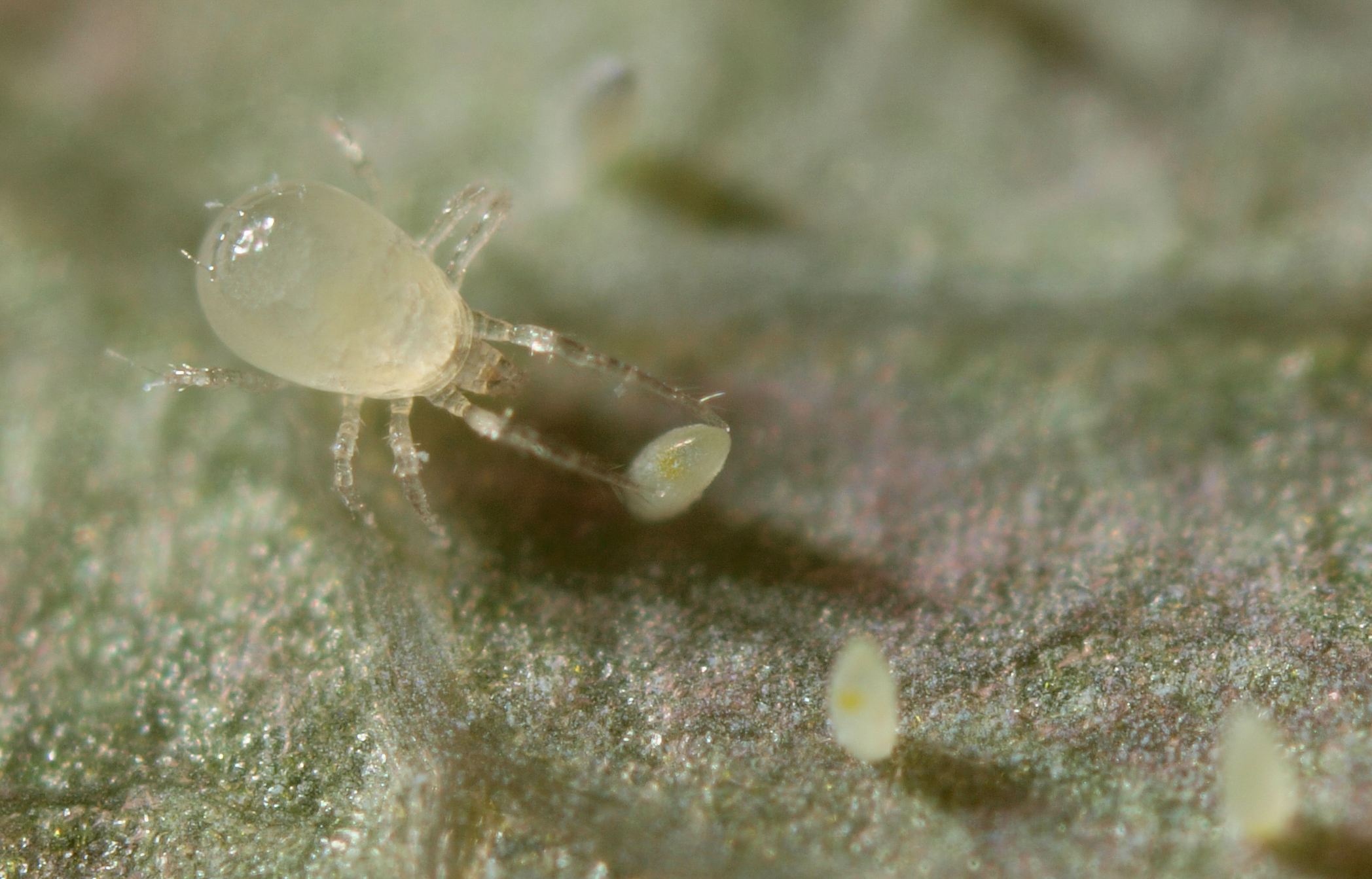
Limonica (Amblydromalus limonicus)
Our research has confirmed that Amblydromalus limonicus (Limonica), a predatory mite that has been used for years against different pests, has a high predation capacity on Thrips parvispinus, something that was unknown until now. Of all the natural enemies studied, Amblydromalus limonicus is the natural enemy that feeds the most on Thrips parvispinus and the most versatile of them all. It provides outstanding results in winter, even in high temperature conditions. Amblydromalus limonicus, is marketed exclusively by Koppert under the name Limonica and now presents a new format with more capacity: 25,000 predatory mites. A dose of 25 individuals/m2 is recommended, with 2-3 repetitions, depending on the pest population level. Consult your Koppert technical advisor beforehand to determine the most appropriate dosage in each case.
-
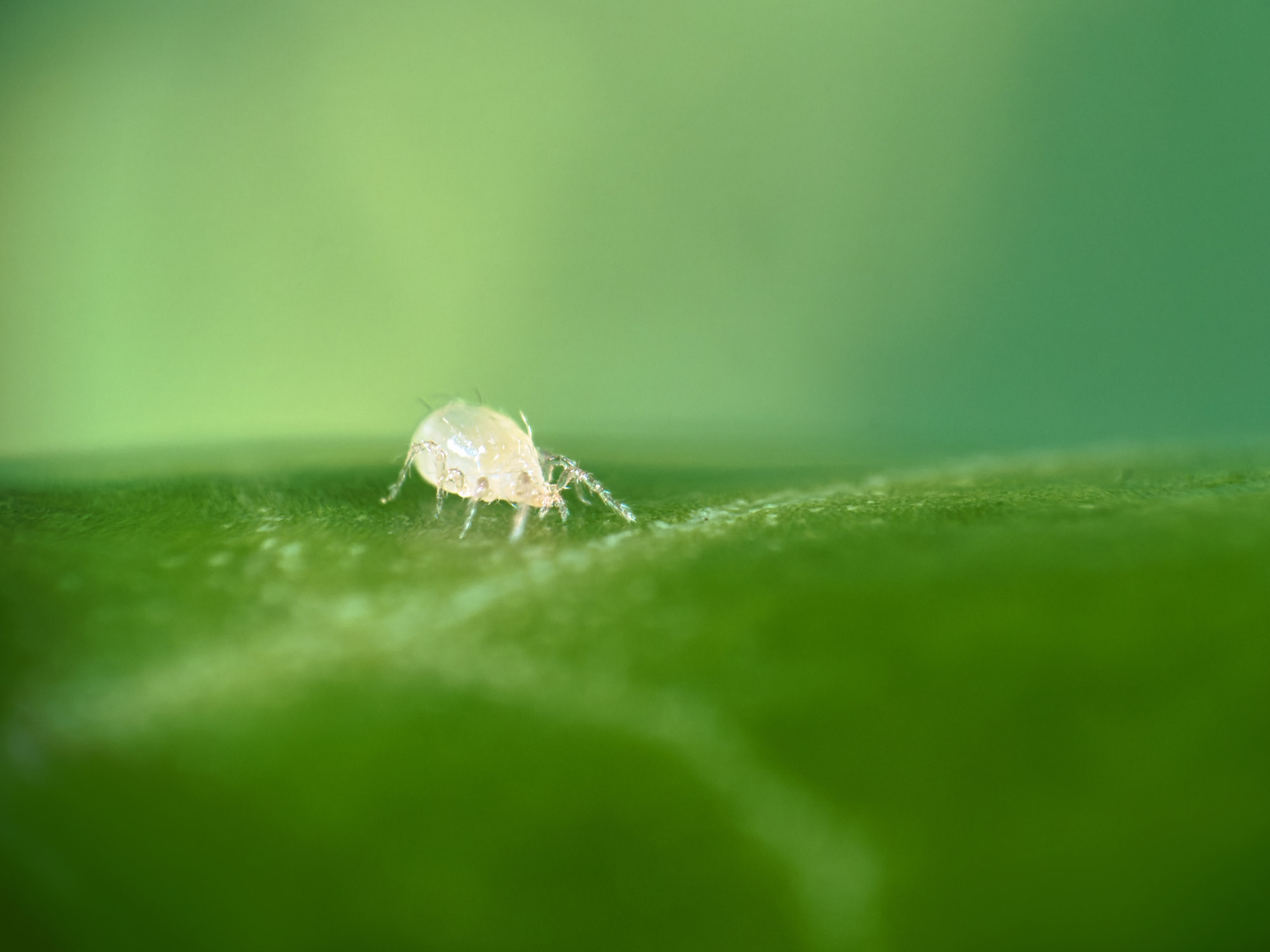
Montdo Ulti-Mite (Transeius montdorensis)
For the first time, Koppert combines the natural efficacy of the predatory mite Transeius montdorensis (Montdo Ulti-Mite) with the innovative technology of the Ulti-Mite envelope. The result is Montdo Ulti-Mite, a unique solution that provides great advantages:
- Built-in power supply: No additional power supply needed. Cost and labor savings.
- Progressive release: In an Montdo Ulti-Mite envelope the predatory mites emerge little by little, contrary to paper envelopes where the entire mite content is released at once, decreasing the chances of survival.
- New formulation: Contains a new carrier material that significantly improves the maintenance of relative humidity inside the envelope, improving the vigor and reproductive capacity of T. montdorensis.
- Envelope resistant to weather, water and sunlight: The outer layer of the envelope is made of an aluminized material for food use, which is also compostable.
-
Adhesive traps Horiver Wetstick
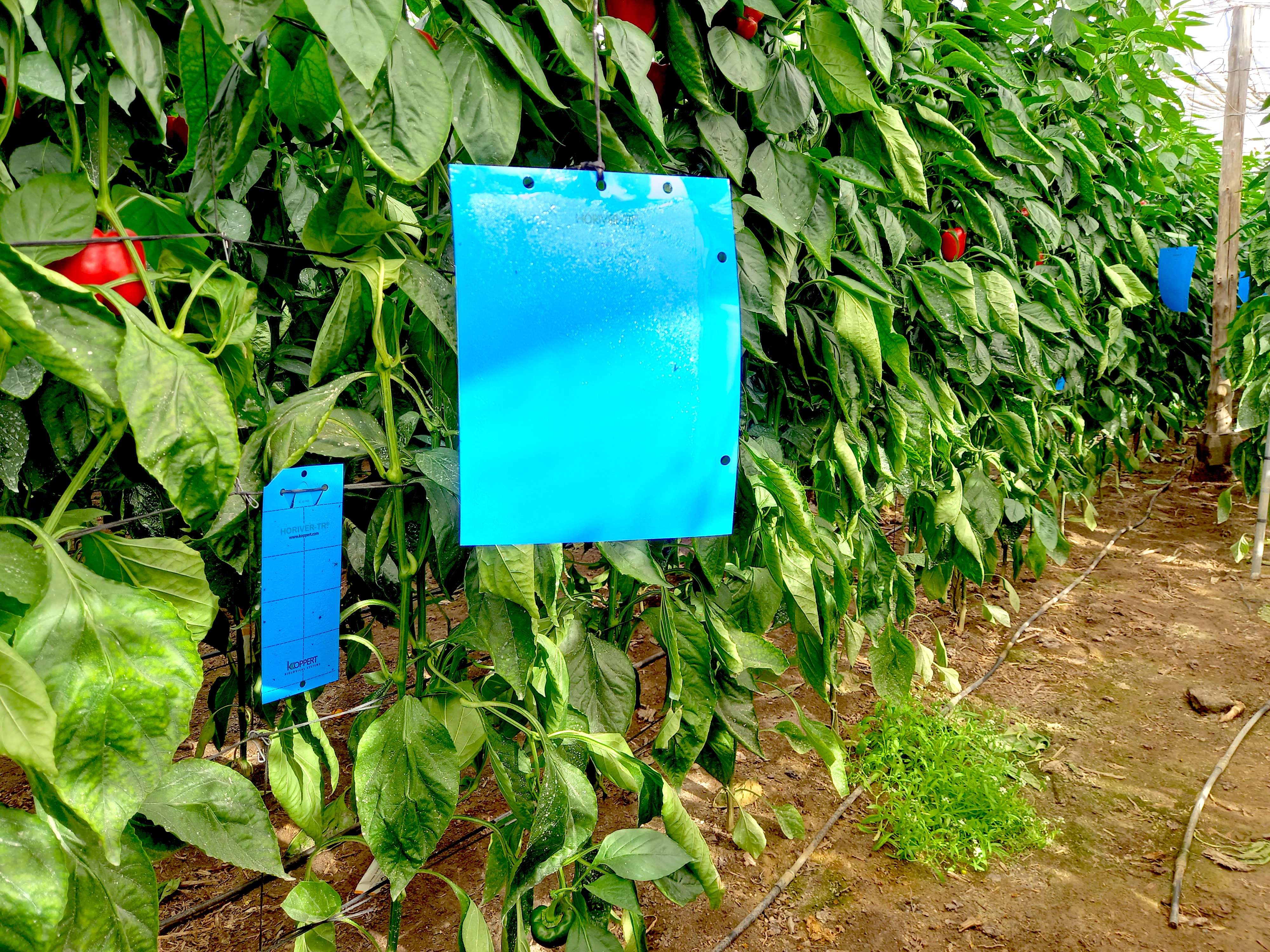
A recent trial conducted by the R&D department of Koppert Spain in bell pepper greenhouses in Almeria compared the results of Thrips parvispinus captures obtained with blue, yellow, green and white sticky plates. Finally, the trial has revealed that the blue Horiver Wetstick plates capture twice as much Thrips parvispinusas other options available on the market.
In addition, Koppert has confirmed with this and another trial that Thrips parvispinus captures are increased by around 30% if the blue Horiver plates are placed at the right height. In this regard, the research has confirmed that the highest average catches are obtained by placing the blue adhesive plate one meter above the ground when pest levels are high, while with low infestations the same efficacy is obtained if the plates are placed 30 centimeters above the ground or 1 meter.